
Commentary - The ‘principled’ stand that almost cost South Dakota taxpayers an $87 million return on their investment

During the legislative session, we’re often witness to lawmakers taking a stand on principle. This can take many forms.
Some want to make one of the harshest abortion laws in the nation even tougher.
Some want to beat back South Dakota’s urge to find more ways to gamble.
Some want to clamp down on access to medical marijuana.
Some want to solve the national debt by returning $87 million to the federal government.
Wait, what?
That’s what came dangerously close to happening in the final weeks of the legislative session. Deficit hawks in the state Senate voted to return $87 million in federal funds earmarked to help pay for the installation of high-speed broadband in areas of the state underserved by the internet.
This isn’t the first time this kind of foolishness has taken hold in the Capitol. During the pandemic, Governor Kristi Noem told the Legislature that she considered giving back all the money that the federal government was piling on states in its effort to bolster the economy. Surely the federal government couldn’t afford this kind of largesse.
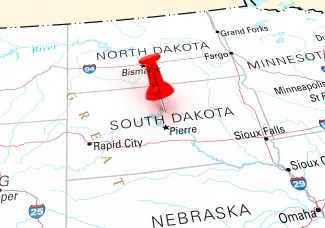
Even a tea party darling like Noem knew in her heart of hearts that refusing federal funding didn’t mean that the money would be safely squirreled away in a federal savings account or used to whittle away at the national debt. She knew it would just get spent anyway in Nebraska or Iowa or, worse yet, North Dakota.
This year, enough state senators were more concerned about the national debt than they were about their neighbors’ inability to get on the internet. They voted 22-12 on whether to accept the federal money, short of the two-thirds majority needed for legislation dealing with appropriations or an emergency clause.
During the debate, Senator Taffy Howard, a Rapid City Republican, said enough was enough. The state had already spent $84 million on broadband expansion with another $88 million from the feds and a like amount invested from private enterprise.
“Government is encroaching on more and more areas of our economy,” Howard was quoted in a story from The Dakota Scout. “I mean, heaven help us, how did we survive before the federal government decided to do everything for us from cradle to grave?”
It’s hard to see it as government intrusion when it partners with the state on a needed project. If Howard had her way, South Dakota taxpayers who dutifully paid their taxes to the federal government wouldn’t get to see a return on their investment.
Senator John Carley, a Piedmont Republican, called broadband old technology. He said satellite services like Starlink could easily provide internet service at a fraction of the cost.
Carley may be right, but when the next conflict between superpowers comes, the first targets will be the opponents’ satellites. Who’s more likely to have internet service in the next big war: the guy with the buried cable or the one who relies on an orbiting machine in space that’s sporting a bull’s-eye?
Senator Ernie Otten, a Tea Republican, made an apt comparison when he called for the Senate to spend the money. He likened the coming of broadband internet to rural areas to the effort that brought electricity to farms.
“It’s because there was a need, and everybody recognized there was a need,” Otten said. “And with the internet, it’s going to be the same thing.”
Otten is right. Like the project that lit up farms across the nation, reliable, high-speed internet is a game-changer for rural South Dakota. No longer will our young people need to leave home to seek their fortunes and build their futures in big cities. Remote work on the internet, and the decent salaries that go with it, will keep young people in Kennebec, Freeman and Milbank.
Supplying high-speed internet to rural areas in this state where it’s not currently available has what Senator Carl Perry, an Aberdeen Republican, called “unintended benefits.” It will help attract new business and industry, bolster telehealth and help schools offer a more well-rounded education.
Eventually cooler heads prevailed. The Senate reconsidered the bill and it garnered the two-thirds majority needed on a 24-10 vote.
Perhaps the lesson in this episode is that state lawmakers who want to do something about the national deficit should run for Congress. In the meantime, they shouldn’t let their principles stand in the way of their constituents reaping the benefits of the federal government’s willingness to invest in all of us having access to high-speed internet.