Conservationists sue feds over plan to allow cattle grazing on 24 million western acres
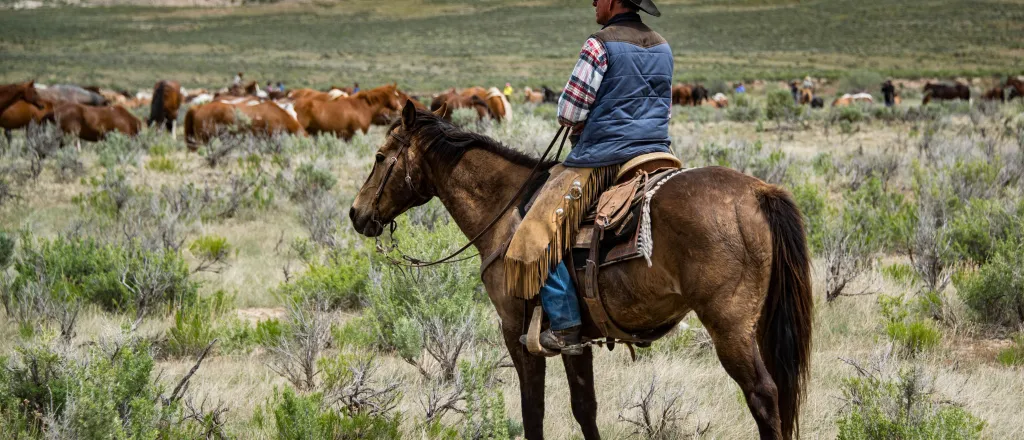
A nonprofit conservation group is suing the federal government over plans to allow cattle grazing on more than 24 million previously restricted federal acres across the West.
The Center for Biological Diversity and the group’s endangered species co-director, Noah Greenwald, filed the lawsuit to stop the plan from moving forward on Thursday in U.S. District Court in Portland. It names as defendants Doug Burgum, head of the U.S. Department of the Interior, and Brooke Rollins, head of the U.S. Department of Agriculture.

Lawyers for the Center for Biological Diversity allege that Rollins, Burgum and officials at their departments violated federal laws including the Endangered Species Act by approving the grazing plan without consulting U.S. Fish and Wildlife and National Marine Fisheries officials about federally protected species and designated critical habitat.
Similar concerns about grazing's impact on wildlife protections arose in a federal court case that blocked grazing in grizzly habitat near Yellowstone last year.
The group in April provided the defendants a 60-day notice of intent that a lawsuit was coming unless their concerns were addressed but did not hear back, according to the filing. A USDA spokesperson said the agency “will not comment on pending litigation.” Spokespersons for the Interior and the U.S. Forest Service did not respond to Capital Chronicle requests for comment Monday.
Rollins first announced the proposed plan in October 2025 to “strengthen support for America’s ranchers,” according to a news release at the time.
“For too long, bureaucratic overreach and activist-driven lawfare have undermined the multiple-use mandate of our National Forests and Grasslands. Today, we are empowering line officers with clear direction and reaffirming grazing as an essential tool for healthy landscapes and vibrant rural communities,” she said in a statement included in the announcement.
The Forest Service and Land Management agencies also in a recent memorandum agreed to fast-track grazing permits under the banner of wildfire fuels reduction or temporarily relocating natural disaster-displaced livestock.
But within a recently published interactive map illustrating the proposed expansion, the group found dozens of new U.S. Forest Service and Bureau of Land Management allotments identified for potential grazing that are also home to federally protected species, according to the lawsuit.
They include areas around Oregon’s Blue Mountains and Mt. Hood National Forest, as well as areas near federally protected landscapes including the Pony Express Trail in Utah, Canyons of the Ancients National Monument in Colorado and Sonoran Desert National Monument in Arizona.
Among the threatened species that could be impacted by expanded grazing are grizzly bears and gray wolves, which are often killed when conflicts arise between the wild and domesticated animals, according to the suit, as well as Oregon spotted frogs, Snake River Basin steelhead, Colorado pikeminnow, Mexican spotted owls and western yellow-billed cuckoos.
“Grazing on our country’s public lands harms vulnerable animals. Letting cattle trample millions more acres of public land isn’t just wrong, it’s also illegal,” said Andrea Zaccardi, an attorney for the Center for Biological Diversity, in a statement.
Federal wildlife and land management officials have found large livestock including cattle erode water quality in rivers with their feces and urine, damage riparian areas and soil health and overgraze native species in some areas leading to a proliferation of invasive grasses and shrubs that exacerbate drought and wildfire. Many of the species listed in the lawsuit received federal protection in recent decades in part because their lives or habitat had been critically impaired by livestock grazing.
Matt McElligott, president of the Oregon Cattlemen’s Association, said it’s too early to comment on the lawsuit or the expanded grazing plan itself since the map showing possible new grazing areas was only recently published, and the lawsuit is likely to impede access for an undefined time.