Daily Audio Newscast - July 28, 2026

© AlexLMX - iStock-823000260
Six minutes of news from around the nation.
The Trump administration asks the Supreme Court to allow an order targeting mail-in voting before midterms; Haitian TPS ends, leaving Florida families in limbo; UNH tick project aims to safeguard public health in Massachusetts; Phoenix heat measures counter federal policies.
TRANSCRIPT
The Public News Service, Daily Newscast, July the 28th, 2026.
I'm Mike Clifford.
The Trump administration filed an emergency application to the nation's highest court Monday.
They asked the Supreme Court to clear the way for an executive order by Trump that restricts voting by mail.
The New York Times notes, The executive order directed the Department of Homeland Security to create state-by-state citizen lists that would help determine voter eligibility.
It then called on the Postal Service to use lists provided by states to determine if voters should be allowed to vote by mail.
More than 20 Democratic attorneys general challenged the order in court, arguing that it violated several provisions of the Constitution, including the separation of powers.
Meantime, the deadline for federal temporary protected status for Haitians has passed.
That creates heightened uncertainty for hundreds of thousands of people who had that designation.
In Florida, nearly 96,000 Haitians living and working under the program now face the loss of work authorization and potential deportation.
Vanessa Joseph is a North Miami elected official and chair of the National Haitian American Elected Officials Network.
Her city is at the heart of South Florida's Haitian community, the largest in the nation.
Everyone has a different posture.
For some, it may mean immediate deportation.
For others, it may be separation from their family. and for some it may be staying here in some kind of limbo as you await maybe another process for which you've applied.
Advocates say Haiti's conditions haven't improved and business leaders warned the change could leave critical jobs unfilled, especially in health care.
TPS was created in 1990 to protect people from countries in crisis.
Arguing it's meant to be short-lived, the Trump administration has sought to end various TPS designations and ICE is reportedly planning to ramp up operations against Haitian migrants this week.
I'm Tramiel Gomes.
And researchers at the University of New Hampshire are stepping up tick surveillance as the populations surge in the region and send a record number of people to the ER.
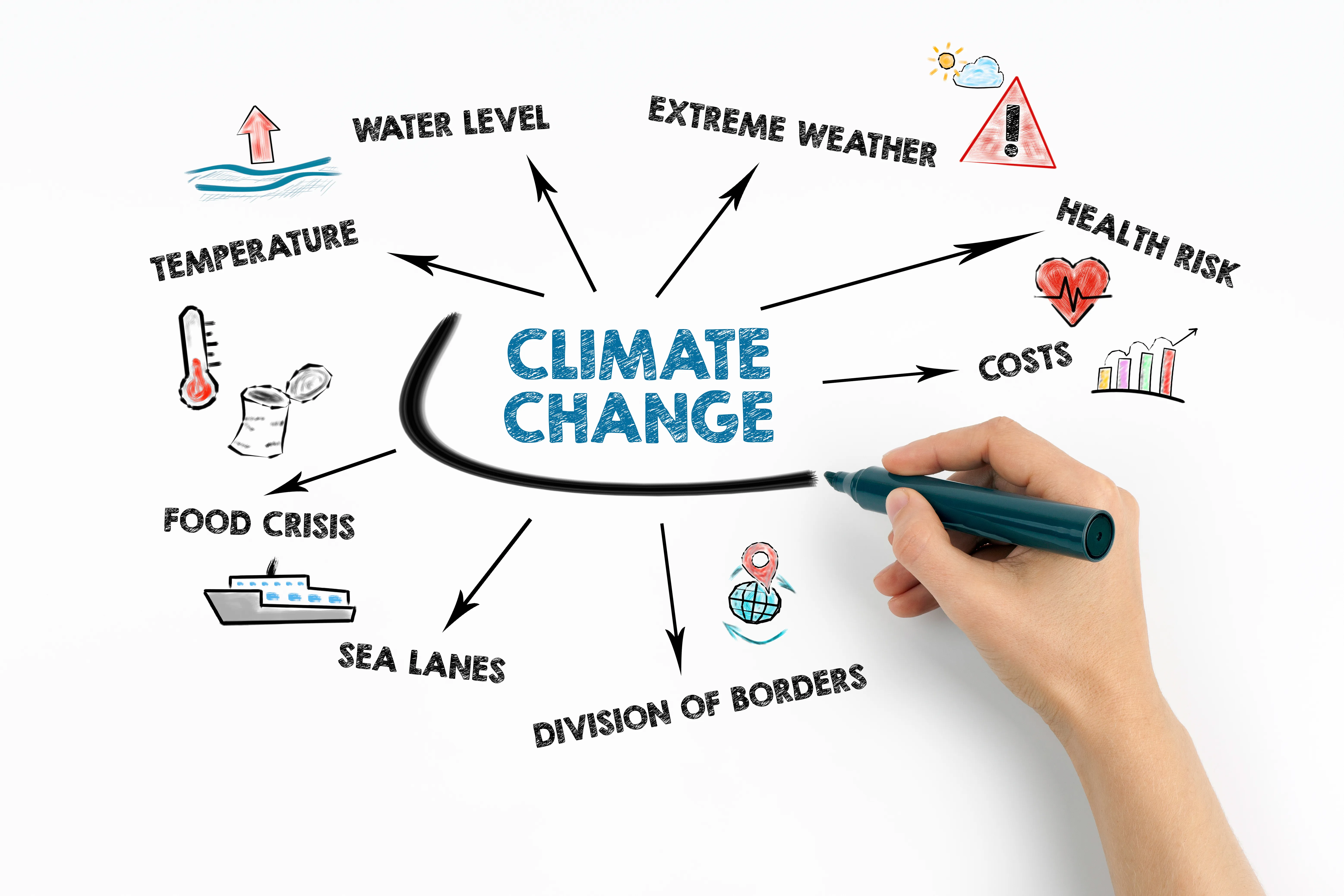
A warming climate and shifting wildlife patterns have contributed to the spread of tick-borne diseases like Lyme disease, Powassan virus, even a red meat allergy known as alpha-gal syndrome.
David Needle, a veterinary pathologist at UNH, says a grant from the National Science Foundation will help him and his colleagues better understand tick evolution.
Ticks and tick-borne diseases could be considered like a tidal wave occurring over 30 years.
So it's certainly an incredibly important human health and animal health concern.
Needle says the collaborative effort among scientists statewide will cover New Hampshire's 11 different ecosystems to help predict where ticks could surge next. information that can be shared with environmental researchers and public health agencies across northeast states.
I'm Katherine Carley.
Massachusetts and New Hampshire are now in the peak of tick season.
This is Public News Service.
Longer, hotter summers in the Sonoran Desert have prompted the city of Phoenix to counter the heat with new programs designed to give people without shelter safe places to go during the extremes.
Phoenix recently opened its first 24-hour shelter for unhoused people and has used a cold water immersion tank to treat severe heat stroke cases.
Elected officials to protect America's Christian Brock says federal help could assist the city in making more progress.
Federal funding for these facilities and services could help save more lives during extreme heat events.
But the actions by the current administration have hindered the climate crisis mitigation progress by putting people and their communities at higher risk.
The Trump administration has sought to roll back aid for extreme heat mitigation resources like cooling centers.
Federal lawmakers contend they're trying to right-size the nation's economy and root out alleged waste and fraud in social service programs.
I'm Mark Moran.
Next, we report on an Ohio mother who relies on the home community-based services Medicaid waiver.
Our Nantia Romagot lets us know she's worried about how her family will manage after cuts to the federal program go into effect next year.
Sarah Bloom Anderson's 14-year-old daughter lives with a severe neurodevelopmental disability.
Anderson says the Medicaid waiver has allowed her daughter, who requires a wheelchair and feeding tube, to live at home and attend school.
We need a special aide to take care of her who is trained medically.
And if we did not have that care, my husband and I would not be able to work.
A new poll from the advocacy group Protect Our Care finds that nearly 70 percent of Americans nationwide, including those in key battleground states, oppose cuts to Medicaid.
This is Nadia Ramlagan for Ohio News Connection.
A new campaign called Sick of It Fix Healthcare Now has amplified voices across the Buckeye State, highlighting how communities are struggling with lack of access to affordable health care.
Finally, as Indiana families prepare for a new school year, Doctors say backpacks and school supplies aren't the only essentials.
Our Joe Lurie reports scheduling annual health appointments can identify problems before they interfere with learning.
Dr. Don Lyon at Indiana University School of Optometry says one area to watch closely is your child's vision.
There's a lot of vision conditions that they don't know that they have.
And the goal of those exams is we want to make sure that there are no barriers in their visual system that are keeping them from reaching their full academic potential.
Lyon says children with undiagnosed vision problems may struggle with reading, develop headaches, or experience eye strain without realizing poor vision is the cause.
He says comprehensive eye exams look beyond whether a child simply needs glasses and can identify conditions that routine vision screenings often miss.
This is Mike Clifford for Public News Service.
Member and listener supported.
Find or trust indicators at publicnewsservice.org.