Daily Audio Newscast - October 27, 2026

© AlexLMX - iStock-823000260
Six minutes of news from around the nation.
Election watchdogs prepare thousands of poll observers nationwide ahead of Election Day, Tennessee deploys trained observers to guard against voter confusion and intimidation, and New Mexico voters consider paying state legislators a salary.
TRANSCRIPT
The Public News Service Daily Newscast for Tuesday, October 27th, 2026.
I'm Joe O'Leary.
With Election Day one week away, political groups and voting watchdogs are preparing to send thousands of observers to polling places nationwide.
The Justice Department also plans its largest ever election monitoring operation as Democrats raise concerns about federal interference in the vote.
We start in Arkansas with our Frida Ross.
The Pulaski County Election Commission could decide tonight if monitors can observe the election from within polling locations.
On November 3rd, commission members will meet at 7 o'clock at the Pulaski County Regional Building.
Kristen Foster with the League of Women Voters says they're urging commissioners to deny the request.
Our local election commission and our local county clerks and election workers are doing an incredible job to make sure that our elections are secure and fair and that every single vote counts.
We don't see this as a necessary thing and have concerns that it could be unintentionally intimidating voters.
Public comments will be allowed at the meeting.
Anyone who can't attend in person can watch it on YouTube.
Foster says people watching virtually should send their comments directly to the commission instead of relying on live stream comments to reach commissioners.
A nonpartisan group is putting trained poll observers across Tennessee to help voters cast ballots without confusion or intimidation. intimidation.
Early voting runs through Thursday for more than 4.3 million registered voters ahead of the midterm election.
Adam Altendorf with Organize Tennessee says observers know election law, watch for problems, and document what happens.
He says the group has already seen troubling behavior.
We've definitely seen a rise in voter intimidation, at least in the past 12 months in Tennessee.
And we had folks that were intimidating hijabi-wearing Muslim women in Williamson County.
Tennessee law allows political parties and citizen groups to appoint up to two observers at each polling place.
New Mexico will join the other 49 U.S. states that pay their legislators a salary if a constitutional amendment is approved by voters in next week's midterm election.
Unlike other states, New Mexico has never changed its 1911 constitution to allow lawmakers to receive a paycheck for their work.
Pending voter approval, legislators' salaries would be tied to the state's median household income, currently just under $68,000 a year.
Advocates for the change include Oriana Sandoval with the state's Center for Civic Policy.
She says even though it's a part-time legislature, right now the vast majority of New Mexicans can't consider throwing their hat in the ring.
The way the system works now is that either you're retired or you're well off, so you don't need a salary, Or you have a job that's flexible enough or a family situation that's flexible enough for you to do volunteer work.
I'm Roz Brown.
This is Public News Service.
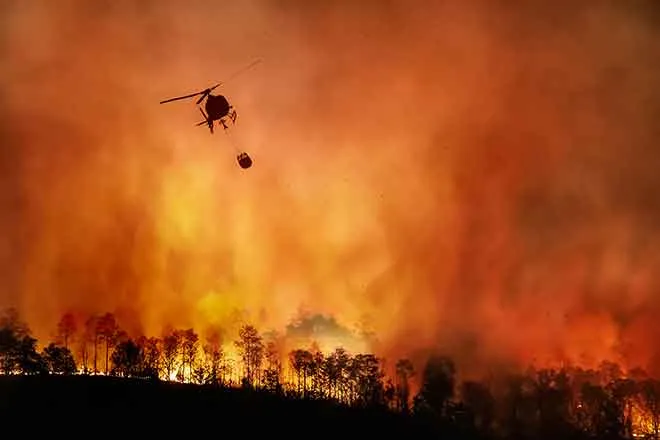
Forest managers are hoping to scale up efforts to rein in catastrophic wildfires by tapping expertise developed over hundreds of years by Colorado's original residents.
Our Eric Galatas has more. environments across the Mountain West evolved with fire and indigenous peoples managed forests through a sophisticated burning regimen to keep the landscapes they depended on healthy.
If voters approve Proposition 137 on this year's ballot, Jennifer Mueller with the nonprofit Ember Alliance says managers will have the resources they need to reduce the size of wildfires.
When we stopped burning and started suppressing fire, we've gotten this buildup of way too much fuel.
We just have too many trees on the landscape.
Not only does that create unhealthy forest conditions, but that's also really unsafe for firefighters.
Proposition 137 would divert some $200 million in existing sales taxes collected when people purchase outdoor gear to help the state respond to drought, wildfires, and other impacts of a changing climate.
Some critics note that the funding would only be available during budget surplus years.
Support for this reporting was provided by the Pew Charitable Trusts.
National park advocates in Montana say the Trump administration is pulling money away from park projects in the West to pay for repairs in Washington, D.C.
Reports now show the federal government has spent more than $60 million in park entrance fees on projects, including the Lincoln Memorial Reflecting Pool.
Meanwhile, officials have canceled or delayed about 1,500 projects nationwide, including dozens in Glacier and Yellowstone.
Ben Super with Montana Conservation Voters says Montanans are frustrated.
It's just stunning for Montanans to watch projects like the reflecting pool and just to watch that entrance fee money disappear and be wasted.
The Center for Western Priority says many delayed glacier projects involve basic maintenance.
Montana Conservation Voters has asked the state's U.S. senators to help restore the funding.
Bats have long suffered from a reputation as spooky, frightening creatures, but wildlife experts say they are critical to maintaining healthy ecosystems throughout New England.
Bats are known to eat their entire body weight in bugs each night, including harmful crop-eating caterpillars or the invasive emerald ash borer, a beetle destroying trees throughout the region.
David Mizajewski with the National Wildlife Federation says bats are keeping insect populations in check, which makes spending time outdoors more enjoyable.
Many bad species are also consuming things like mosquitoes.
So brown bats, for example, can eat 1,000 mosquitoes in an hour.
And that's good because mosquitoes are pests to people.
They're an annoyance and they can spread disease.
Several bat species are considered endangered and millions have died from a fungal disease known as white-nose syndrome.
Misajewski encourages people to grow more native plants like goldenrod and to preserve trees with dead wood and shaggy bark to support bat habitats.
I'm Katherine Carley.
This is Joe Ulery for Public News Service, member and listener supported.
Find our trust indicators at publicnewsservice.org.