Salt Lake’s poor air quality, worst in the U.S. this week

Salt Lake City topped national charts this week under a blanket of the dirtiest air in the country, with more to come.
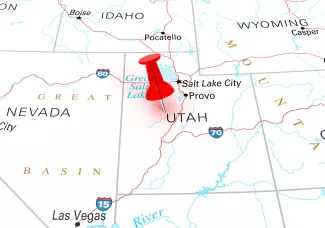
Tuesday’s air quality ranked worst in the U.S., according to the National Weather Service. The Utah Department of Environmental Quality’s three-day forecast projects conditions will remain “unhealthy for sensitive groups” through Sunday.
The Salt Lake Valley’s unique geography, encircled by the Wasatch and Oquirrh mountains, creates an inversion – where cold valley air traps pollution and harmful particles in the valley under a layer of warmer air at higher elevations. Low-pressure weather conditions, including strong storms, are needed to clear an inversion.
An average Utah winter has “about five to six multi-day inversion episodes on average,” according to the Utah DEQ, and 18 days with high levels of harmful inhalable matter, PM2.5. A longer high-pressure weather system creates more extreme conditions, prolonging the inversion.
Salt Lake City recommends taking public transit, driving less and reducing idle times to limit contributing to the smog. Transportation contributes almost 50 percent of wintertime particulate pollution, according to the city’s sustainability website. Solid fuel burning is prohibited during periods of poor air quality.
Health impacts
A Nov. 2020 study from Brigham Young University found air pollution in Utah can decrease median life expectancy by 1.1 to 3.6 years, causing between 2,500 and 8,000 premature deaths each year. Exposure to dirty air increases risk of heart attack, asthma, congestive heart failure, pneumonia, and chronic obstructive pulmonary disease.
The study also found risk of “stroke, cancer, reproductive harm to mothers and children, mental illness, behavioral dysfunction, immune disease, autism” all increase with prolonged exposure to poor air.
Everyone is vulnerable to negative health effects after exposure to high pollution, according to University of Utah Health, but some populations face a higher risk. Older adults, children, pregnant women, people with underlying heart and lung conditions, and those who work outdoors face a higher risk of severe health complications.
During times of high pollution, U. Health recommends staying hydrated, limiting outdoor activity, using protective masks outside (such as N95 or N99), and utilizing indoor air purification.
Economic Impacts
The same BYU study estimates Utah’s air pollution costs $1.9 billion annually, citing “healthcare expenses, damage to crops, and lost earning potential,” as well as indirect costs such as “loss of tourism, decreased growth, and regulatory burdens.”
BYU’s study notes that those loss assessments “are on the low end of national estimates, which range up to $9 billion a year for Utah.”