Study: Dogs make Colorado bear encounters dangerous

Many outdoor enthusiasts assume if they bring dogs into bear country, they will act as an early warning system and deterrent but according to a new report, dogs actually increase the odds of dangerous human-bear conflicts.
In at least 27 cases studied, unleashed dogs created what is known as a boomerang effect, where dogs run off, encounter a bear and bring it back with them. In such incidents, 70% of dog owners were injured or worse.
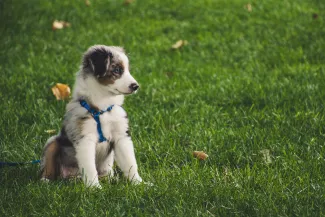
Maybe you shouldn't let your dog run free at the park — or in your neighbor's yard — if carcinogenic chemicals are used on the lawn. Credit: Brett Sayles, Pexels.
Lana Ciarniello, a human-bear conflict expert at the International Union for the Conservation of Nature and the report's co-author, said people who decide to bring their pets into wilderness areas are safer if they keep them on a leash.
"Incidents involving unleashed dogs outnumber those involving leashed dogs by almost six to one. So basically, you want that dog on a leash. What we also found is that when dogs were on a leash, there were no human fatalities," Ciarniello noted.
Bear encounters become more likely in October during hyperphagia, when animals consume 20,000 calories a day or more before hibernation.
Ciarniello stressed people are safest when they travel in large groups. Because encounters can happen in a second, experts advised practicing how to use bear spray in advance and carrying it where you can grab it in an instant.
In more than half of the encounters analyzed, dogs actually instigated and provoked bears. Dogs physically engaged with bears 40% of the time and ran away in 20% of incidents. Ciarniello added 85% of owners who decided to tangle with bears to save their dog suffered injuries. The majority of owners taking on bears were women.
"We found that females were more likely to come to the aid of their dog than males: 63% of women went to the aid of their dog and physically engaged with that bear to save their dog," Ciarniello reported.
Ciarniello emphasized owners should not expect their canine companion to respond in kind.
"By the way, that wasn't the same way when we looked at the dog. The dog, most of the time during an attack, they failed to come to their owner's aid," Ciarniello underscored.