70 percent of children in South Dakota foster care are Native American, state says

For the fourth year in a row, Native American children made up more than 70 percent of children in the South Dakota foster care system at the end of the state’s fiscal year.
That’s six times higher than Indigenous children’s representation in the state’s population. White children, by comparison, make up 70 percent of the state’s population and 23 percent of the state’s foster care population.
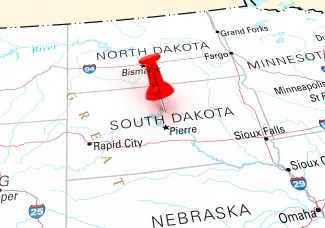
South Dakota officials have known Native American children are overrepresented in the foster care system for nearly half a century. Children who are removed from their homes and placed in foster care are more likely to be diagnosed with mental health disorders, to be involved in the criminal justice system or homeless, and to have their own children removed from their care, studies indicate.
The state Department of Social Services recently released its annual Child Protection Services report, detailing the number of children in foster care, how they’re cared for and where they’re discharged.
Of the state’s 1,709 foster care children at the end of fiscal year 2025, according to the department, 1,201 were Native American.
State works to increase kinship care numbers
About 32 percent of children, regardless of their race, were placed in kinship care with relatives or close family friends, while 86 percent were placed in a “family setting” with a foster family. Kinship care falls within family settings.
Kinship care is up from 30 percent the year before, when the state first began releasing the data point.
The Lost Children
South Dakota Searchlight and the Argus Leader investigated the overrepresentation of Native American children in the state’s foster care system — its causes, effects and potential solutions — in the 2023 series The Lost Children.
The number of registered foster homes in the state for the 2025 fiscal year was 793 — the fewest since 2020. Of those homes, 93 — or nearly 12 percent — were Native American, up from 11 percent the prior year.
When children have to be removed from their homes, prioritizing kinship care (placing them with a relative or close family friend) can improve academic, behavioral and mental health outcomes, and allow the child to stay within their culture and community, according to Child Trends, a research organization focused on child welfare.
Department of Social Services Secretary Matt Althoff told South Dakota Searchlight in an emailed statement that kinship care is “a priority.” The department implemented new licensed kinship foster home standards in June, meant to remove barriers that kept potential kinship families from registering with the state.
“This permits kinship families to become licensed and receive financial support more quickly to meet the children’s needs,” Althoff said.
At-home intervention decreases by 13 percent
At-home intervention, without a child’s removal or the court’s involvement, decreased by 95 children this year.
Just under 500 children received at-home intervention services through the state Child Protection Services, including parental training and home management, according to a Searchlight data request answered by the department.
Interventions can include a “safety plan,” which is a strategy created by a social worker to address safety concerns of at-risk families while a case is being investigated, and a “present danger plan,” which involves families voluntarily letting a child live with another caregiver or having a person accused of maltreatment leave the home.
Another 122 children received other types of at-home interventions, such as a referral to counseling or other assistance, without further Child Protection Services involvement.
More children aging out of foster care system
Of the 984 children who left the child welfare system during the 2025 fiscal year:
- 423 were reunited with their families.
- 254 were adopted (54 percent by a foster parent and 36 percent by a relative).
- 72 were transferred to a tribal program.
- 108 were placed into a formal guardianship agreement.
- 34 were placed with a relative without guardianship or kinship licensure.
- Five were transferred to the Department of Corrections or another agency.
Eighty-five children aged out of the system during fiscal year 2025, up by 20 from fiscal year 2024.
The state reported that 58 percent of children in the child welfare system are reunited with their families within a year — a gradual decrease each year from a 75 percent reunification rate in fiscal year 2020, the oldest data available on the department website.
Althoff said the department tracks reunification data to “ensure that efforts remain focused on child well-being and family stability.” He added that many factors influence reunification timelines.
“These can include the willingness on the part of the birth parents to conform to behavioral changes described by the court, the complexity of family circumstances, availability of services, court scheduling, and the time needed to ensure a safe and stable environment for the child,” Althoff said.
Two children ran away, both cases reported as 15-year-old females who were found, and one child died in state care. The child was a 15-year-old male who died “unrelated to child abuse and neglect,” according to the department. The department did not disclose the cause of death.