Aging coal plants in Colorado and other states turn into a midterm fight over energy costs

This story was originally published by Capital & Main.
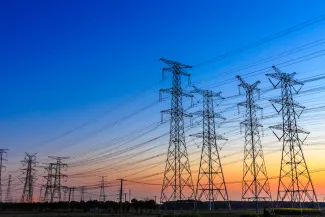
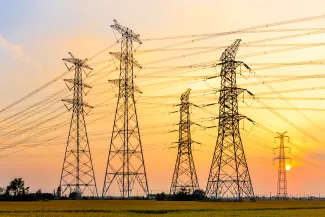
Craig Unit 1, a coal-fired power plant distinguished by tall exhaust smokestacks that rise above a rolling landscape in northwestern Colorado, was scheduled to close for good at the end of 2025 amid pressure from environmental advocates, public interest groups and state officials.
Colorado has committed to closing its coal-fueled electric plants by 2031, a plan the state set out in early 2025.
But on December 30, Energy Secretary Chris Wright ordered it to keep burning coal. The unit had suffered a mechanical failure 11 days earlier and was not even running. Wright has since renewed the order three times — most recently on September 25, extending the plant’s life through Christmas Day, a full year past its retirement date.
© zhaojiankang - iStock-802436842
Its operator, Tri-State Generation and Transmission, is a nonprofit rural cooperative, and in January it joined co-owner Platte River Power Authority, a public power agency, in arguing that Wright’s orders violate the Constitution and federal law — a fight that has since reached a federal appeals court in Washington, D.C. A co-op and a municipal utility suing the executive branch for the right to close their own coal plant was not what Congress had in mind in 1935, when it wrote the emergency provision that the Energy Department is now leaning on.
Data centers and gas pump prices have dominated the energy story in this midterm cycle — polls show broad opposition to the artificial intelligence build-out over utility bills and grid strain. But with weeks until Election Day, a second tier of climate and energy battles is running through campaigns in Colorado, Michigan, Indiana and beyond: forced coal plant extensions, canceled plans for offshore wind farms, repealed clean energy tax credits, drought, state preemption of local climate rules and a drumbeat of federal rollbacks. None of these issues poll as high as affordability. But all of them, say the people trying to turn them into votes, are essential to the affordability debate.
The plant nobody asked to keep
Starting in May 2025, the Energy Department invoked Section 202(c) of the Federal Power Act to order Consumers Energy’s J.H. Campbell plant in West Olive, Michigan, to stay online past its planned retirement, then renewed the order five more times.
Similar mandates followed for Craig and for the Schahfer and Culley plants in Indiana, each justified by grid reliability. On September 11, a unanimous D.C. Circuit panel, in an opinion written by Judge Cornelia Pillard, ruled that the first two Campbell orders were illegal — no genuine emergency existed to justify overriding Michigan’s regulators.

© iStock
Ari Peskoe, director of the Electricity Law Initiative at Harvard Law School, said the provision had been dormant for decades after some early wartime use. “Over the past 20 to 30 years it’s really been used almost exclusively for weather-related events,” he said, “and it only lasts a few days.”
Nothing like Wright’s coal orders had been tried. “In every prior instance there’s been some entity, whether a utility, a grid operator or a state regulator, that’s asked for these orders. Here it’s (the Department of Energy) acting on its own,” he said. “No one had asked for it. And to the contrary, some had said, ’Please don’t do this.’”
The administration has until roughly the end of October to decide whether to appeal. If it lets the ruling stand, Peskoe said, “I think the other orders for the other plants will fall pretty quickly.”
A September analysis of what the Michigan appeals ruling means for the Craig plant explains how the decision could affect Colorado's case.
Who pays
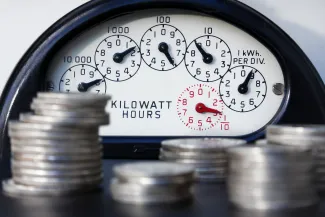
Utility giant Consumers Energy put the net cost of running Campbell from May 23, 2025, through June 30 of this year at $295 million, after wholesale market revenue. Michigan Attorney General Dana Nessel’s office has cited that figure, against nearly $600 million in savings the retirement was supposed to deliver. In August, federal regulators let Consumers Energy spread the costs across the grid’s north and central regions — from North Dakota to Indiana. That means Wisconsin ratepayers, whose share one estimate puts at $117 million, could wind up paying for a Michigan coal plant. The recent appeals court decision overturning the Energy Department’s order could spare taxpayers those costs.
(It) will result in unnecessary costs passed onto Coloradans in higher electric bills and more pollution in the region.
– Phil Weiser, Democratic candidate for Colorado governor, on the order to keep open the Craig coal-fired plant
Brian Wheeler, spokesperson for Consumers Energy, said the utility would work to ensure “everyone who benefits from power from the Campbell plant across the Midwest pays their fair share.” Nessel, who has challenged all six orders, said, “This administration does not get to invent fake emergencies to bypass the rule of law.”
Three states, three fights
The coal plants have become a factor in the midterm elections for a key seat in Michigan. The Campbell plant sits in the 4th Congressional District, where Representative Bill Huizenga, a Republican, is defending a traditionally red seat against Democratic state Senator Sean McCann of Kalamazoo.
Huizenga cheered the first order; constituents answered with marches on his office under signs reading, “My asthma and my wallet can’t afford coal.”
“If you’re seeing your electric bills go up, that has happened because of this,” McCann told a crowd in Saugatuck in August. “This should be shut down.”
Huizenga blamed Governor Gretchen Whitmer “and her Green New Deal cronies in the state Legislature like Sean McCann,” arguing that “forcing the premature closure of cheap, reliable power plants is punishing hardworking Michiganders who just want to keep their lights on without going broke.”
The fight runs up the ballot. Nessel, who recently joined McCann at a roundtable on the Campbell plant, is term-limited, and the race to succeed her as attorney general has become a referendum on whether Michigan should keep suing. Democrat Eli Savit, the Washtenaw County prosecutor, pledged to continue the Campbell litigation, while Republican Doug Lloyd, the Eaton County prosecutor, has declined to take a position on the plant and accused Nessel of politicizing the office.
Climate Power senior adviser Jesse Lee said the issue had ripened with time and is starting to galvanize voters.
“The longer these decisions have sat out in the sun, the worse they stank,” he said. “It might have a ring of common sense — oh, we need more energy — but people caught on to that: ’Wait, this is actually costing me more money. There’s one guy who supports it and one guy who’s against it.’”
A poll commissioned by the Environmental Defense Fund in West Michigan found 71% of respondents said their utility bills had risen too much, and 51% favored closing the Campbell plant, as opposed to 32% who want it kept open. But the coal industry insists otherwise, with a September National Mining Association poll in which 58% of Americans supported government efforts to keep coal plants open.
© iStock - zhaojiankang
Colorado’s version runs through the 3rd Congressional District, where Representative Jeff Hurd, a Republican and former co-op lawyer, asked the Energy Department to intervene and keep Xcel’s Comanche plant in Pueblo running. Hurd praised the Craig order as a correction to a state energy policy “driven by ideology instead of reality.” His Democratic challenger, Dwayne Romero of Aspen, is running on affordability, accusing Hurd of “rubberstamping reckless policies that raise our costs.”
Statewide, Senator Michael Bennet called the Energy Department order part of a federal “revenge tour” against Colorado, and Attorney General Phil Weiser, the Democratic nominee for governor, has challenged every coal-fired plant renewal, warning it “will result in unnecessary costs passed onto Coloradans in higher electric bills and more pollution in the region.” But in Craig, a small coal town near the Wyoming border, Mayor Chris Nichols welcomed the short-term jobs resulting from the order. The cost so far is unknown: Tri-State spokesman Mark Stutz said generator-specific data is confidential.
Indiana is the outlier — the orders have a cheerleader in the governor’s office and no competitive race to carry them, since both plants sit in safe Republican House seats. Governor Mike Braun praised the latest renewal, saying it would “help protect Hoosiers from higher energy costs and keep the power on.”
But the utilities disagree, with CenterPoint asking the Energy Department in February to let the Culley order lapse, calling the power plant “inefficient and increasingly unreliable.” NIPSCO, one of Indiana’s largest power companies, said both Schahfer units covered by the orders remained offline for maintenance, and asked federal regulators in August to approve about $38 million in cost recovery for the first quarter — a bill for a plant that was not running. On top of that, the utility has outraged customers, who experienced a more than 25% jump in their bills last year. The pushback has come from statehouse Democrats like Representative Carey Hamilton, who said Hoosiers were “being asked to foot the bill for a decision they had no say in.”
Galvanizing, or not
As to other climate and energy issues, their impact on the elections depend on whether a voter can feel the issue, such as dwindling water supplies. Federal cuts to Arizona’s Colorado River supply in August pushed water to the top of the state’s campaign messaging — Governor Katie Hobbs is running an ad declaring, “Arizona’s water is for Arizonans,” while Republicans accuse her of failing to negotiate a fair water rights deal.
Along with Colorado farmers getting no water after a dismal snowpack and Corpus Christi potentially owing Texas $235 million for a desalination plant that was never built, the crisis highlights how climate change is being experienced by many Americans through higher water bills, exacerbating the affordability challenge.
The electric vehicle tax credit repeal has galvanized donors more than voters. The One Big Beautiful Bill’s elimination of the credit cast a pall over 2026 sales, and its wind and solar phaseout spawned a super PAC, the Invest in Tomorrow Coalition, that bills its work as a “Revenge Tour” and has already claimed five Republican primary scalps — including Representative Chip Roy, who lost a runoff election in May for Texas attorney general. Four House Republicans, among them Representative Mike Lawler of New York, have introduced a bill to restore the EV credits and House Democrats have made reinstating such credits a major part of their governing agenda.
Offshore wind is a courtroom story more than a voting booth one. Nine states have sued over federal deals paying developers more than $1.5 billion to abandon leases on the condition they reinvest in oil, gas or geothermal instead. The League of Conservation Voters’ David Shadburn put the estimated taxpayer tab for blocking cheaper power at nearly $4 billion.
Florida’s HB 1217, which stripped cities of climate authority and outraged Democratic mayors, has been duplicated across the country but seems to have little visible traction with voters. And on September 14 the EPA finalized its repeal of most Biden-era power plant rules, while the House passed the Ratepayer Protection Act, which the League of Conservation Voters dismissed as window dressing. Neither one seems to have galvanized voters, though some Democratic candidates have mentioned them in their campaigns.
Whether voters can parse any of it is another matter.
“To some extent it’s all a bit of a blur for voters,” said Lee, the Climate Power adviser. “But it’s all kind of accumulated into one cloud of corruption. They just understand that they’re paying more every which way they look.”
As for what lands last, he pointed north. It is getting chilly, and people are starting to read about what it will cost to heat their homes — a problem for Lawler in New York and Senator Susan Collins in Maine, and for anyone else on the ballot above the Mason-Dixon line.
“That’s the kind of story voters are going to be reading about right before they head into the voting booth,” noted Lee.
Copyright 2026 Capital & Main