Colorado students want stronger state regulations of AI, social media

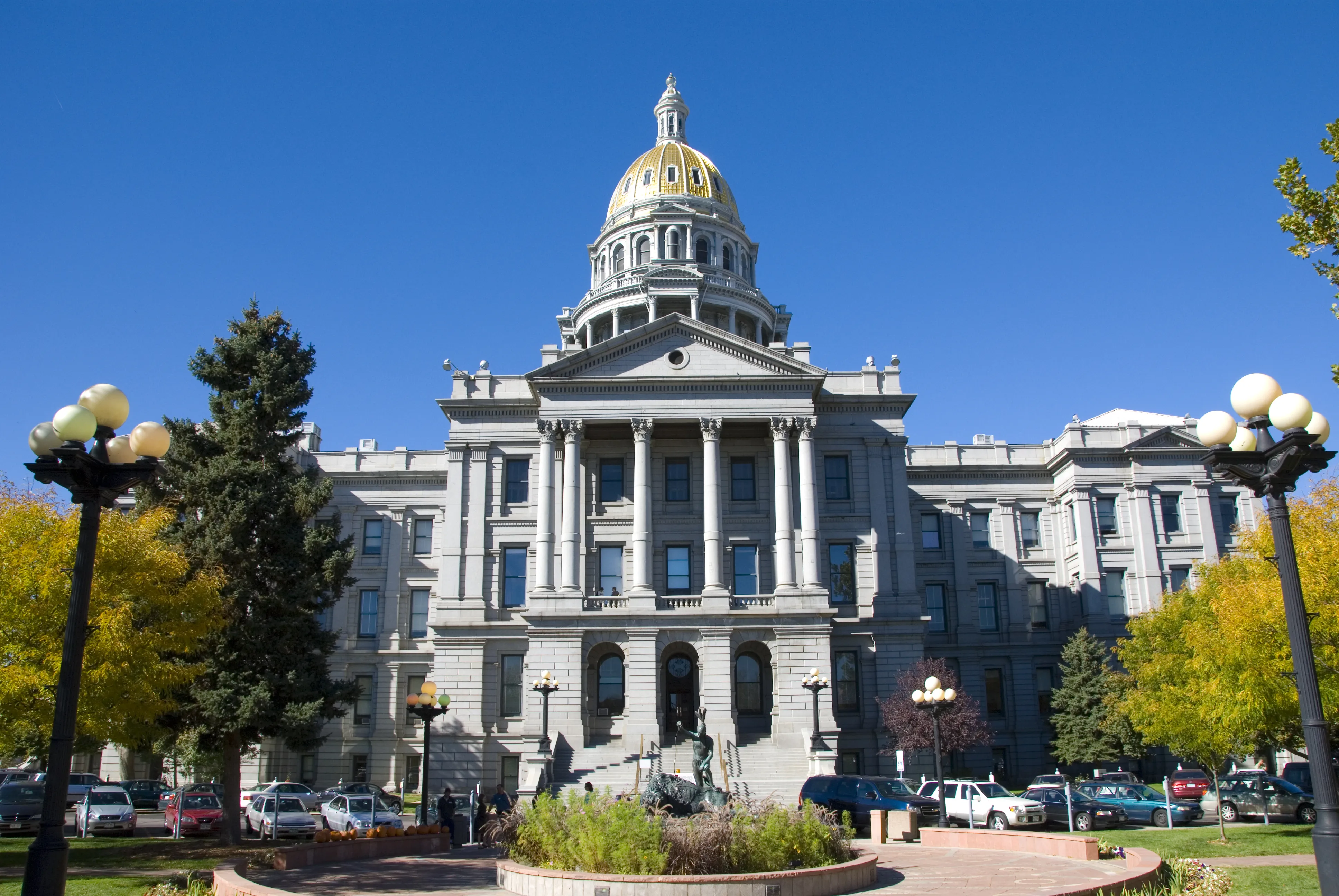
Teens on the Colorado Youth Advisory Council pitched policy ideas to state legislators at the Colorado Capitol Friday, with a large focus on new regulations for social media and artificial intelligence.
Committees within the council focus on different problems the teenagers want to find policy solutions to. Students on this year’s council focused on issues around technology, mental health, healthcare access and environment. The group of teens on the council come from all over the state and range in age from 14 to 19. Each member serves a two-year term on the council.
© flickrcc - Alan Levine
The council, which pitches its ideas to the Legislature’s Colorado Youth Advisory Council Committee, used to have the power to draft bills that the Legislature would consider during the legislative session. Legislators nearly cut the program during budget negotiations in 2025, but kept it in place without bill-drafting authority. The Legislature will convene again in January.
Anabelle Pettiner, a 16-year-old student from the rural southeastern Baca County, said council members did not feel that social media companies do enough to protect youth mental health. She told the committee about a friend who struggled with anxiety, depression and eating disorders in middle school, and that friend’s social media feeds “became flooded with beauty standards and weight loss content.” Some content teens see online can romanticize negative experiences, she said, and introduce them to concepts they otherwise would not have seen if they were not on social media.
A policy proposal Pettiner pitched would require social media companies to verify parental permission before letting anyone under the age of 13 create an account.
“This verification should rely on evidence-based methods and not self-reported age, or simple verification prompts, such as multiplication, that children can very easily bypass,” Pettiner said. “If an account is found to belong to a child under 13 without verified permission, the platform should be required to remove that account.”

© Khanchit Khirisutchalual - iStock-1515913422
While the federal Children’s Online Privacy Protection Act already limits how social media companies can collect personal data from users under 13 years old, Pettiner said those policies are “rarely enforced” and many kids make social media accounts by simply entering a false birth year into age verification forms. Companies should face civil penalties if they refuse to comply, she said.
“Repeated or willful violations should result in increased penalties, ensuring that protecting children is not simply a recommendation, but a responsibility for these companies,” Pettiner said.
State Senator Katie Wallace, a Longmont Democrat who chairs the Youth Advisory Council Committee, said while she appreciates the premise, she’s concerned about data protection if social media companies are tasked with verifying age or identity by scanning someone’s face or their ID.
“That’s a whole new layer of data that we’re giving to social media companies that already own basically every piece of data about us, right?” Wallace said.
Personalized algorithms
Brandon Martinez, an 18-year-old recent graduate from Pueblo County, said Colorado should require that social media companies give users under 18 the option to opt out of recommendation algorithms. He noted that New York passed a law in 2024 that restricts social media platforms from exposing people under 18 to algorithm-generated feeds unless they have parental consent.
“Right now, algorithms automatically decide what content young people see based on what’s keeping them scrolled, engaged and on their app,” Martinez said. “Instead, social media platforms should be required to ask youth if they want this type of personalized algorithm.”
Giving Colorado youth more control over what they see on their feeds would reduce unhealthy social media use while still allowing them to enjoy the platforms, Martinez said.
Representative Brandi Bradley, a Littleton Republican, expressed interest in pursuing legislation around age verification and parental consent for social media use. She said she would want to restrict access to pornographic content in a similar manner, too.
Right now, algorithms automatically decide what content young people see based on what’s keeping them scrolled, engaged and on their app ... Instead, social media platforms should be required to ask youth if they want this type of personalized algorithm.
– Brandon Martinez, 18
Om Vegesna, a 17-year-old from Boulder County, recommended that Colorado establish a task force to build guidance on how educators can responsibly implement the use of artificial intelligence in schools. The task force would include educators, school administrators, tech companies and youth, and its members would build a framework to recommend to the Legislature.

© iStock.com - leolintang
Because Colorado offers no guidance on how to talk about or use AI in schools, students use it irresponsibly, Vegesna said, adding that nobody has set clear expectations around AI use in classrooms. He had a friend turn in an essay written entirely by ChatGPT. The friend got an A on the paper, but when his teacher asked him to explain his thesis to his class, he couldn’t do it, Vegesna said.
“He had realized he knew nothing about the argument, and he knew he was caught,” Vegesna said of his friend. “He wasn’t trying to cheat. He just didn’t know there was a better way to use the tool, and no one had ever taught him one.”
Vegesna said students should be taught to use AI thoughtfully, since the “workforce they’re walking into is being reshaped by this technology faster than almost anything we’ve seen before.”
California has a task force looking at AI in education, Vegesna said, and other states have considered the issue as well.
With tight budgetary conditions at the state, Vegesna said the tech companies involved could fund the task force. Wallace cautioned that companies’ motivations to drive their own profits could influence their work on a task force, especially if they are the ones funding it.
Connecting kids
Another teenager on the council proposed the state develop a media literacy curriculum for high school students to ensure more responsible use of social media and the internet. The curriculum would be available for any district to use, but not mandated.
“Now that social media has ingrained itself so deeply into our daily lives, measures like cell phone bans and parental controls can only go so far,” Josie Nelson, a Jefferson County student on the council, said. “Teens should have agency while also being able to protect themselves on social media. Schools can play a role in teaching students how to evaluate what they see online and protect themselves from harm.”
Other teens proposed policies to establish climate and mental health curriculum in Colorado schools and to increase access to mental health and specialized telehealth resources for teens across the state. Members also want the state to make the Colorado Youth Advisory Council a permanent part of the state’s legislative structure.
Pettiner told Newsline she is looking forward to more conversations about the council’s policy proposals and seeing if they make it to the Capitol. Hearing fellow Coloradans who live six hours away from her have similar thoughts and ideas on policies is a unique opportunity the council creates, she said.
“Being from rural Colorado, I don’t meet a lot of kids that are like myself that are really interested in … politics,” Pettiner said. “Having an opportunity to really connect with all of these kids from all across the state is really amazing.”