Daily Audio Newscast Afternoon Update - February 20, 2026

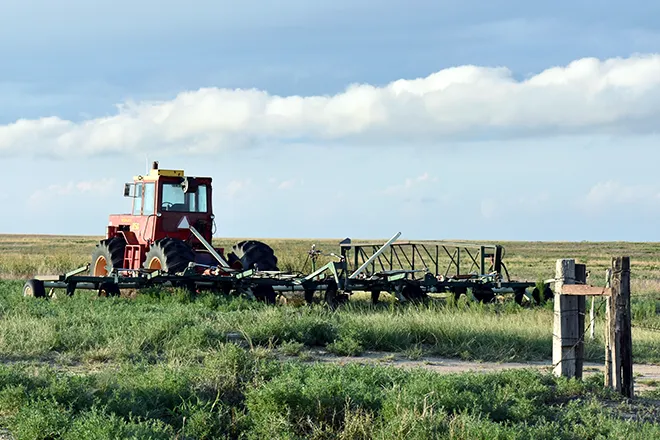
© INDU BACHKHETI - iStock-1336427297
News from around the nation.
Supreme Court strikes down most of Trump's tariffs in a major blow to the president; AL nursing apprenticeships help close gaps in profession; The future of construction: University of Washington's living structures; Shining the spotlight on caregivers in Michigan and the nation.
Transcript
The Public News Service Friday afternoon update, I'm Mike Clifford.
The Supreme Court delivered a major blow to President Donald Trump, ruling Friday, he exceeded his authority when imposing sweeping tariffs, using a law reserved for a national emergency.
The justices divided 63, held that Trump's aggressive approach to tariffs on products entering the US from across the world was not permitted under a 1977 law called the International Emergency Economic Powers Act.
According to NBC News, the ruling invalidates many, but not all of Trump's tariffs.
Meantime, across the country, the demand for nurses is high.
With more than 140,000 needed nationwide in the next decade, our Shantia Hudson reports in Alabama, more than 7,000 nursing positions remain unfilled.
At Coastal Alabama Community College, a hands-on apprenticeship model is helping meet that need by blending classroom instruction with paid one-on-one clinical training inside local hospitals.
Dean of Nursing Tiffany Scarborough says the program launched in 2022, pairing students with experienced nurses who mentor them while they complete their degree requirements.
She says it didn't take long to see how powerful the new pathway could be.
I had one of the students, she stayed afterwards and found me and gave me the biggest bear hug you could possibly get somebody and said, I would not have been able to do this program without the apprenticeship.
I have four kids.
I'm a single mother.
Shantia Hudson reporting.
And researchers at the University of Washington are using engineered living materials to rethink how buildings are made and how they perform in a changing climate.
Scientists are embedding organisms like fungus and bacteria into building materials so they'll provide structure while also doing things like capturing carbon or filtering wastewater.
Researcher Alshakeem Nelson with the University of Washington says construction is responsible for about 40 percent of global greenhouse gas emissions. and the goal is to create renewable replacements.
We potentially could have a building that would be producing its own anti-corrosive coatings or could actually capture CO2 instead of emit CO2, could potentially self-heal, all due to the actions of the microorganisms that reside within these materials.
I'm Isobel Charle.
And today is National Caregivers Day, a time to honor the millions of people who provide care to the elderly or those with chronic health conditions, often behind the scenes and without recognition.
Claire Shepparan with the nonprofit Compassionate Choices says today is about honoring just how much these caregivers do.
We see that a lot of these people go underappreciated or underrecognized because a lot of this work is invisible to people who are not in that kind of situation.
And we see that especially with those informal or family caregivers.
According to AARP Michigan, about 1.6 million adults in the state are family caregivers or roughly 20 percent of the state's population.
This is Public News Service.
A new Ohio study shows that youth mental health is influenced by family, peers, trauma, and interactions with the juvenile justice system.
The report from the Health Policy Institute of Ohio said that appropriate juvenile justice policies can prevent delinquent behavior and improve community safety.
The study's lead author, Jacob Santiago, says data provide evidence that juvenile detention can harm youth mental health.
When a child is at risk of harming themselves or someone else, they're experiencing a crisis, they're not able to take care of themselves.
Oftentimes families do call 911 and that starts their kid down a certain path towards being involved in the justice system.
The report calls for Ohio elected officials and other policy makers to improve crisis intervention, strengthen diversion from justice involvement, and increase access to mental health treatment in detention facilities.
I'm Mark Richardson.
Next, a coalition of conservation groups have filed a lawsuit against the Trump administration to stop the removal of historical and science-based materials from America's national parks.
That includes signage on the impacts of climate change and Wabanaki heritage in Maine's Acadia National Park and the controversial removal of a slavery exhibit in Philadelphia.
Kristen Brangel with the National Parks Conservation Association says visitors are curious about local history and the changing environment, not just cute stories.
No one is clamoring for this and no one's asking for it.
The administration is headed in the exact wrong direction.
An executive order signed by President Donald Trump last year requires park materials considered disparaging to American greatness be removed.
Bringle says that goes against long-standing National Park Service laws requiring educational signs or brochures be peer-reviewed and meet the highest scientific standards.
I'm Catherine Carley.
Finally a new project that hopes studying the benefits of tree and shrub systems used to protect farms from extreme weather otherwise known as windbreaks will revive the practice among Illinois farmers today.
The Corn Belt Windbreak Project will look at trees planted through the Conservation Reserve Program with the oldest dating back to the 1980s.
Illinois farmer Dallas Glazek is compiling profitability data particularly for crops along end rows where farmers typically lose money.
He notes farmers are now removing windbreaks to maximize space on their farms.
"It's one that we're seeing a forgotten place about.
With the use of intensive agriculture on these landscapes they think, 'Oh I can squeeze out another seven rows if I get rid of this tree line,' and they're losing money by doing so."
Glazek says windbreaks serve as important shields especially during spring and winter months when soil is bare.
He notes they can reduce soil erosion by 95 percent, increase key wildlife habitat populations, and protect neighboring farmland.
I'm Judith Ruiz Branch reporting.
This is Mike Clifford for Public News Service.
Member and listener supported.
Find out trust indicators at publicnewsservice.org.