Daily Audio Newscast - August 3, 2026

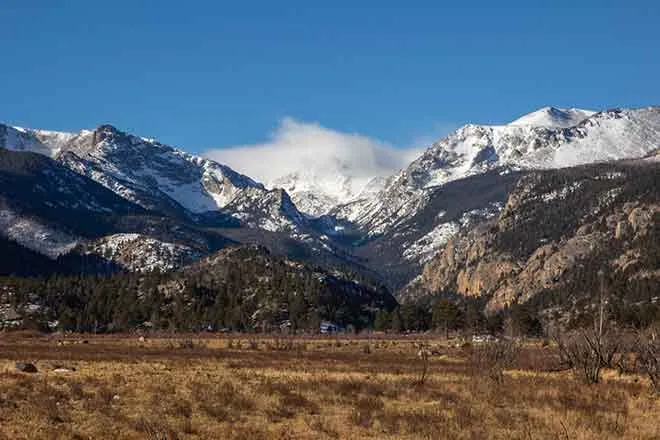
© AlexLMX - iStock-823000260
Six minutes of news from around the nation.
Wildfires in Spokane push Washington to the brink; Nevada leaders slam SAVE Act ahead of Trump visit; Indiana Black-owned business flourish amid financing hurdles; Former Montana wildlife commissioner: Public lands transcend politics.
TRANSCRIPT
The Public News Service Daily Newscast for August the 3rd, 2026.
I'm Mike Clifford.
We head first to Washington State, where wildfires forced the evacuations of about 60,000 people in the Spokane area while destroying at least 600 homes and businesses.
The AP notes the fires in and around Spokane, the state's second largest city, burned about 8.2 square miles.
But there are among dozens across western U.S. that stretched the ability of federal, state and local agencies to fight them.
A total of about 390 square miles have burned across the state and some of the fires, including those in the Spokane area, have not been contained.
Meantime, groups that fight for secure and accessible elections are speaking out ahead of President Donald Trump's visit to Las Vegas this week.
Trump has been pushing Congress to pass the SAVE Act, which would change the way Americans register to vote.
People would have to register in person and bring proof of citizenship, like a birth certificate or passport.
Brian Lemmick is executive director of Defend the Vote Action Fund, the advocacy arm of the left-leaning political action committee Defend the Vote.
He says the SAVE Act is a ploy to keep large numbers of people away from the polls.
Donald Trump's goal here is to prevent people from voting so that he can hold on to power and so Republicans can hold on to power.
The bill is really just part of a larger plan to take over our elections, clumped in with the vote by mail and voting gerrymandering.
Mr. Trump says the changes are necessary to prevent non-citizens from voting.
I'm Suzanne Potter.
In addition, women who have changed their name after marriage would have to get an affidavit to register to vote or get a passport.
That cost about $165.
And August is Black Business Month.
Indiana has around 61,000 black-owned businesses statewide, with Indianapolis seeing a 59% growth since 2022.
This increase has led to the creation of a platform for consumers to find products and services offered by black-owned companies.
Indy Black Businesses serves as a resource center for that purpose.
Founder Uthman Olamida says these business owners are not alone in remaining operable in an unpredictable commerce environment.
Indiana Governor Mike Braun's announcement last month to replace race and gender-based preferences for state contracts with a merit-based system was met with immediate backlash.
Braun labeled the original policy as, quote, divisive, but some viewed his actions as another barrier to Black businesses applying for and receiving lucrative opportunities often awarded to White-owned companies.
I'm Terry Dee reporting.
A 2024 State of Black Business report finds these businesses are often excluded from access to financing opportunities, including venture capital.
This is Public News Service.
And a new training is helping to prepare police, paramedics, and other first responders to better support older adults in rural Oregon during disasters.
Research shows older adults are disproportionately impacted by disasters, especially outside city centers.
Julia Brown is with Oregon nonprofit Age Plus, which helped organize the free trainings.
She says most emergency response systems rely on individuals to do things like pack a go bag and plan an evacuation route.
But not everyone is able to do so.
That really doesn't account for the number of older adults that are living independently, may not have easy access to transportation, may be living with chronic illness or disability.
Brown adds there are much more older adults who face these specific challenges in rural communities.
So far, the training has been piloted in five counties in North Central and Eastern Oregon.
And Brown says it has been well received.
I'm Isobel Charle.
And yesterday marked the beginning of National Health Center Week, highlighting the dedication of people working in over 1,500 community health centers across America, including hundreds of service delivery sites in the state of Tennessee.
Community health centers treat anybody, regardless of their ability to pay and their insurance status, according to Elisa LaPolt with the Tennessee Primary Care Association.
She notes that although there have been many closures in rural systems, these centers continue to play a key role in providing basic services.
This is the cancer screenings.
This is health checkups.
This is minor treatment for cuts, infections and all the way up to diabetes care.
She adds that some locations provide medical and dental care and comprehensive health care.
The Tennessee Health Center Week 2026 theme, Planting the Seeds for Better Health, highlights the long-term return on investing in community health centers.
Danielle Smith reporting.
Finally, as election season heats up in Montana, a former wildlife commissioner says one issue deserves bipartisan attention, public lands.
The possibility of selling off public lands has become a divisive political issue in recent years.
Former Montana Fish and Wildlife Commissioner Dan Vermillion says it's an issue that unites people in the state, regardless of their political affiliation.
Public lands are sort of like a fundamental piece of Montana.
It's a fundamental piece of the Montana culture.
And it's a foundational piece of our economy, whether you're a rancher or like me, somebody who's in the tourism business.
Conservationists point to the Trump administration's rescission of the public lands rule this spring, which means conservation is no longer on an equal level with other development uses on public lands.
I'm Laura Hatch reporting.
This is Mike Clifford, and thank you for starting a week with Public News Service.
Member and listener supported.
Find our trust indicators at publicnewsservice.org.