Daily Audio Newscast - June 29, 2026

© AlexLMX - iStock-823000260
Six minutes of news from around the nation.
A heat dome will send extreme heat to as many as 18 states this week; 3 firefighters are killed in wildfires on the Colorado-Utah border; Intense scrutiny of poll workers could impact numbers in Mississippi; Rideshare companies use AI to tap Colorado riders and drivers; North Carolinians drop Obamacare in record numbers as the cost soars.
TRANSCRIPT
The Public News Service Daily Newscast, July 29, 2026.
I'm Mike Clifford.
A heat dome will bring dangerous temperatures to the central and eastern portions of the U.S. this week.
Mark Chouinard, a meteorologist at the Weather Prediction Center, said ahead of the nation's 250th birthday, Washington, D.C. will almost certainly exceed 100 degrees on at least one or two days.
Philadelphia and New York City also currently forecast to go over 100.
From the AP, three firefighters were killed and two sustained burn injuries when they were overcome by flames from fast-moving wildfires in hot, windy conditions near the Colorado-Utah border.
Meantime, the Mississippi Secretary of State's office is accepting applications for poll workers.
But a report from the University of Maryland and their election resilience lab shows high stress and low pay contribute to a high turnover rate among workers.
Limited resources and expanding workloads are also factors behind the highest turnover rate among election workers in more than 25 years.
Allison McLaughlin, director of the lab, says workers have faced intense scrutiny since the 2020 election.
The challenge for staff to do more with less has only grown and grown.
It's the same reason people burn out in other fields.
They're called upon to do more.
They don't have the resources to do it well.
And that's a very frustrating thing for people in the public sector.
Researchers noted that despite the stress and lack of resources, officials continue to operate free, fair, and accurate elections.
I'm Frida Ross reporting.
And ride share companies Uber and Lyft are using algorithms that charge customers significantly different prices for the exact same ride.
That's according to a new investigation by Consumer Reports.
Volunteers requested numerous rides, all from the same location to the same destination and at the exact same time, but fares differed by as much as 50%.
Rachel Dempsey with the Colorado nonprofit Torch Justice says one problem is that companies are not required to disclose what factors determine how much riders have to pay.
And they could potentially be using things like how much phone battery you have left, how far you are from home.
Things like that, I think, make consumers really vulnerable to being charged excess prices for the services they need.
Not unlike surge pricing for concert tickets, hotel rooms, and even groceries, the new report suggests that Uber and Lyft algorithms are programmed to calculate the maximum amount they can get consumers to pay.
Uber and Lyft have questioned the report's methodology and conclusions and claim any price variations are based on real-time marketplace conditions.
The companies also say they do not personalize base fares for individuals or engage in behavioral or surveillance pricing.
I'm Eric Galatas.
Derek Kravitz with Consumer Reports says the driver's share of the total fare paid by riders has dropped to as low as 45 percent.
This is Public News Service.
Our news partners at KFF Health News find more Americans are canceling their health insurance or opting for less coverage as health insurance tax subsidies and an insurance cost dramatically rise.
Rebecca Tobiasin and her husband, Ross, run an auto repair shop in Sugar Grove, North Carolina.
For years after the Affordable Care Act was passed, the Tobiasons health insurance cost $130 a month by using the marketplace.
I was able to get my husband to start going to the doctors once a year, which was really good because he hadn't before that from like 18 to 30 something.
He hadn't gone to the doctors.
But this year, their monthly payment ballooned to more than $550 a month as congressional Republicans allowed ACA tax credits to lapse late last year.
That prompted the Tobiasons and thousands of other North Carolinians to go uninsured or pay more for worse coverage.
Sign-ups on the marketplace in the Tar Heel State declined by 22 percent compared to the year before, more than any other state.
This story was produced with original reporting from Andrew Jones for KFF Health News.
I'm Simone Perez.
And as Americans prepare to celebrate its 250th birthday, six military veterans are making their way across the country via bicycle.
They're expected to reach the halfway point of their journey in northeastern Nebraska on the 4th of July.
They're taking on this 3,700-mile bike ride as part of the Warrior Expeditions Program, which supports veterans after they leave the military.
Ryan Chow, president of Rails to Trails Conservancy, shares more about how the program works.
Warrior Expeditions is a wonderful organization, and they connect veterans with epic outdoor adventures as a way to both kind of cope and reconcile with post-traumatic stress disorder and really kind of explore their own physical and mental health and wellness.
The veterans' bike ride kicked off in the nation's capital in May, and they're expected to arrive in Battle Creek on July 3rd.
Crystal Blair reporting.
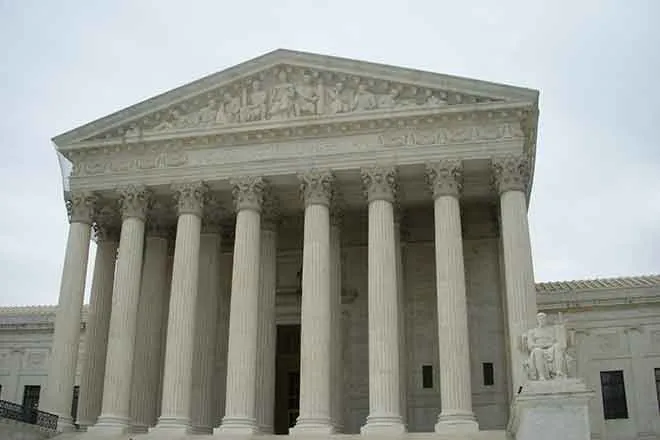
Finally, a Montana oncologist and state house representative condemns the Supreme Court decision that would block cancer patients from suing Roundup's maker.
The court overturned a lawsuit by a Missouri man who claimed the company was liable for failing to warn him about the possible link between glyphosate, an active ingredient in the weed killer, and cancer.
Dr. Melody Cunningham has been treating pediatric cancer in hospice patients for more than 30 years.
She calls the court's ruling a public health travesty.
I really, truly believe that this is going to embolden other corporations to ignore safety signals, not just cancer signals, but other safety signals about patients and people's health.
In the Supreme Court's 72 ruling, the majority sided with Monsanto, now owned by Bayer, the herbicides manufacturer.
I'm Laura Hatch reporting.
This is Mike Clifford.
Thank you for starting a week with Public News Service.
Member and listener supported.
Find your trust indicators at publicnewsservice.org.