Daily Audio Newscast - November 17, 2026

© AlexLMX - iStock-823000260
Six minutes of news from around the nation.
Chicago-based United Airlines is not the latest victim of a technical glitch. Tennessee's administrative SNAP costs are set to rise under new federal rules, and a new study finds that child welfare-led Ohio program generates millions in social value.
TRANSCRIPT
The Public News Service Daily Newscast, November the 17th, 2026.
I'm Mike Clifford.
The latest major technical glitch impacted United Airlines.
The AP notes United said Monday it had resolved the technology issue that delayed departing flights just days after that malfunction by the Federal Aviation Administration's network prompted a nationwide ground stop.
Chicago-based United said there was no indication that this was a cybersecurity-related issue.
And the arrival of the USS Theodore Roosevelt brings the total number of U.S. aircraft carriers in the Middle East to three.
That's an unusually high number.
The arrival of the carrier confirmed Monday the ship carries thousands of additional troops to the Middle East, and President Trump keeps his options open eight months into the Iran war.
Meantime, Tennessee has expected significant new costs for administering SNAP under changes from the federal One Big Beautiful Bill Act.
The law shifts more program expenses to states and will require Tennessee to pay additional costs starting in 2027.
And a grace that's due with the Tennessee Justice Center says funding for SNAP is divided between administrative and benefit costs.
H.R. 1 leaves the state responsible for paying more of both.
While benefits were previously covered entirely by the federal government, states will have to pay additional costs based on SNAP payment error rates.
Tennessee's payment error rate is 9.44 percent for fiscal year 2025, and that means that the state would pay 10 percent of the SNAP benefit amount, which is somewhere around, depending on enrollment, because it fluctuates consistently, $170 million.
The state will start paying the additional costs on October 1st of next year.
Danielle Smith reporting.
An Ohio program that helps families struggling with parental substance abuse disorder generated between $157 and $349 million in social value between 2017 and 2025, according to new research.
The Ohio Sobriety Treatment and Reducing Trauma, or START, program focuses on peer mentorship, rapid referrals to addiction treatment programs, and wraparound support services.
START program director Fawn Giddell says the long-term goal is to help families navigate traumatic childhood experiences.
There's also improvement in parent-child interaction that leads to better outcomes.
And so all of these things together really are saving society a great deal of money and helping these families to be healthy.
This is Nadia Ramlagan for Ohio News Connection.
One big goal is keeping families together.
Stark children are 19% more likely than similar non-stark kids to avoid being placed in foster care.
Substance use disorder is a disease that affects the entire family.
The program screens all family members for trauma and strives to stop generational patterns of substance abuse.
This is Public News Service.
Public school funding expected to be a top priority for Wisconsin's incoming Democratic trifecta.
That is, voter support for referendums appears to be declining.
That's according to a new report from the Wisconsin Policy Forum that shows Wisconsin voters approved 90 of 155 school referenda this year, the lowest passage rate since 2010.
Mark Sommerhauser with the forum says even though voters are still approving the majority of school funding referendums, growing rejections could add urgency to a school funding debate expected ahead of the state's next budget.
The approval rate for these referenda here in Wisconsin peaked around 2018 and seems to have been declining since that time.
More than 80 percent of this year's school referenda sought money for day-to-day operating costs, the largest request on record.
The trend comes as Governor-elect David Crowley and Democratic majorities in both legislative chambers prepare to take office in January, where they're likely to face questions about how districts will pay for growing costs.
I'm Judith Ruiz Branch reporting.
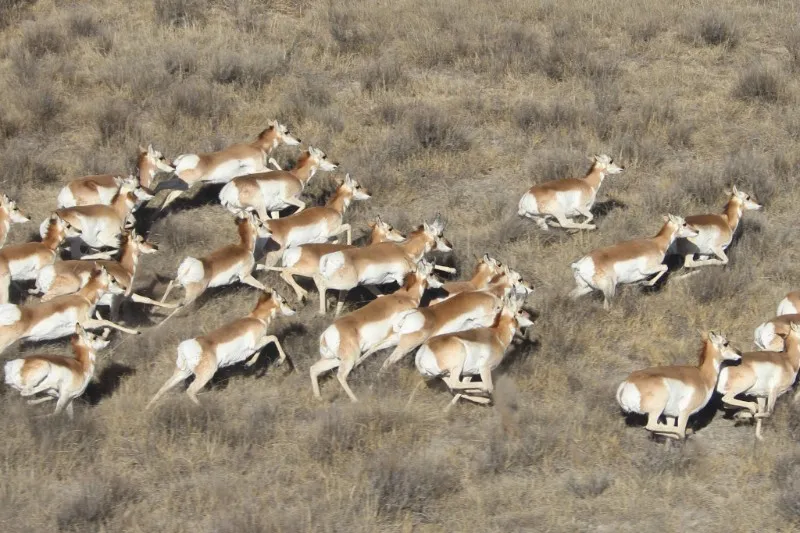
And backers of wildlife crossings in Oregon are crossing their fingers that funding will be approved to design a series of bridges on one of the most animal collision heavy sections of highway in the state.
Oregon just applied for a federal grant that provides about $9 for every dollar the state spends on designing and building wildlife crossings.
Jeremy Austin with Central Oregon Land Watch says collisions with deer and other animals cost Oregonians millions of dollars a year in damages and injuries.
So crossings are a worthy investment.
We have a series of wildlife crossings on Highway 97 here in central Oregon.
And in the first two years, they reduced vehicle collisions with animals by about 90%.
So these are highly effective structures that can really pay for themselves pretty quickly.
Austin notes Oregon has fewer wildlife crossings than other Western states.
So he's hopeful the state will establish permanent funding in the upcoming legislative session.
The current grant funds would go towards designing four crossings for a 35-mile stretch of Highway 20 between Bend and Subtle Lake, which sees more than 400 deer and elk collisions every year.
Support for this reporting was provided by the Pew Charitable Trusts.
I'm Isobel Charle.
Finally, scientists have identified four major conservation-focused areas to reduce the effects of global warming, including the Amazon rainforest and the Appalachian Mountains.
The Nature Conservancy has made preserving a quarter million acres of Cumberland Forest a priority for withstanding future climate change.
Some 30,000 acres are in Kentucky's Bell County, where John Grace is the tourism director.
I think that it's possible to have that property open to several different kinds of recreation and still be good stewards of the land.
Grace says Bell County continues to have more public hunting and fishing land than anywhere in the state.
This is Mike Clifford for Public News Service.
Member and listener supported.
Find our trust indicators at publicnewsservice.org.