Flood survivor’s advice: Give yourself a break

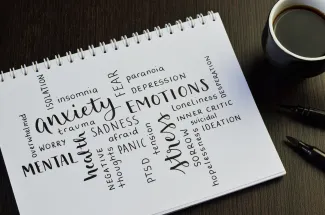
May is Mental Health Awareness Month, and survivors of extreme weather events are speaking out about ways to cope after a natural disaster.
Jessica Calix and her family survived flooding near San Diego in January 2024, when an atmospheric river sent torrents of water down a poorly maintained flood channel choked with vegetation. The wall of water destroyed whole neighborhoods.
Calix’s family lost everything. It was also her 8-year-old son’s birthday.
“My neighbors are swimming in the water in the living room,” Calix said. “And they're not being rescued. And so it was just pretty much madness from there because the number of people that needed to be rescued exceeded the help that was available. I mean, you couldn't even call 911.”
NASA says severe weather events such as wildfires, floods and droughts linked to climate change have become more frequent in recent years.
According to Cal Matters, the Palisades and Eaton fires in Los Angeles in January 2025 destroyed 16,000 structures, killed at least 31 people and displaced thousands, many of whom are still struggling to rebuild their lives.
Calix said she dealt with the overwhelming stress by focusing on what she could accomplish, rather than what seemed impossible. She said she threw herself into coordinating help for her neighbors.
“I was able to focus my energy on something productive, focus on taking action, and then resting when necessary,” she said.
Calix said most people in her former neighborhood are scattered and have not been able to rebuild. She has since become an advocate with the group Extreme Weather Survivors. A lawsuit against the city is underway.
In the meantime, Calix said patience and compassion are essential.
“Definitely the most important thing was taking things as they come and being gentle with one another because everybody is on super high alert, super stressed,” she said. “So just giving each other and ourselves some grace.”