Governor Polis submits second major disaster declaration request for Southwestern Colorado flooding

Governor Jared Polis asked President Trump on November 20, 2026, to approve a second Presidential Major Disaster Declaration. The request follows another round of historic flooding across Southwestern Colorado and the San Luis Valley beginning on October 31.
The first request, sent October 31, covers flooding in the same region from October 22 through October 25. It is still waiting for federal approval.
The state had to send two separate requests. The National Weather Service is treating the storms as two distinct weather events. They began on October 22 and October 29. Both storms hit the same region. The second storm added to damage in areas still recovering from the first. State officials say approval of both requests is essential for recovery.

"Coloradans living in the southwestern part of our state experienced unprecedented floods. Hundreds of families have lost homes, roads and bridges have been washed away, and communities are facing a large recovery effort as winter approaches. This region and its people are resilient, and they will recover. But Colorado needs the federal government to approve both of our Major Disaster Declaration requests to support this recovery. Approving one without the other would cause confusion, create unnecessary barriers to recovery, and leave families, businesses and communities without the assistance they need to rebuild. Time is of the essence and I urge President Trump to approve both requests without delay," said Governor Polis.
Joint state and federal reviews confirmed $28.5 million in public assistance damages from the second flood. They also found 271 primary homes that were destroyed or deemed uninhabitable. Another 136 homes were affected across the four counties asking for individual assistance.
At the height of the flooding, more than 6,300 residents were under mandatory evacuation orders. More than 3,300 homes could not be reached. Hundreds of Coloradans are still displaced. Damaged roads, bridges and water systems are slowing recovery as winter approaches. Some households may not have road access until spring. Others have no homes to return to.
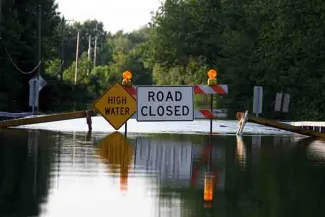
The two floods struck many of the same communities. They damaged homes, businesses, roads, bridges and telecommunications equipment. The first storm caused runoff, flooding and flash flooding, including record and near-record river floors. The second storm arrived just a few days later. Many of the same areas saw higher water than during the first flood.
© iStock - djperry
Colorado has worked with local governments and the Federal Emergency Management Agency to assess damage from each storm. State officials say approving only one request would leave major needs without federal help. It would also add paperwork for state and local governments and delay recovery.
The new request seeks three types of aid:
Public assistance for Archuleta, Conejos, La Plata, Mineral, Montezuma and Rio Grande counties. This covers debris removal, emergency protective measures and repairs to roads, bridges, water control facilities, public buildings, utilities, parks and other public facilities.
Individual assistance for Archuleta, Conejos, La Plata and Rio Grande counties. This includes help for individuals and households, disaster case management, crisis counseling, disaster unemployment assistance and disaster legal services.
Statewide Hazard Mitigation Grant Program funding. This would support projects that lower the risk of future disasters. Examples include improving flood-prone infrastructure, stabilizing streambanks and protecting communities from repeated flooding. Statewide eligibility would let Colorado choose projects wherever they can reduce future risks.
"The terrible floods have left Southwestern Colorado facing an unprecedented recovery challenge. Our local and state responders have done an incredible job, but the damage to essential public infrastructure and the sheer number of displaced residents require federal support. Securing this Major Disaster Declaration is critical to ensuring our communities have the housing assistance and infrastructure funding they need to recover safely before winter conditions make rebuilding impossible," said Trevor Denney, Director of the Colorado Office of Emergency Management.
© iStock - designer491
"Our communities have endured two devastating floods in a matter of days, leaving families displaced, critical infrastructure damaged, and residents facing an uncertain future. I'm incredibly proud of our first responders, county employees, and community partners who have worked tirelessly to help our neighbors, but recovery of this magnitude requires federal support. I urge President Trump to approve both Major Disaster Declarations without delay so our families and communities can begin rebuilding," said La Plata County Commissioner Matt Salka.
Colorado sent its first request on a fast-track basis while damage reviews were still underway. Before teams could fully assess the first storm, the second flood struck many of the same communities.
Governor Polis also signed two executive orders on November 20, 2026. One records and extends the state disaster emergency for the Southwestern Colorado flooding. The other amends an earlier wildfire disaster declaration to match an updated estimate of costs. It helps make funding available right away.
Under the flooding order, the state has called up the Colorado National Guard, state emergency management staff, mutual aid partners and volunteer groups. They are helping affected communities, providing emergency supplies, assisting displaced residents and starting recovery work.
This is Colorado's 13th declared disaster this year. The state has already committed more than $128.2 million to the previous 12 disasters. With local governments and emergency responders stretched thin, state officials say more federal help is urgently needed.
"Our neighbors in Southwestern Colorado need our support now more than ever. I encourage Coloradans to give what we can, support local businesses, and plan a trip to these beautiful communities over the next several months. Whether it's skiing this winter, rafting and boating this spring, or hiking and camping in the summer, as conditions allow for it, every visit helps these communities get back on their feet," said Governor Polis.