Less water has left John Martin Dam this year than in any year in 88 years of records

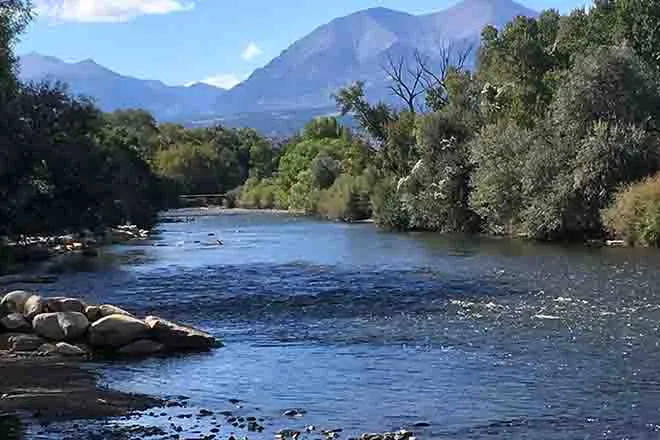
The Arkansas River below John Martin Dam has carried less water this year than in any year since the dam was finished in 1948, and the reservoir behind it is heading into fall at a fifth of the level it held five years ago.
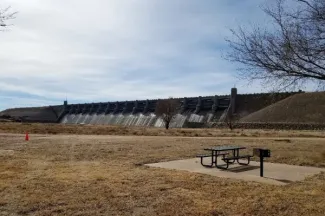
John Martin Dam in Bent County, Colorado. Courtesy CPW.
Through September 10, the federal gauge just below the dam had measured about 40,300 acre-feet of water for the water year that began October 1. That is the lowest total in 88 years of records at the site, below the 43,500 acre-feet of 2012, and less than a quarter of the median year of 182,500. With about two weeks left in the water year and the river running under 30 cubic feet per second, the total will not climb enough to change the ranking.
The river coming into the reservoir told the same story. At Las Animas, above the lake, the gauge measured about 40,500 acre-feet, the fourth-lowest year since 1939 and below 2002, the drought year most people in the valley still measure others against. At Lamar, the total of about 16,000 acre-feet ranks sixth-lowest in 108 years.
Why the sewage went nowhere
That is the water the Pueblo sewage spill flowed into in late August. About 4.25 million gallons of untreated wastewater entered the river at Pueblo on August 26 and 27, and state health officials warned people out of the water from Fountain Creek all the way through John Martin Reservoir.
The reservoir did not need the warning for long. In four samples at the east boat ramp between August 31 and September 6, E. coli never read higher than 6.3 colony-forming units per 100 milliliters, far under the 235 that marks water unsafe for recreation. The Colorado Department of Public Health and Environment lifted the advisory for the reservoir on September 4. Upstream, where the same slow river carried the plume through La Junta and the ditches, readings stayed high for days.
"Multiple safe readings over several days gives us confidence to lift the sewage-related advisory," park manager Dan Kirmer said at the time.
A lake that has been low for five years
John Martin is not at its lowest. It bottomed at about 2,500 acre-feet in August 2006, and it held 499,000 acre-feet in October 1991 and 456,000 in May 1999. But it has not been full in a long time. Storage stood at 19,842 acre-feet on September 11, according to the Army Corps of Engineers, at an elevation of 3,801 feet, and it is losing about 100 acre-feet a day. On the same date in 2021, 2022, 2024 and 2025 the reservoir held between 14,000 and 20,000 acre-feet.
This year's spring rise was one of the weakest on record. The reservoir peaked April 14 at 54,490 acre-feet, the eighth-lowest spring peak in 37 years of state records, then drained through the summer as irrigators drew on it and almost nothing came down the river to replace it. The water year's average storage ranks eighth-lowest as well.
What visitors will find
Colorado Parks and Wildlife, which runs the state park on the reservoir, has closed the west boat ramp to trailered boats because of low water. Canoes and kayaks can still launch there, and the east ramp remains open, though the park says owners of large boats should not attempt it. The cove at the west ramp has been under a toxic algae caution since September 9, with water being tested on an ongoing basis. Lake Hasty, the smaller lake below the dam, was already under an algae warning in August.
What could refill it
The reservoir needs snow in the mountains, not rain on the plains. The lake fills from spring runoff, and this year the snowpack that feeds the Arkansas peaked at a fraction of normal and melted a month early. Statewide reservoir storage was 60 percent of the median in late August, according to the state's Water Conditions Monitoring Committee.
Forecasters expect a strong El Niño this winter, which in Colorado tilts the odds toward a wetter fall and spring. But the Colorado Climate Center cautions that El Niño's link to mountain snowpack is weak, and that only the southern basins show any tendency toward a bigger snow year. For John Martin, the answer will come next spring, when the runoff arrives or does not.
The Drought Monitor's final map of the water year comes out October 1.