Most Wyomingites to pay $1,430 more under Trump tax policies

© iStock - Ligorko
Click play to listen to this article.
With Wednesday's income tax deadline just around the corner, a new analysis shows that new policies under the second Trump administration will negatively impact most Wyomingites while benefiting the wealthy and corporations.
In 2026, the top 20 percent of earners will get a $380 billion tax cut, with $117 billion going to the richest 1 percent alone.
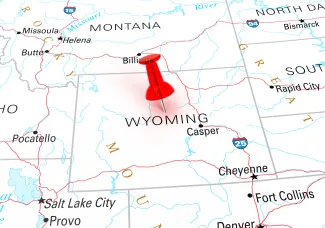
In Wyoming, said Michael Ettlinger, a senior fellow at the Institute on Taxation and Economic Policy, middle-income people are going to pay about $1,430 more in 2026 than if the existing tax policy had continued.
"Overall, on average, people in the bottom 95 percent of the income distribution are going to see taxes go up," he said, "whereas people in the top 5 percent are going to see taxes go down."
Tax cuts passed under the Republicans’ signature "One Big Beautiful Bill Act" are projected to add $4.6 trillion to the national debt. In an effort to reduce that price tag, lawmakers cut $1.2 trillion in spending, largely from health care. Republicans have long argued that allowing Americans to keep more of their earnings will boost the economy, in turn, creating more jobs and increasing revenues.
Live Nation, Palantir, Tesla and Yum Foods – which owns KFC, Taco Bell and Pizza Hut – paid close to zero federal corporate income taxes last year on a combined $8 billion in profits. Under HR 1, Ettlinger said, corporations that do pay taxes will contribute $234 billion less this year, and nearly $2 trillion less over the next decade.
"The corporate tax cuts embedded in the Trump tax policies have certainly helped shareholders and the owners of corporations, who are enormously wealthy," he said, "but have not spawned some boom to help workers."
The biggest change in tax policy affecting most Americans is President Donald Trump's tariffs. The U.S. Supreme Court found many of Trump's sweeping tariffs unconstitutional, but some still remain in effect. Ettlinger said the bottom 20 percent of working families spend virtually all of their income on necessities, but the wealthiest Americans literally have more money than they could possibly spend on imports subject to tariffs.
"The upshot of that," he said, "is that just a very high percentage of your income is effectively being taxed if you’re a lower-income person than if you’re a very high-income person."