Politics: 2026Talks - October 27, 2026

© Arkadiusz Warguła - iStock-1890683226
Politics and views in the United States
Trump stumps in deep-red Mississippi’s senate race, New Mexicans decide whether to pay state lawmakers, and Tennessee voting rights advocates call for restoration of rights.
Transcript
Welcome to 2026 Talks, where we're following our democracy in historic times.
This is socialism versus capitalism, communism versus democracy, and big government versus the free market.
It could not be higher stakes.
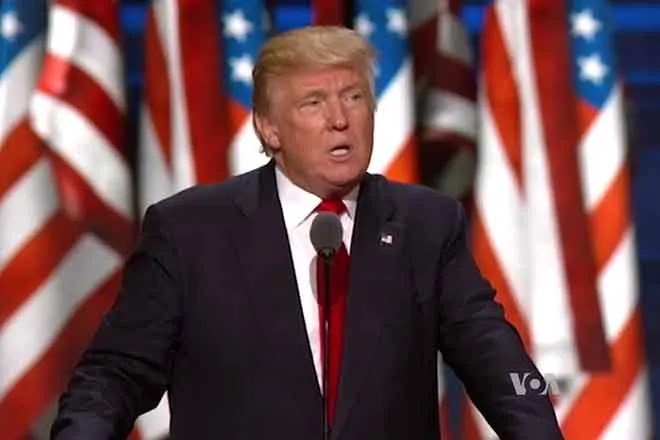
Republican Mississippi Senator Cindy Hyde-Smith was joined by President Donald Trump at a campaign stop in the Magnolia State yesterday.
Polls show Hydesmith with a narrow lead, some at just three points, over Democratic District Attorney Scott Cologne.
Trump won Mississippi by more than 20 points.
If Cologne wins in an upset, he would be the first black senator from Mississippi since Reconstruction.
The race has caught the attention of national Republicans and Democrats in the past month.
Former Vice President Kamala Harris and Georgia Senator Raphael Warnock have joined Cologne at events in the state.
And former President Barack Obama recorded an ad for him.
And a political action committee aligned with Senate Minority Leader Chuck Schumer announced a million-dollar broadcast in digital ad blitz across the state.
Now Trump is in the state, which will be a test of his ability to turn out his base when his name is not on the ballot.
In New Mexico, state lawmakers don't receive a paycheck, minus small per diems for lodging and gas.
State lawmakers do the work largely without compensation.
But a constitutional amendment on the ballot this November could change that.
If passed, legislators' salaries would be tied to the state's median household income, currently just under $68,000 a year.
Oriana Sandoval, with the Center for Public Policy, says the measure is not meant to give politicians more taxpayer money, but rather increase the number of people who could throw their hats in the political ring.
The system now makes it difficult for working people to get involved in politics.
The way the system works now is that either you're retired or you're well off, so you don't need a salary, or you have a job that's flexible enough or a family situation that's flexible enough for you to do volunteer work.
In the latest of the polls PNS is highlighting ahead of the election, a majority of Americans report feeling shut out by the political system.
That's reflected in new polling.
More from Mike Moen.
In an October survey from the Frameworks Institute, two-thirds of Americans say they believe the system is rigged.
Todd Lefkoe leads the International Business Development Company and is based in the Twin Cities area.
He suggests that because only a select group of the ultra-wealthy have real access to decision makers, everyday residents are left to feel helpless.
The instruments that we had from the past are basically going for the benefits of a few.
And so the question is, why doesn't anybody in government seem to understand that?
When breaking down the Frameworks poll by political affiliation, 58% of Republicans and 71% of Democrats align with rigged system beliefs.
I'm Mike Moen.
The Justice Department has charged former FBI Director James Comey with sharing classified information.
The charges allege Comey authorized the disclosure of classified information involving government surveillance techniques to The New York Times.
Comey denies he violated the law.
I'm Zamone Perez for Pacifica Network and Public News Service.
Find our trust indicators at publicnewsservice.org.