A research facility closure could bring more USDA scientists to Nebraska

Some U.S. Department of Agriculture researchers could be relocated to Nebraska under a plan to close a Washington D.C.-area research facility.
Nebraska researchers say more USDA personnel could benefit the state’s research efforts, but with few details shared about the project or staff movement, how much help they’ll get is unclear.
In July 2025, the USDA announced it would close the Beltsville Agricultural Research Center (BARC) in Maryland as part of a department “reorganization” effort.
In an April announcement, the USDA said it would relocate employees to at least 27 USDA facilities across the country. One of those locations is in Clay Center, Nebraska.

© iStock - wellesenterprises
The U.S. Meat Animal Research Center (USMARC) works on animal health, animal food production, food safety and soil and air quality projects. Its employees work for the Agricultural Research Service (ARS) — a USDA subagency that conducts and funds research.
University of Nebraska researchers and faculty often collaborate with USDA scientists, said Derek McLean, dean and director of the UNL Institute of Agricultural and Natural Resources’ Agricultural Research Division.
“The mission of our researchers to help support Nebraska agriculture, to help develop new innovations, to work closely with them and to be responsive to the challenges that they face, basically on a daily to yearly basis – that mission is strongly overlapped with the ARS mission and their commitment to research excellence and scientific integrity to help in field-based research that can help support our producers,” McLean said.
He said he welcomes any ARS scientists offered relocation to Nebraska.
“When we can leverage the strength of the ARS scientists and the strength of the University of Nebraska scientists, I mean, it’s just a win for Nebraska producers, and actually nationwide for all the research in the ag industry,” McLean said.
Few details have been announced about how staff will be distributed to ARS locations nationally. A USDA spokesperson told Nebraska Public Media News that the department “will maintain open communication and close coordination as the new organizational structure is implemented over the coming year(s).”
ARS researchers are ‘deeply rooted in their mission’
University of Nebraska-Lincoln professor and extension specialist Matt Spangler’s expertise is in beef cattle genetics. He has frequently collaborated with scientists in his specialty at USMARC for nearly two decades.
“They deeply care about the industries that they serve. They understand the industries very well,” Spangler said. “Many of them grew up on family farms or ranches, so they understand from that vantage point. Deeply rooted in their mission is serving those clientele, and I think that’s part of the reason why our collaboration has remained so strong over the years.”
Spangler said the projects they’ve worked on have directly helped the agriculture industry. Certain genetic traits in cattle control meat tenderness, growth and feed efficiency, so Spangler said USMARC and the University of Nebraska built a tool that helps cattle ranchers see how different genetic traits economically affect their operation.

© iStock - Pashalgnatov
“This web-based decision support software, which is in heavy use in the U.S. beef industry, combines all those partial [research] solutions to help people actually make decisions,” Spangler said.
He said USDA’s many connections to state universities and for-profit ag industry groups helps connect them to solutions that arise from USMARC’s research.
“Through those collaborations, it’s clear that not only do they listen to the needs of industry, but then they utilize the resources they have to provide solutions to those questions,” Spangler said. “And so to me, strong collaboration with them is essential if we’re going to jointly help the industry through the challenges it may have going forward.”
While Spangler said more ARS scientists would be beneficial, it’s hard to say how Nebraska’s research would be affected by the USDA reorganization without more information on the personnel and projects moving to the state.
Spangler said USMARC was impacted by USDA staff loss in the first year of the second Trump administration, delaying some research projects and industry reports.
“Any time there are reductions in scientists or technical staff, it has an impact, not only on the scientists that are remaining, but also on the clientele they serve,” Spangler said.
During the first year of the second Trump administration, ARS lost about 30% of its staff across the country. Currently, 131 ARS employees are working in Nebraska – 47 fewer positions than in 2024 – according to U.S. Office of Personnel Management data. The same staff reductions affected the ARS-Lincoln facility, which focuses on crop improvement and management techniques.
“We would love to see replacement of some of the expertise that we lost due to retirements and the Deferred Resignation Program. We would like to see those units built back up to full strength,” said UNL agronomy and horticulture professor Katherine Frels.
Frels works on developing varieties of wheat and other small grains. She said ARS researchers in Lincoln are instrumental in that process. For example, the USDA could develop a positive genetic trait for wheat, then Frels and other university researchers can find a practical use for it.
“We take that trait and then we put it in a really good package that’s adapted for the environmental conditions in Nebraska, for example,” Frels said. “To do that, it really takes that wide range of specializations all the way from really basic research science, all the way to more applied plant breeding.”
More help from ARS scientists could give research a boost, she said, especially after those staff cuts.
“The amount of data that I am able to get from the USDA is significantly reduced, “ Frels said. “Instead of getting disease ratings on 300 lines, I’m only getting disease ratings on about 30 to 40 lines. That’s a pretty big drop, and that’s going to have impacts on the amount of disease resistant wheat that I can produce for farmers here.”
The ARS scientists can test Frels’ work in other states, giving her more genetic and crop performance data, plugging her into a wider collaborative network.
“They facilitate this interaction between wheat breeders across multiple states, and it makes us all better for it,” Frels said.
Keeping BARC open is a ‘question of commitment’
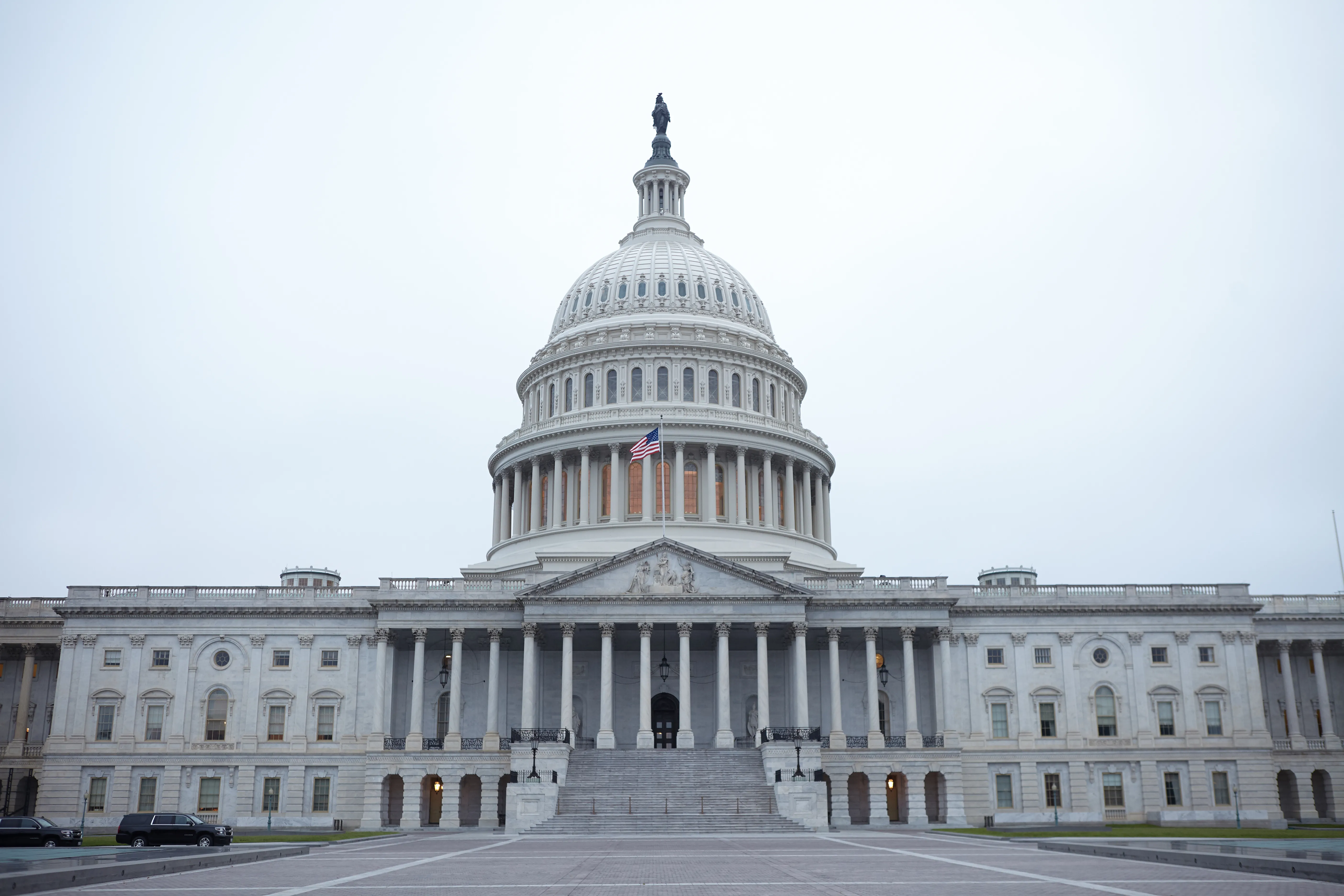
Today, about 400 buildings stand on the nearly 7,000-acre Maryland BARC campus – about a 30-minute drive from Capitol Hill.
BARC was officially established in 1910. In its history, Beltsville researchers have made strides in food safety and ag production. They developed ways to improve the shelf life of butter, created the small variety of turkey used on Thanksgiving tables, invented products to fight honeybee diseases and discovered a cacao-eating fungus threatening chocolate production.
The Trump administration argues it would be too costly to repair and modernize the 116-year-old campus. Instead, the USDA argues, moving research out of the area would lower overhead costs and bring research efforts closer to where communities can use them.
“Science is most effective when it’s connected to the people and places it’s meant to serve,” Under Secretary for Research, Education, and Economics and Chief Scientist Dr. Scott Hutchins said in an April statement. “This effort strengthens our ability to deliver actionable research, trusted data, and innovative solutions by aligning our teams more closely with agricultural producers across the country. It ensures our work remains relevant, responsive, and grounded in the needs of American farmers.”
Currently, about 4,600 USDA employees work in or around the Washington D.C. area, and the USDA plans to keep no more than 2,000 there.
A former BARC honeybee research leader, Jeff Pettis, told Harvest Public Media in March that he worries that plans to move employees out of the area could cause the USDA to lose those experienced researchers.
“People built their careers in a certain location,” Pettis said. “Personally, they don’t want to move, so you end up losing people.”
The BARC’s proximity to Capitol Hill was also instrumental in educating lawmakers and influencing positive ag policies, Pettis said.
“It’s really invaluable to have that much expertise right there close to Washington for policy issues,” Pettis said. “It’s an aging facility, no doubt, but when those buildings were renovated – they were beautiful, old brick buildings, and they turned out beautifully. It’s just a question of commitment, and I think there’s a lack of commitment right now by the current administration.”
The closure is part of a larger effort to streamline the USDA by “strengthening leadership accountability, reducing organizational complexity, ensuring consistency across agencies where appropriate, leveraging emerging tools and technologies, and aligning clearly with USDA’s priorities.”
This story was originally published by Nebraska Public Media News, a network of local reporters working with a National Public Radio station based in Lincoln.