State order to kill wolf in northeast Washington is canceled

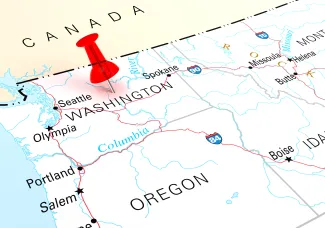
The state Department of Fish and Wildlife rescinded an order to kill a wolf in northeastern Washington one week after authorizing the plan in response to attacks on livestock.
A calf was killed and two others were injured in mid-May in the Aladdin Valley area of Stevens County. Three wolf packs inhabit the area. State wildlife managers have not determined which wolf or wolves were responsible for the attacks.
Agency Director Kelly Susewind authorized staff on May 22 to kill one wolf. A week later, on May 29, he withdrew the order and moved the agency into an evaluation period, stating if another attack on livestock occurs, lethal removal would be reconsidered.
The region's wolf population has faced ongoing pressure from removal efforts, making wildlife advocates cautious about lethal measures.
After the attacks, but before the kill order, the agency trapped and radio-collared one wolf belonging to the Onion Creek pack, which has at least five members. Staff then spent a week attempting to trap another wolf, but to no avail.
Fish and Wildlife staff are monitoring where the newly collared wolf travels and will “respond promptly if there are reports of any further conflict,” an agency spokesperson said. There is no fixed date for the evaluation period to end.
Francisco Santiago-Ávila, science and advocacy director for Washington Wildlife First, said he’s relieved the agency rescinded the kill order, but is concerned that it was issued in the first place given the uncertainty over which wolf was to blame.
He said the agency authorized the lethal removal of a wolf before the investigation was complete, before it had identified the pack responsible for the attacks and before non-lethal measures had time to work.
“Decisions to kill wolves should be based on clear evidence, transparency, and the best available science,” Santiago-Ávila said.
The capture and release of the Onion Creek wolf could discourage further attacks because the wolf is likely to avoid the area where it was trapped, according to an agency spokesperson.