Stitt vetoes OETA, objects to publicly funded broadcasting

Governor Kevin Stitt has vetoed a continuation of Oklahoma’s state-funded TV station, contending taxpayer dollars shouldn’t subsidize public broadcasting.
The Oklahoma Educational Television Authority would reach its sunset date July 1 and have a year to wind down its operations, if the governor’s veto is not overridden or counteracted with other legislation. Senate Bill 1461, which Stitt vetoed, would have extended OETA’s existence to July 2031.
State lawmakers overrode a similar veto from Stitt in 2023 and another in 2022 that would have affected the station’s funding. With the state Senate adjourning with no clear return date, it’s uncertain whether both chambers of the Legislature will coordinate a veto override this time.
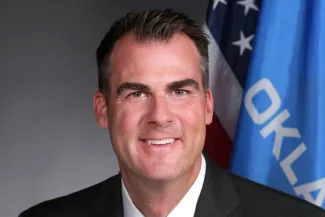
Oklahoma Governor Kevin Stitt - public domain
Stitt also vetoed a bill that would make OETA a permanent fixture in state law with no sunset date. House lawmakers unanimously overrode him on Thursday, but the Senate would have to take similar action soon to complete the override. The legislative session is expected to end May 14.
If lawmakers don’t approve an override before the end of session, they could vote when they reconvene next year to extend OETA, House Speaker Kyle Hilbert said Thursday.
Hilbert, R-Bristow, said the governor’s veto wasn’t a surprise. Stitt has opposed multiple bills that would otherwise extend the legal expiration date of Oklahoma governing boards and commissions.
“The governor’s had a lot of vetoes of sunset bills,” he said. “This has been an ongoing policy disagreement between the Legislature and the governor for the past couple of years.”
Senate President Pro Tem Lonnie Paxton, R-Tuttle, plans to review each veto and put them through the proper vetting process before making any decisions, a spokesperson for Paxton said.
A state budget that Stitt signed into law appropriates $2.84 million for OETA for the 2027 fiscal year.
Funding a TV station “is not a core function of state government,” though OETA’s programming might be worthwhile for viewers, Stitt wrote in his veto message.
The Republican said his veto aligns with President Donald Trump’s effort to cut off taxpayer funding of National Public Radio and the Public Broadcasting Service. Congress approved Trump’s request to rescind federal support for NPR, PBS and their local affiliates.
The Corporation for Public Broadcasting has since shut down, but public TV and radio stations continue to broadcast across the country, including in Oklahoma, by relying on other revenue sources. OETA has said it isn’t dependent on CPB funding to remain on the air.
“President Trump has shown that ending guaranteed taxpayer subsidies for public broadcasting is not the crisis its defenders claim it to be,” Stitt wrote in his veto message. “Oklahoma should follow his lead by letting viewers and advertisers fund OETA, not Oklahoma taxpayers.”
The last time Stitt vetoed the public TV station, he objected to pro-LGBTQ+ content on OETA programs, claiming it “overly sexualizes our kids.”
OETA’s state funding supports not only educational TV programs, but also infrastructure delivering emergency alerts and public safety communications, executive director Shawn Black said.
The station, viewable in all parts of the state, counts 650,000 weekly viewers. It also issues severe weather warnings, AMBER alerts and other emergency messages.
“OETA appreciates the thoughtful consideration and bipartisan support shown throughout this process by members of the Oklahoma Legislature,” Black said. “For nearly 70 years, OETA has been a tremendous public-private partnership that serves all of Oklahoma.”
Cherokee Nation Principal Chief Chuck Hoskin warned Stitt’s veto would “effectively destroy public television in our state.”
“There is no finer example of public-private partnership in our state than OETA, which delivers symmetric and indispensable news, information and educational programming to communities across Oklahoma, all while providing a significant boost to Oklahoma’s public safety network through use of their extensive tower matrix,” Hoskin said.