What climate science tells us about the causes of the Colorado River crisis

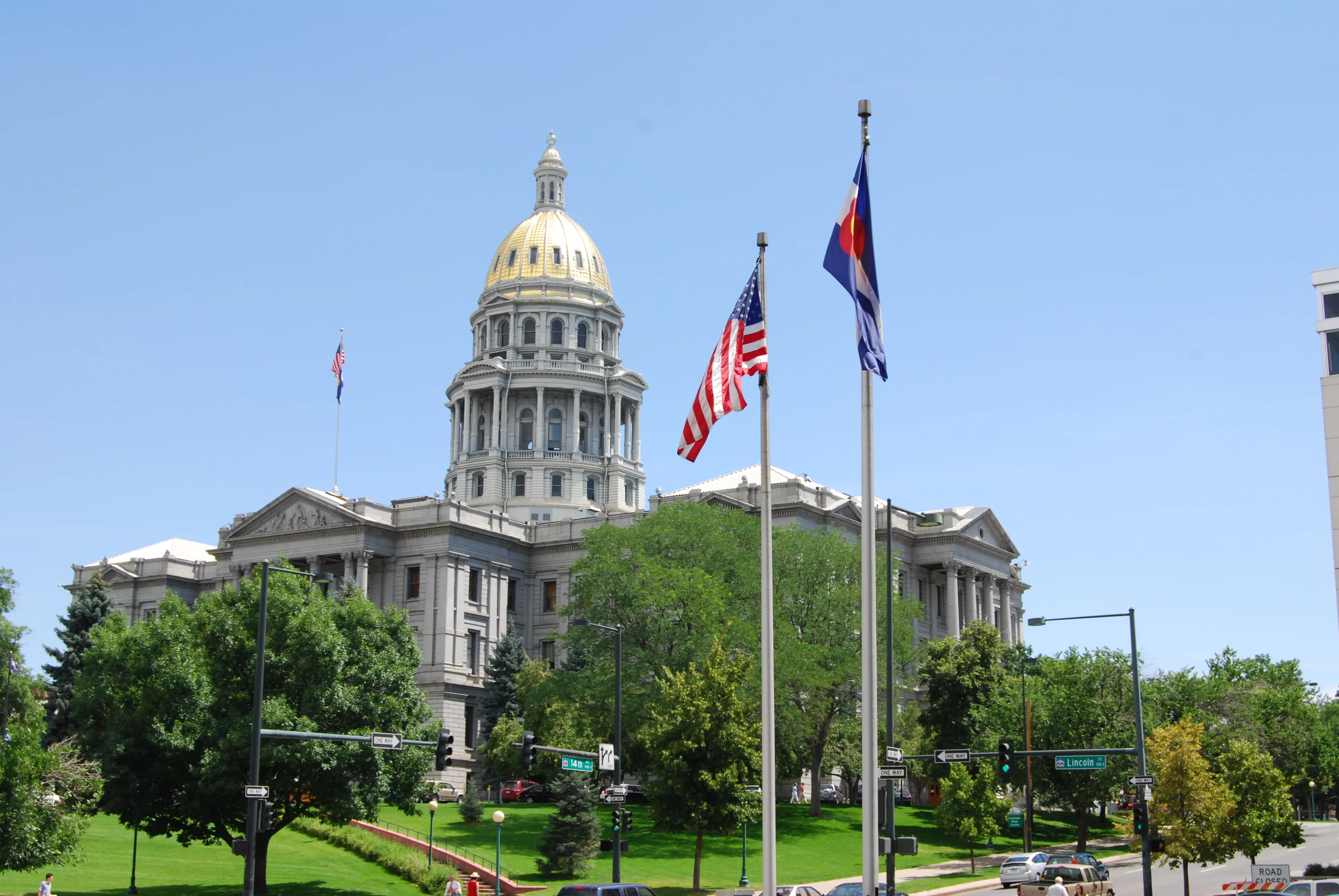
Elected officials from across Colorado’s political spectrum continued a 68-year-old tradition last week when they took to the stage at the annual summer conference of the Colorado Water Congress in Steamboat Springs.
First convened by Governor Steve McNichols in 1958, the Water Congress brings together experts, policymakers, agricultural producers and other interest groups to negotiate and strategize in a state where water has always been a scarce and carefully managed resource.
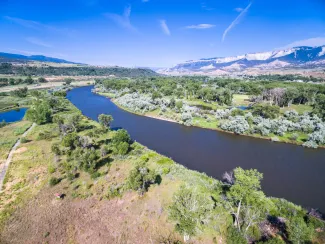
That’s never been more true than it is today, at a time of extreme drought and escalating political conflict over the future of the Colorado River. The river’s cumulative flow at Cameo, just upstream of Palisade and Grand Junction, is at a record low this year, and Colorado and six other states that depend on its water are likely headed for an extended, high-stakes court battle over how to apportion the cuts forced on them by more than two decades of persistently dry conditions.
Addressing the Water Congress, Colorado leaders said the way forward for water users is through, as Attorney General Phil Weiser, the Democratic nominee for governor, put it, “collaboration and innovation.” They talked about storage and diversion projects, conservation measures and drought-resistant crops. They promised to defend farmers and ranchers from so-called “buy and dry” purchases of their water rights by municipal utilities, and to fight off efforts by the Lower Basin states of Arizona, California and Nevada to force mandatory cuts on upstream users in Colorado.
Notably absent, however, from the event’s three days of speeches on water policy — from politicians on both sides of the aisle — was the predominant reason why the situation on the Colorado River is bad and getting worse: human-caused climate change.
Neither Weiser nor Victor Marx, the Republican candidate for governor, made any mention of the threat posed to Western water supplies by rising global temperatures. It was missing, too, from speeches by both GOP U.S. Representative Lauren Boebert, a longtime fossil-fuel industry booster, and Democratic U.S. Representative Joe Neguse, a former member of the House Select Committee on the Climate Crisis.
Dwayne Romero, the Democratic nominee in Colorado’s drought-ravaged 3rd Congressional District, went so far as to say that “the climate is putting new pressure on” water management issues, but no further.
The lack of acknowledgment of the causes of the Colorado River Basin’s post-2000 megadrought comes as Colorado Republicans largely continue to ignore or deny the science of climate change — and as Democrats have been pressured by some party consultants to deemphasize the issue in the wake of their defeat in the 2024 election.
But even as this “climate hushing,” as Rhode Island Senator Sheldon Whitehouse dubbed it earlier this year, appears to have taken hold in the Democratic Party, hydrologists and climatologists have grown increasingly confident in identifying human emissions, rather than natural variability, as the overwhelming factor driving the West’s water woes.
Whether or not it’s politically expedient for either party to say so, the scientific consensus is that rising levels of greenhouse gases in the Earth’s atmosphere — mostly the result of burning oil, gas and coal — have pushed the Colorado River system to the brink, and that drought conditions are likely to continue to worsen as long as those emissions continue to push global temperatures higher.
‘Hot drought’ and beyond
As of 2024, average global temperatures had risen by more than 2.3 degrees Fahrenheit over pre-industrial levels, according to NOAA data, and climate scientists have concluded that virtually all of that observed warming is due to greenhouse gas emissions from human activity. Parts of Colorado, including much of the Western Slope, are among the areas in the U.S. where average temperature increases have been most severe.
As litigation looms and drought takes its toll, state officials defiant over Colorado River’s future
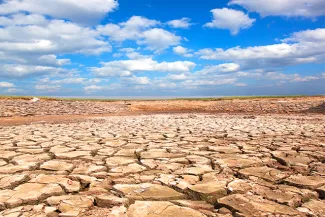
Even in the absence of any other changes to global climate patterns, this higher heat alone can lead to drier conditions on the ground, by increasing the rate at which moisture evaporates — sometimes called evaporative demand, a measure of the atmosphere’s “thirst.” In a 2024 report for the Colorado Water Conservation Board, state climatologists found that evaporative demand had risen by 5% statewide between 1980 and 2022, and was projected to increase by 8% to 17% by 2050.
iStock
Within about a decade of the onset of the Colorado River megadrought in the 2000s, researchers began to conclude that rising temperatures were a major factor, making the drought more severe than it otherwise would’ve been. In an influential paper published in 2017, hydrologists Brad Udall and Jonathan Overpeck used the term “hot drought” to describe the basin’s current conditions, distinguishing it it from previous 20th-century “dry droughts,” caused largely by lower precipitation.
Further research has only solidified those conclusions. Using historical soil-moisture data and tree-ring records, one 2022 study found that the current megadrought is the worst dry spell the Southwest has experienced in at least 1,200 years. Studies generally agree that about 40% to 50% of the Colorado River’s declining flows can be attributed to higher temperatures alone.
Still, scientists were cautious about the other half of the hydrological equation — whether, and to what extent, climate change was influencing rainfall and snowfall, too. Modeling global warming’s precise impacts on precipitation patterns proved more complicated than identifying what state climatologists called the “basic physical relationship” between heat and evaporation.
“Compared to the 20th century, the 21st century has indeed been drier, but only by about 2.5%,” hydrologists with the Colorado River Research Group wrote in 2016. “Whether or not this is the leading edge of a trend, or merely a part of normal variability, is unknown.”
In just the last two years, however, new research has begun to dispel that uncertainty — and the findings, wrote Udall and Overpeck last year, “translate to mostly bad news.”
It’s precipitation, too
Overall precipitation in the Upper Colorado River Basin has continued to decline since 2000, with multi-year averages about 7% lower than previous levels as of 2025. Colorado was one of nine states in the West to have experienced their warmest winter on record in 2025-26, and statewide snowpack fell to its lowest level in more than 40 years, setting the stage for this summer’s extreme conditions.
Researchers at the University of Colorado Boulder found last year that global warming is reducing precipitation in the West by stalling a key oceanic climate cycle known as the Pacific decadal oscillation, indicating that the region’s persistently dry conditions are being driven by human emissions “more intensely — and more directly — than previously understood.” Another 2025 paper by a different group of researchers echoed their findings.
© iStock - Ig04Zh
“What’s important here is that we’re showing that rainfall has also been influenced by humans, in addition to just evaporation,” Pedro DiNezio, one of the CU Boulder study’s co-authors, told Newsline last year. “Both contribute to drought.”
A final key takeaway from climatological research on the Colorado River is that the higher global temperatures get, the worse things will be for river flows, which are not likely to ever return to their previous “normal.” Udall and others have encouraged the use of the term “aridification,” rather than drought or megadrought, to more accurately describe what’s happening to the river basin. But it’s also why he and Overpeck wrote last year that there’s a “silver lining” to the better understanding of river’s hydrology that researchers have gained over the last decade.
“We can say with confidence that human-caused emissions of greenhouse gases are having an increasingly negative impact on the flows of the Colorado River,” they wrote. “This climate change impact will continue to worsen, but because humans cause it, humans can halt it.”