The Yonder Report: News from rural America - July 3, 2026

© Dean_Fikar - iStock-503150251
News from rural America.
This week, we start out with a conversation with Daily Yonder reporter Ilana Newman who brings us a story from Illinois, where community members are trying to get state policy passed that would stop CO2 pipeline companies from using eminent domain to build pipelines. We have two takes on America’s 250th birthday this week, one from editor of the Glasgow Courier, Skylar Baker Jordan and another from columnist Donna Kallner. We welcome back Kiki Bush to the show with a conversation with Susannah Broun about supporting the arts in rural areas. Then, we have a segment from our partners at the Rural Faith Initiative about LGBTQ+ affirming rural churches and parishes. It's a conversation between Whitney Kimball Coe and Reverend Claire Brown. Our featured musician this week is Sam Miltich, who brings his jazz music and mental health advocacy to the show.
TRANSCRIPT
Hey, I'm Jared Ewe, the host of Yonder Radio.
Every week we bring listeners to rural conversations with national reach.
This week is no different.
Talk about consistency.
We're starting out with a conversation with daily Yonder reporter Alana Newman, who brings us a story from Illinois about CO2 sequestration, an eminent domain to build the necessary pipelines.
And we have two takes on America's 250th birthday.
These are brilliant.
And we welcome back actor Kiki Bush.
And she talks about supporting arts in rural areas.
Incredible conversation as per usual.
And then we have a segment from our partners at the Rural Faith Initiative about LGBTQ plus affirming rural churches and parishes.
And our featured musician this week is Sam Miltich.
I pull out the Virtuoso label and he hedges a bit, but I think you'll hear it with his jazz music.
Also his mental health advocacy.
He brings that to the show as well.
Tune in for all of that on Yonder Radio.
We'll see you next time.
Yonder Radio.
We're glad you're here.
This is Rural Conversations with National Reach.
My name is Jared Iwi, and today we're just packing the house with beautiful people.
On the way, we're going to be hearing from Sam Miltich.
Just imagine a jazz guitar virtuoso who to me looks like Matt Damon.
So we have him coming up, his music.
We're going to talk about CO2 sequestration and eminent domain and also the semi-quincentennial.
We're going to have some words about that, and they are brilliant.
That is all the way along with trivia.
But first, from the Daily Yonder Newsroom, it is the Daily Yonder News editor, Jan Patalski.
Hi, Jared.
This week, we start off with Reuters and their report on the current state of Supplemental Nutrition Assistance Program, better known as SNAP.
According to their report, more than 4.7 million people nationwide lost their benefits.
That's as a result of the President Trump's signature tax and spending law that went into effect last July, which amounts to about 11% of participants.
And unfortunately, Arizona leads the pack.
According to the Reuters reporting, more than 457,000 Arizonians, including almost 200,000 children lost their benefits as of the end of May.
That law reduces SNAP's funding by about $187 billion or 17 percent and that's supposed to happen over the next 10 years.
Well coming from climate.us some warm news or at least the reporting of warmth what is happening with this.
ClimateUS, formerly climate.gov, is now a non-profit website that stores and hosts all of the climate research and weather data that used to be accessible at climate.gov.
Climate.gov was run by the National Oceanic and Atmospheric Administration, NOAA.
However, after Doge and the purges within the federal government rolled across the country, that website was shut down.
Now, more than 80 scientists volunteers to serve as subject matter experts at the new climate.us site.
The site also boasts that it will make available the entire 15-year collection of the research from the former website.
Now, this is not an official U.S. government website.
However, the scientists want you to know that the brainpower behind it is pretty much the same.
And speaking of brain power, KFF Health News always delivering in the world of Lyme disease today.
What's this?
KFF brings us a story about a potential for a new Lyme disease vaccine planned to be rolled out in the near future.
However, the interesting wrinkle in the story is that people are not sure if there will be interest in the first place.
There is a Lyme disease vaccine available already.
And one of the reasons why they want to replace it and why those questions are posed in the first place is because this one is not particularly popular.
Well, and there's always prevention, Jan Patolsky.
Hear me out.
Some wisdom from the sage.
A family that checks for ticks together sticks together.
Beautiful.
Beautiful.
All right, Jan Patolsky, Daily Yonder News Editor from dailyyonder.com.
Thank you so much.
Thanks so much, Jared.
That was Jan Patolsky, News Editor for the Daily Yonder.
Now, our news story this week comes to you from Daily Yonder reporter Alana Newman, who reported a series of stories about carbon sequestration along with Julia Tilton.
The two visited central Illinois, where they found community members protesting proposed carbon pipelines and the state's legislature ready to do something about it. with Bill 2842.
And that would have stopped pipeline companies from being able to use eminent domain to build CO2 pipelines across private property.
So Ilana Newman, you went to Illinois.
You meet a guy who gets a letter in the mail that would make a property owner's blood boil.
Tell the story of this guy who goes up against a BlackRock-backed pipeline.
Yeah, so Steve Hess received a letter in the mail in December of 2021.
And a bunch of other property owners in central Illinois also received the same letter from Navigator CO2 Ventures, which was backed by BlackRock, which was trying to build the Heartland Greenway pipeline across central Illinois to sequester carbon.
And basically, they told him that if he didn't agree to let them use the property, they would use eminent domain to purchase it without his permission.
That made him very upset.
And then he went on to fight this pipeline along with a bunch of other landowners and community members from central Illinois for the next two years.
And they actually did successfully beat the pipeline in 2023.
The Heartland Greenway pipeline was never built and is not currently planned to be built.
And there's a few other pipelines that they're fighting against right now.
So you do have a win for property owners.
Maybe carbon sequestration is something we need.
Are they finding places that they can run pipelines?
Are there property owners who are like, yes, run it through there?
Or is there a debate that has emerged within the community?
Right now, there are some wells in Decatur, Illinois, and those have been operating for about a decade.
And that's kind of been where a lot of the pilot program of CO2 sequestration in central Illinois has been happening.
But right now, there's a huge scale up.
And it's kind of unclear exactly what's going to happen over the next few years, because the amount of carbon that will be sequestered is going to rise dramatically.
And some of that is because of increase in tax credits.
And people feel a lot of different ways about it.
I mean, I think we can all agree that something needs to be done about the CO2 that's being emitted.
And this is one very large scale solution.
But it also people are worried about how their communities will be affected when these are built very close to where people live.
Has it been shown that there are dangers, actual physical danger of the pipelines on properties?
So the biggest issue that has arisen as far as CO2 pipelines happened in 2020 in Mississippi in a small town called Satarsha.
The pipeline burst.
And what can happen is if there's a very small puncture in the pipeline, it can kind of unzip itself because of the pressure of the liquid CO2 that's being pumped through the pipeline.
That CO2, when it comes out, it doesn't rise and dissipate.
It stays really low to the ground and spreads out.
And because of the geography of that region, this region of Mississippi, it kind of got funneled.
And the risk is that anyone lying on the ground could basically suffocate.
So if you're asleep, animals, humans that are asleep can suffocate.
In the case of Satarsha, about 45 people were hospitalized. 200 people were evacuated.
Cars don't run if they are in the CO2 cloud.
So emergency services don't really know how to respond to this because they can't drive into these CO2 clouds.
Well, that's nightmarish.
Just some of the things that should be brought up with this kind of large scale operations, including the history of eminent domain and how that's been used.
Yeah, I mean, eminent domain is something that I think if you asked pretty much any person across rural America, they would say that's one of my biggest fears.
It's been used for all sorts of things and it has to be used for public good.
So there's some argument, and that's one of the reasons for some of this legislation around it, that a CO2 pipeline is not necessarily for public good, but it has been used for oil pipelines in the past.
It's used for electrical lines, water, sewage.
It's used for schools.
But there's also kind of this environmental justice perspective on eminent domain, because between the 1940s and 1970s, the Institute of Justice found that more than 2,500 eminent domain projects displaced 1 million people.
So that's using eminent domain to basically kick someone off of their property.
And two thirds of those people were black.
So it is disproportionately people of color who are affected by eminent domain.
Yeah, people do have to be compensated for eminent domain.
So there is necessary compensation.
But usually the compensation has something to do with how much they would lose out on to keep that, in this case, in agriculture, keep that land in agriculture.
So it's a weird formula and it doesn't necessarily feel fair.
It's not really exactly a fair, especially for land that's been in someone's family for generations.
The article is proposed bill would stop eminent domain for carbon dioxide pipeline in Illinois.
The journalist is Alana Newman.
We are glad you made it back from the land of Lincoln.
And there's more you're going to be following up on this.
Yes, I did report on this with Julia Tilton as well.
She is a co-reporter on this story.
And we have several more CCS, which is carbon capture and sequestration stories coming up.
It'll all be really interesting.
We look forward to more.
Thanks for coming by.
Thanks, Jared.
After reporting that story, the Illinois General Assembly ended at the end of May without passing the bill, which leaves property owners wondering what will happen if a pipeline company wants to build across their land.
If you want to read more about that story, then go to dailyyonder.com.
And out there in the yonder is our featured musician this week, Sam Miltich, a jazz guitarist and mental health advocate.
Sam has played all across the country from small town bars on the Iron Range to New York's Lincoln Center.
So the range guy brings range.
Here he is, Sam Miltich.
Where are you right now?
I am on my little homestead up here about 15 miles northeast of Grand Rapids, Minnesota. about an hour and a half south of the Canadian border or so and about four hours from Minneapolis.
And just a warm Minnesotan accent, like a quilt.
Yeah, I got it thick.
What are a couple Minnesotan words?
Like the broader Minnesota is the you betcha.
Oh, yeah, you betcha.
They say ope.
Tell me about ope.
How can that be used?
Like ope, I'm going to scooch right past you.
It's funny, I even wanted to move for you.
It was so friendly and genuine.
Yeah.
I use those every now and again, especially with my mom, who's Norwegian, Swedish, Finnish lady.
So my dad's side, we're Eastern European, and it's a little more of a kind of a oi.
A oi.
Oi, oi, oi.
And that is a sign of frustration?
Yeah, oi, oi, oi, that's frustration.
Either side of the family linguistic spectrum, that's what you got.
Oh, it's beautiful.
I mean, if your ope doesn't work, you can just break out an oi.
Right, that's right.
Exactly. you are is it too much to say i mean i don't want to you know build your ego and then you storm off the set but is virtuoso prescribed you know i've heard the term before i just think that i mean personally the way i think of myself as skilled you know if people want to call me a virtuoso by all means i've uh i've put the time in and uh i i practice hard and i continue to practice hard because I'm the kind of person that if I'm going to do something, I want to do it well.
I think virtuoso because there's this thing with you when I watch your videos.
There is this flow, this comfort.
And now someone who practices a lot, granted, you're not going to see them really thinking about the strings or the keys or whatever.
But there is this yin and yang.
There's this vibe of flow with you and the guitar.
Is that something you've been recognized for?
Because I don't feel like I'm watching you work.
I feel like this is just something you emanate.
You know, it's like the 10,000 hour rule.
You know, it's like when Jordan would go up for a layup, he wasn't thinking about it.
He put so much time in that it's just an automatic response.
And that's really how jazz, you know, and the kind of music that I play.
You know, my identity as a musician is as a jazz guitarist.
And I play a lot of different sub genres of jazz.
You have to be so comfortable and familiar with your instrument that you literally know where every sound is on the neck.
So when you're creating a new melody in your head, your hands know where to grab that melody.
Yeah, because you have to be able to improvise, right?
Yes, I'd say 80% of what I do is improvising.
You know, the melody is always referenced at the beginning of the tune and at the end when you play the head.
We have a form that we work over, you know, we use a 32 bar form a lot of times.
But ultimately, you know, improvisation, you're just using the three elements of what we think of as Western music, which is you're improvising around the melody, you're improvising around the harmonies, and you're improvising around the rhythms.
You know, it requires a lot of time in the practice room, just developing those skills.
And so when you're hearing these new phrases, when you're creating a new melody on the instrument, your hands are able to immediately grab what you're hearing in your head.
Well, what we will be hearing from you is, now this is old country stuff.
I love the story here.
Yes.
My newest project that I'm embarking on is called Miletici.
My name, Miletici, is just an anglicized version of Miletici.
Our village is plural.
Our family is Miletici.
My grandfather came from this village in Croatia.
And so what I've done is I've taken my training as a jazz guitarist, especially in the hot club style that Django Reinhardt created, a Romani musician from France in the 1930s and 40s.
And I'm playing old Balkan folk songs, whether it be a Chocek or a Klopo or Tamburitza tune, all different subgenres from within the Balkans.
And I'm using my jazz knowledge to create these kind of newer arrangements of these old traditional pieces.
I live in a very rural part of the state and there was a very large, they call it the the Mesabi Iron Range, or we refer to it as the range, where most of the people that immigrated to this part of the state, like my dad's family did, came from the Balkans.
And they worked in the iron mines.
And when they came, even up to when I was a little kid, there were still people playing this traditional Balkan folk music.
It was primarily what was called tamburitsa music.
So, you know, I'm trying to pay homage to my rural region here, the Mesabi Iron Range up in northern Minnesota.
I love where I live and I have a rural life.
I raise chickens for meat and for eggs and I have a large garden and I make maple syrup and I harvest wild rice and I hunt and fish for my food.
So I'm a rural person.
This is the lifestyle that I grew up with and the life I choose and continue to lead.
And a life, it seems, that helps anchor you.
Very much so, yes.
The rural life is, you know, it's my spiritual refuge to be in my garden or be hiking through the pines.
You know, that's where I'm recharged.
You use the term yin and yang.
I have to have equal parts outdoors Sam and equal part artistic Sam.
And I'm always working to strike that balance in my daily life, you know.
When I heard this interview and you talking about your mental health journey and realizing the importance of taking care of your mental health, which I guess says to me, there was a time that you didn't 100% realize how to manage that?
Well, yeah, you know, I have two diagnoses.
I have schizophrenia and post-traumatic stress disorder.
So, you know, when I was 22, I had a psychotic break where I lost touch with reality and neither I nor anyone around me really understood what was happening.
You know, it took some time to get the proper diagnostic assessment to understand what was happening.
I've had two or three, I guess you could say bouts of psychosis, you know, I've recovered from all of them.
And, you know, it's, it's just like, you know, I don't really view it any different than, you know, people who have diabetes may have spikes in their blood sugar.
And, you know, they have some challenges and they, you know, do what they have to do metabolically to get back on, on track.
And I do the very same.
It's just, you know, their metabolism is driven by insulin and mine is by dopamine and chemicals inside my brain.
So I've just shed any level of self-stigma that I may have ever held.
And I just take good care of myself so I can have a good life.
And what value that you have created this life where you have a platform where just you talking to us about this is helping someone?
The reason I talk about it publicly is for a lot of years, and especially even when I was first diagnosed, this is we're looking, we're working on 20 years ago.
There was very little public conversation about it.
There wasn't as much scientific knowledge about these conditions.
Still to this day, there exists a lot of stigma surrounding mental health.
By normalizing it, my hope is that it will encourage people to get treatment.
And when people get treatment and get help, it helps dispel the myth that people can't have a normal, meaningful life like anyone else.
It doesn't drive me.
I drive it.
You know, I'm in charge of my life. sammiltagemusic.com it has music there it has the calendar and I just love what you're doing as far as paying tribute to your grandfather and where you live thank you I appreciate that yeah it's it feels honest and true that was sam miltich we'll hear more music from him later in this episode but right now it's the first clue to this week's trivia this answer is an event that rocked the world in 1947 at the height of the global flying disc craze okay we have more clues on the way that's gonna to happen.
We're going to talk to Skylar Baker Jordan about the 250th birthday.
He put some words on paper and they're brilliant.
We have them coming up on Yonder Radio. music plays This is Yonder Radio, rural conversations with National Reach, and we appreciate whatever effort you had to do to reach to the radio, your current listening device to make this relationship happen.
It's working out, I feel.
And it's only going to get more passionate because we're celebrating America 250.
We are going to have some thoughts on that, and they are worth your time as we bring in the editor-in-chief of the Glasgow Courier in Glasgow, Montana, Skyler Baker Jordan.
He's a contributor for the Daily Yonder.
He grew up in Appalachia.
He studied history his whole life and is currently writing his thesis for a master's in Appalachian studies.
And you're going to feel that.
You're going to feel the academia.
You're going to feel the experience all coming together with his tribute to America for our semi-quincentennial.
So Skyler, this piece you've written, defining American character for 250 years.
This is the kind of thing that John Philip Sousa would write a song to.
You start off with the seeds, the seeds of this piece.
What are the seeds?
Well, it depends on how far you want to go back, Jared.
So let's go back.
The seeds are quite literally, let's say, the three sisters, corn, beans, and squash.
America, even before Europeans ever arrived here, was defined by rurality.
There were cities in pre-Columbian North America.
Cahokia comes to mind.
But by and large, the Native Americans who are indigenous to this continent were living off the land.
And when the first European settlers arrived, they quickly had to learn how to live off of this land, which was completely foreign to them.
So the land has always defined who we are as a country.
The political framing goes back to the early republic.
The framing, I think, is really important because it's a framing that still defines our politics and our culture today, but it traces back to the rivalry between Jefferson and Hamilton.
Both of them had very different conceptions of what the United States is and more to the point, where the American spirit truly dwells.
Jefferson thought of us as an agrarian democracy of Yalman farmers, Hamilton was a finance bro.
And, you know, people kind of forget that.
He was New York through and through.
As we go through this piece, this dedication to America on its 250th anniversary, you start up with the seeds and the seeds aren't just the agrarian society, but the seeds are the seeds of disagreement between Jefferson and Hamilton.
You move from this into rural America earning its stripes with the resistance.
For example, a piece here that really speaks to me, you mentioned we always think of civil rights in Montgomery or in the city.
But this also was in the country.
This is where big change was happening.
And a lot of people, they think about, when they're thinking about resistance, they're thinking about the Revolutionary War.
But there's so many other things, too.
You know, the Trail of Tears.
There's the, in a more modern day, perhaps the fight against the Keystone Pipeline.
Like there is this rural resistance that doesn't get defined so clearly, but is always there.
That's absolutely right.
And you can trace this through American history, beginning with the Whiskey Rebellion back in the 1790s that George Washington put down.
But you can trace it on through Nat Turner's Rebellion in the Tidewater.
You can trace it through to a lot of the abolitionist movement, which much of it was urban, but just as much of it was Quakers in rural Pennsylvania.
You can follow that through to the labor movement, whether it's at Coal Creek in Tennessee, or it's at Maitwan and Mingo County in West Virginia.
And then, of course, the civil rights movement, which ran directly through the rural churches and juke joints of the Deep South.
All of these things that have defined the movement towards more equality and a greater fulfillment of the promise of the Declaration, which is what we're celebrating with the 250th anniversary.
The road to equality runs through rural America.
You can't deny it.
There's a reckoning, though.
It's a modern reckoning that represents reckoning throughout our history.
And in an example you give here is Matthew Shepard in Wyoming.
What does this mean for the West and our bravado?
Well, I think Matthew Shepard was a watershed moment in many ways.
Obviously, for the gay rights movement, it was the moment America was confronted with the reality of homophobia.
But as I argue in the piece, I don't believe that Matthew Shepard's death would have had the same effect had it happened in a major city or had it happened in rural New England or the rural South or in the rural Midwest.
The West is the place America has always looked to to explain itself.
From the Wild West shows of the volleyball era all the way up through the mid-20th century westerns that my grandfather still watches religiously because they were the superhero films of his day.
On through to today, when you have shows like Yellowstone and you have movies like Brokeback Mountain that are incredibly, incredibly influential and beloved.
The West is where we look to because the West has always been synonymous with freedom.
And it is a place where those who have felt persecuted by mainstream American society have sought refuge.
I think that that is why Matthew Shepard being murdered where he was matters so much, is the West is synonymous with freedom to be who you want, which is a quintessential part of how Americans identify themselves and view themselves, is that we are the land of the free.
We are a place where plurality exists.
And here was this young boy.
I think the fact that he was a young white boy with blonde hair and blue eyes matters significantly here as well.
But here was this young boy who America could look at and see their own son, who was ostensibly killed simply because of who he is.
And it made America ask, are we really the country we think we are?
You cannot strip the context of the West from that story.
It happening in the West, I think, was what made people wake up.
Because if you can't be free there, where can you be free?
And then you say, simply put, there would be no America without the contributions of rural Americans.
This is this moment where even though we start with some seeds of disagreement, we are one organism relying on each other, whether urban or rural.
But as you point out throughout this piece, rural can't be overlooked.
No, no.
To begin with, just the logistics factor, you have to have a rural area to grow your food.
Like beyond the obvious, which is you got to have farms to feed folk.
The reality that rural America has throughout U.S. history disproportionately contributed to the soldiers who fought for this country.
Our culture is largely rural.
It may have been sort of polished in urban America in a lot of ways.
I mean, certainly Hollywood has exported American culture to the world and made it in many ways global culture.
But if you look at something like Motown or you look at something like the Harlem Renaissance, you can't divorce those things from the rural roots of, in this case, Black America and the Black American rural experience.
The blues were, if not born in the Mississippi Delta, they were certainly incubated there.
So the music, the literature, look at Faulkner, look at Zora Neale Hurston, look at Flannery O'Connor, look at Mark Twain.
You know, these are the voices that define the American experience, and they all are telling stories about rural folk.
Skyler Baker Jordan, you can read his piece at dailyyonder.com.
He is the editor of the Glasgow Courier.
And really what you've done here in Reflecting on America is fantastic.
Thank you so much.
I really appreciate your kind words and the opportunity to share the story of rural America with your listeners.
It's a story that's worth telling and worth celebrating.
Read more of Skylar's thoughts about America 250 on the Daily Yonder.
Next up, we have another song from Sam Miltich.
This is from his new project.
You can listen to that at sammiltichmusic.com.
The song is Now's the Time to Panic on Yonder Radio. guitar solo That was Sam Miltich just doing the acoustic alchemy.
He does, combining Eastern European sounds with jazz and, well, it's amazing.
And we're honored to have Now's the Time to Panic on Yonder Radio.
Greatly appreciated, Sam.
Up next, we have a conversation between Susanna Brown and actor Kristen Kiki Bush.
She goes by Kiki and lives in Saline County, Kansas.
She's been a professional actor for 20 years and wrote and directed the short film The Game Camera after moving back to Kansas and meeting her husband, Rolf Potts, a writer who has also been a guest on the show.
Here's Kiki and Susanna.
What is it like in Saline County, Kansas, and what sort of projects are you involved in there?
Well, what is it like in rural Saline County?
On a day-to-day basis, I feed my mini horse, my cooney cooney pig, his granddaughter, his daughter, and our really grouchy donkey.
Saline County is the home of Salina, which is a really kind of incredible arts community.
And it allows me to continue being a professional actor, which I have been for 20 years.
I'm on the board of the Salina Arts Center, which has the gallery, an arts warehouse with classes, and then it also has the art cinema, which is one of only three independent movie theaters in all of Kansas.
It's the most Western and certainly the most rural in all of Kansas.
This little town just really does a tremendous amount with the arts.
I really feel like Salina is becoming this hub in north-central Kansas and beyond, and it serves almost 300,000 people in these surrounding counties.
There's just so much going on in Salina that feels like it's in conversation more with urban centers.
So I love the band the Avett Brothers, and they have this song, one of my favorite songs, But now I'm thinking more critically about it based on this conversation.
It's called Salina.
And the first line is, Salina, I'm as nowhere as I can be.
And so I love the Avett brothers, but it sounds like they're a little wrong.
It's not as nowhere as you can be.
It seems like there's a lot happening in Salina.
You know, as a rural Kansan in the arts, there's a part of me that's deeply proud of the fact that, like, it's in the middle of nowhere.
And then there's a part of me that gets my back up a little bit when it's a little bit like I can trash talk it, but nobody else can.
Right.
Yeah.
So they can't talk about it badly, but I sure can.
I know you had mentioned some of the activities that the Art Center puts on.
And one of them was this film club that really was a great community gathering space.
Misty Serene, who's the executive director at the Art Center, and I, and Isaiah Marcotte, who is a young man who's a filmmaker in Salina.
We've been trying to figure out how to honestly get more people to come to the cinema because this is a national and a local problem.
We've got this darling.
It's about 60, 60 seater.
And we show incredible films there.
Sometimes we show old movies.
We were able to show my film, the game camera.
We show other local films.
We're really trying to expand our reach, and one of the ways that we're trying to do it is having a film club, much like a book club.
We had our inaugural one go, and we had A Small But Mighty.
I think there were seven people there, and the conversation was just really, really invigorating, kind of desultory.
There was no theme other than, like, we talked about the films that were shown.
Folks just wanted to connect over art.
Why do the arts matter in rural spaces?
I think simply, and I think one has to think simply in these terms, arts create empathy, full stop.
And while I love a good football game and root for the Sterling Black Bears, Go Bears, that sense of team is really limited.
One rarely feels a sense of empathy for the other side, but in the arts, you do feel a sense of empathy across the board.
And I believe, I'm speaking personally here, that that's what we need in this country right now more than ever.
And because we're talking about rural issues, and I live here, and I love it here, I think that some folks on the coasts think of rural spaces as monolithic.
And I've witnessed this firsthand in the 20 years that I've lived in urban centers.
And I bristle at it.
But I would love to create work and be a part of work and foster work that would help us see each other better.
And I think art has that power.
Go out and support your local art center, whether that's rural, urban, or otherwise.
They need your support more now than ever.
If you're on the fence about spending a night in or if you're kind of curious about what your local art center has to offer, get off the couch, get in your car, take a walk, go see it and take a friend because I tell you it will be worth it.
I guarantee you.
Incredible advice.
Thank you so much for being here.
Thanks for having me.
Thanks for your interest.
I'm not sure if you could put a price on Kiki Bush and her enthusiasm for where she's from.
I don't know if she's taken offers from other states, but she's so loyal to Kansas.
And there she was from Saline, bringing arts to rural communities in conversation with Susanna Brown.
Okay, right now, our second trivia clue for the episode.
Everybody huddle.
This event took place in southern New Mexico, where mysterious debris was found in a rancher's field.
There'll be more clues coming up along with a conversation with Whitney Kimball Coe, breaking stereotypes right here on Yonder Radio. music Yonder Radio, Rural Conversations with National Reach.
Hi, I'm Jared Iwi, and we are talking a lot about the semi-quincentennial.
And if you're like me and love WALL-E by Pixar, you are thinking that maybe we should have a semi-quincentennial cupcake in a cup.
We will have the audio version of that tasty treat as we are going to hear from Donna Kellner about our 250th birthday.
And now our next story comes to you from another program here at Rural Strategies.
It's the Rural Faith Initiative.
Here's its director, Whitney Kimball Coe.
Today's conversation is the first in a series on rural faith that will look at research and stories from LGBTQ plus affirming churches in the rural South.
This research and the stories have been collected by the Reverend Claire Brown, an Episcopal priest in rural Tennessee.
More LGBTQ plus people live in this region than in any other part of the country, and this area is also a uniquely difficult place to live for them, as Southeast states have many restrictive laws and policies.
Many of those persons live in rural communities, where Bible Belt culture intersects with a lack of community resources and representation.
But there are communities of faith in the rural South that defy cultural and religious stereotypes.
These churches are committed to living out their inclusive values and express faith and community as fully affirming of LGBTQ plus persons, including equality in marriage, family support, and ordination.
Welcome, Reverend Claire Brown.
So glad you're here.
Thanks so much for having me.
Well, I want to jump right in.
You're an ordained minister in the Episcopal Church and the priest of a parish in a small town in rural East Tennessee.
And for the last year or so, you've been gathering research and stories about parishes and churches in the South that are LGBTQ plus affirming.
So I wonder if you could maybe tell me about what drew you into this research.
Yeah, absolutely.
So I think part of my interest in this is rooted in my own faith life.
I grew up in a tradition that was not at all open and inclusive and affirming and have then made my way and found a home and a call to ministry in the Episcopal Church, a tradition that has deep roots in a sort of more open vision of who and what the church can be.
But it really came to fruition, Whitney, when our family moved a little over five years ago from Chattanooga, Tennessee, a smaller southern city, and one of the larger ones in our state, to Athens, a small town just an hour away, but pretty different in its rural culture.
And I realized that the discourse and advocacy and ministry around LGBT inclusion and to those members of the church was going to be more distinct in this context.
As I got to Athens and got settled in, I spoke with a few LGBTQ folks who were part of the church and broader community.
One thing that came up right away was to not put rainbows on anything.
The local PFLAG support group was concerned about being too public in advertising their gathering times out of concern for physical safety.
That's a pretty distinct nuance and care that I hadn't had in other contexts.
And of course, not everyone feels that way.
But there was enough concern that I realized just how much the stakes are higher in rural communities in the South, and that I needed new strategies.
Couldn't just rely on a boilerplate template that I'd learned in an urban seminary for how to walk a church toward being formally affirming.
I knew we couldn't be the only ones trying to navigate the ins and outs of creating a safe spiritual community in the rural South in this political climate.
And so I wanted to set out and find the churches and pastors and members of churches who have also been on this journey in their corners of this region.
So through the Louisville Institute, there is a Lilly Endowment Project that bridges the church and the academy through different grants.
And I was honored to be a recipient of the pastoral study program that's allowed me to conduct this research.
So over the last year and a half, two years, I've spoken with or visited for worship and interviews, 17 different communities across the Southeast.
And I've spoken with people from the Episcopal Church, Presbyterians, United Methodist, Lutheran, United Church of Christ, and Cooperative Baptist.
And most of these churches are the only affirming religious communities in their area, in their towns or their larger region.
And when you say affirming communities, I think we all have a sense of what that means, but can you get a little bit more granular and tell us about what it means to be a truly affirming church and maybe the background of that in the Episcopal Church even?
Sure, sure.
So an affirming church or open and affirming, that's the language that ministers and theologians use to describe congregations or whole denominations where people with all different gender identities and sexualities are affirmed as full members, not in spite of how they love or who they are, but celebrated as part of God's good creation and able to lead and serve in all areas of church life, able to be ordained in ministry, able to be married, and have their families blessed and held.
And in our tradition in the Episcopal Church, this dates back formally to the 1970s.
In 1976, the General Convention, which is our governing body, our Congress, formally stated that homosexual persons are children of God who have full and equal claim with all other persons on the love, acceptance, and pastoral care and concern of the church. and over the last years you know more and more decisions for inclusion and acceptance have been made formally through church governance and that happens alongside increased education and social advocacy cultural awareness now of course we're not all to a person whether the episcopal church or any other affirming denomination exactly on the same page but we're part of churches that have made formal positions of full equality and we're all on the same journey there it's pretty incredible And the Episcopal Church, as you've already mentioned, is not alone in this.
There's United Churches of Christ, the Presbyterian Church USA, there's the UU Church, Lutheran, Evangelical Lutheran Church, Cooperative Baptists, and even the United Methodist Church more recently, right?
That's exactly right.
And it's true, though, that when it comes to the Protestant churches in the rural South, these communities are often the religious minority.
And this is for both longstanding historical reasons and recent developments.
But also just looking over the last decades, we've had this deepening of partisan divides.
And there are different ways that Christianities in our region have responded to different social and political challenges.
More LGBTQ people live in the Southeast than any other one region of the United States, and many of those folks are in rural communities.
And many of those folks are Christian.
So when we're looking at the South, where we know there's a dearth of social resources, education, gathering spaces for people, particularly outside of larger cities down here, Part of the need that we see in LGBTQ community life is the need for spiritual and religious places, communities that allow people of all genders and sexual orientations to practice their faith, to find belonging, to love God and neighbor in a way that doesn't put them in a place of fear.
Today's conversation is part of a rural faith series that looks at research and stories from LGBTQ plus affirming churches in the rural South.
This research and these stories are collected by the Reverend Claire Brown, an Episcopal priest in rural Tennessee.
We hope you'll tune in for the next segment of this series where we're going to explore some of those stories and examples of parishes and churches that are practicing beautiful and somewhat ordinary acts of welcome and hospitality.
That was Whitney Kimball Coe, Director of the Rural Faith Initiative and Ordained Minister in the Episcopal Church.
Next up, we have a story from Daily Yonder columnist and recurring Yonder Radio storyteller Donna Kalner.
She comes to us from northern Wisconsin, where she documents her life through her column 45 degrees north.
Today, she brings us a reflection on America 250 as a graduate of the class of 1976. 50 years ago, my small rural high school's yearbook committee made a bold choice.
A yearbook cover printed in color was unusual back then, and this was vivid color.
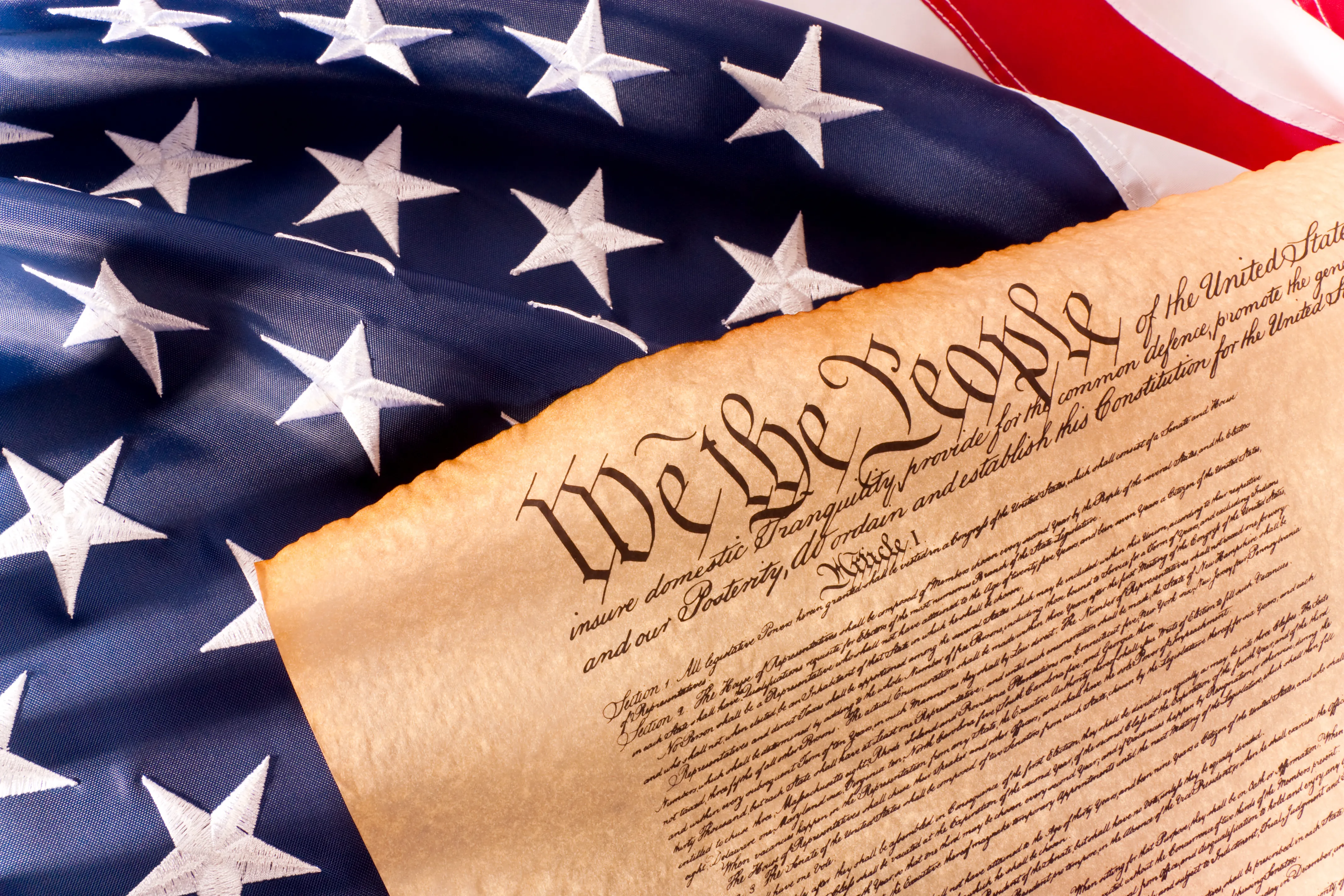
The image wrapping front to back featured a bald eagle clutching the stars and stripes and a stylized U.S. Constitution with its bold heading of We the People.
We were now the people.
We were eager to honor our nation's past as we ventured forth to build its future. 1776 to 1976, 200 years, the bicentennial class.
It felt special.
This year marks the 250th anniversary of our nation's declaration of independence from English rule.
I'm still learning to pronounce semi-quincentennial.
I have mixed feelings about this 250th anniversary, and I'm not alone.
Others in my life say they, too, feel weird about it.
We love our country, but something feels off.
We, the people, haven't exactly created a more perfect union. justice, domestic tranquility, and the blessings of liberty have taken some hard hits lately.
And to be honest, a lot of what I saw in the lead-up to semi-quincentennial season felt like shopping lists, as if wearing made-in-China red, white, and blue merch proves patriotism better than an I-voted sticker.
Maybe we could all remember during this semi-quincentennial that our communities include people who love their country, but not commemorative coins.
That doesn't make them unpatriotic.
And you can love a star-spangled party and also support the right to assemble at a no-king's march.
I'm pretty sure the original Sam Adams would have been up for both.
When the class of 2026 reflects on the 50 years between their semi-quincentennial and the tricentennial in 2076, I hope they can celebrate the resilient democracy our founders helped create and generations since have worked to preserve, even if it was never perfect.
I think that's worthy of celebration, even if it's just a moment to give thanks for living in interesting times, Even if it feels weird.
This is Donna Kellner from 45 Degrees North for Yonder Radio.
That was Donna Kellner.
You can read more of Donna's column 45 Degrees North on the Daily Yonder.
It's time for our final trivia clue.
The city where this took place is now synonymous with alien encounters and hosts an annual UFO festival over Fourth of July weekend.
Do you have it?
The answer is the Roswell incident.
When odd debris was found scattered through a field, the Roswell Army Airfield issued a statement identifying the debris as part of a flying disc.
That statement was quickly retracted and replaced with a different official explanation, a crashed weather balloon.
But it was too late.
Speculation of a government cover-up only fueled further interest in the event, and Roswell became known as a possible UFO crash site.
For decades, the town has been leaning into that notoriety to fuel tourism, attracting visitors from all over the world to sites like the International UFO Museum.
Local businesses and chains alike advertise using alien imagery.
The Dunkin' Donuts sign, for example, is held aloft by a 30-foot green alien.
And the official town motto is, we believe.
In 1994, the U.S. Air Force released a report admitting that there had been a cover-up at Roswell.
But according to the report, the debris was from a top-secret spy balloon, not just your everyday run-of-the-mill spy balloon, that was being developed to spy on the Soviets.
And we appreciate you tapping into our conversation today.
Covert or not, we appreciate your presence.
Thank you all so much for hanging out with us today on Yonder Radio.
Thank you for listening to Yonder Radio, a production of the Center for Rural Strategies, publisher of The Daily Yonder.
I'm your host, Jared Iwi.
Thanks to Don Castle and the Tennessee Sheiks, Steph Gunno and the Lone Tones, Quincy Ponfair, Leo Pozel, and Tim Merrimah for the great music.
Our editor and producer is Susanna Brown.
This episode was also produced by Alana Newman with additional support from Anya Patron-Slepian and Julia Tilton.
Our executive producer is Joel Cohen.
The executive in charge of production is Adam Georgie.
Yonder Radio, Rural Conversations with National Reach. guitar solo