The Yonder Report: News from rural America - June 19, 2026

© Dean_Fikar - iStock-503150251
News from rural America.
This week on Yonder Radio, we start out with a story from KFF Health News, about the closure of dialysis clinics in rural Nebraska. Arielle Zionts reports that shuttering clinics mean that patients will have to drive several additional hours each way to receive life-saving care. We’ll continue our visit to the Great Plains with Kristy Bly, who manages the restoration of the Black Footed Ferret with the World Wildlife Fund. Then, we’ll head to western North Carolina, to learn about the tradition of ballad swapping, and its special significance in the wake of Hurricane Helene. Finally, reporter Ilana Newman takes us to the Sandhill Crane Festival in Monte Vista, Colorado, to celebrate the annual migration of one of North America’s oldest species. Our featured musical guest is Bill Palmer, a musician and producer out of Terilingua, Texas.
TRANSCRIPT
Hey, I'm Jared Ewe, the host of Yonder Radio.
Every week we bring listeners rural conversations with national reach.
No different this week as we go to Nebraska with KFF Health News' Ariel Zients reporting that despite an influx of state funding from the Rural Health Transformation Program, dialysis clinics are shutting down, which means people are having to drive several hours each way to receive life-saving care.
And we're going to continue our visit to the Great Plains with Christy Bly, who manages the restoration of the Black-Footed Ferret.
We're also going to head to Western North Carolina to learn about the tradition of ballad swapping and its special significance in the wake of Hurricane Helene.
And finally, reporter Alana Newman takes us to the Sand Hill Crane Festival in Monta Vista.
It's where they celebrate the annual migration of one of North America's oldest species.
And our featured musical guest is Bill Palmer.
I swear this dude is haunted by Tom Petty, and that's a good thing.
Take a listen for yourself.
He's a musician and producer out of Terlingua, Texas.
All that and more on this week's episode of Yonder Radio.
We'll be right back.
Yonder Radio, rural conversations with National Reach.
Hello, my name is Jared Iwi.
I just went outside and drank some hose water.
And if you're Gen X like me, you know that's better than coffee.
So I'm fired up for this time together because we have some incredible stories.
We're going to save our BFFs.
Okay, we're bringing in Christy Bly from the World Wildlife Foundation.
Talk about what that is and why we're saving it.
That's on the way.
Also, the legacy of Tom Petty, apparently infused in a musician in Terlingua, Texas.
We have that, trivia, and of course, news.
Right now, it is hot.
It is scorching where I am, but there's one thing we have that cools us down.
The only source of ice cold delivery is the Daily Under News editor, Jan Patolsky.
What's going on in rural America?
Hey, Jared.
This week, we kick off with a report from KCUR about how Kansas rural hospitals are leading the pack in the country with the risk of immediate closure.
According to a report by a nonprofit policy organization Centers for Healthcare Quality and Payment Reform, of about 100 rural Kansas hospitals, analyzed 69 are at risk of closure with 28 at immediate risk.
Experts point to increase in expenses.
That's the inflation hitting them hard, as well as fixed reimbursement rates, which means hospitals are less nimble in those trying financial times.
Listeners, I did the math for you.
That would be 97 hospitals of approximately 100 at risk.
Here's hoping the breadbasket to the world doesn't play an important role in anything.
And also an agriculture USDA staffing crisis.
What's happening here?
Yes.
National Sustainable Agriculture Coalition did an analysis and found out that between January of 2025 and 2026, USDA lost approximately 20,000 employees.
Majority of those losses, around 15,000, due to actions taken up by DOGE.
That was the Department of Government Efficiency.
And while the top leadership of USDA claims that it's primarily an attempt to move staff out of D.C. closer to the farmers, the reality is that 98% of the USDA staff lost between January 2025 and 26 were already outside of Washington, D.C., over 19,000 employees.
Every state and territory lost some staff during this period.
The highest losers were Maryland with over 1,400, California with over 1,000, and Texas close to 1,925 specifically.
That causes a lot of worry for the farmers who obviously need that experienced staff on the ground to really help administer a whole host of programs.
And now quite literally the lighter side of news from Grist.
Jan Patelsky, what is this?
Yes, so Grist brings us a story about how, for the first time in recorded history, solar energy provided more electricity in the United States than coal.
We learned that gas and nuclear power plants are still leading the country's energy mix.
Solar managed to contribute 12.8% of nations' electricity in May, with coal providing 12.2%.
And for context, just five years ago, solar was less than half of its current level. with coal providing over 20% of energy.
Another interesting wrinkle in that story is that all of that data comes with the backdrop of $700 million being funneled to prop up the coal industry.
That's money that's been moved away from funds previously dedicated to actually reducing our country's dependence on coal.
Well, it makes sense that the public pay attention to the sun because, Jan, it is a pretty big star.
Is it as big as me?
Nothing is as big as Jan Patolsky, heard only here on Yonder Radio Weekly.
Thank you so much.
Thank you, Jared.
That was Jan Patolsky, news editor for the Daily Yonder.
And up next, we have a new guest for our feature news story.
And that's what we do.
The latest, most pertinent story right here with the article, Rural Nebraska dialysis unit closes despite the state's $219 million in rural health funding.
From KFF Health News, Arielle Zients joins us, and she can tell us what is going on with dialysis in rural Nebraska.
Dialysis in rural Nebraska reflects what's happening with rural health care across the country, which is just challenges to stay open.
And in this case, the CEO of the hospital, it's a nonprofit critical access hospital that ran this dialysis unit.
He told me they were losing about a million dollars a year for several years.
All but one of the patients were on Medicare and Medicare did not reimburse what it actually costs for them to offer this service.
The idea was if we keep going with this program, it might then force us to shut down another program.
Dialysis is life-saving.
It is necessary for people with end-stage kidney disease, but it was a small amount of people.
It was 14 patients.
So the idea is, okay, we need to cut this to perhaps save another service that serves more people.
But it's literally devastating, life-changing for the people who no longer have it in Chattron.
And is there any inclination that you were able to gather for this story as to why rural areas have more kidney issues?
Rural areas have higher rates than urban areas of some of the conditions that can cause end-stage kidney disease, so like diabetes and high blood pressure.
And that may be because of less access to healthcare in general.
Healthcare can be further away.
There can be longer wait times, less access to specialists.
And something I hear like literally from people when I go visit rural areas is people like ranchers and farmers putting off health care during busy seasons but it's often always busy so a lot of so these people will only come in once it gets really bad people in rural areas are less likely to have access to nephrologists, which are kidney specialists.
And then another interesting barrier is kidney transplants.
When I first heard that, okay, there's challenges in rural patients getting transplants, I thought, oh yes, of course, because they need to drive to a major medical center to get a transplant.
I mean, even me here in Rapid City, they don't do transplants here.
I would have to drive five hours at least.
But it's not just the actual surgery.
To qualify for a transplant, You have to have a barrage of pre-clearance exams and tests.
You were in the Shadron area and you did speak to several people.
And the first person here, you talked to Linda as she was doing some planning.
I ran into Linda in the waiting room.
She was waiting as her husband, Alan, got his dialysis.
She has to drive him because of some of his conditions he can't drive.
And I noticed she had this big yellow legal pad.
Oh, it's just the list of the different towns that I was trying to figure out when they was wanting us to go to a different facility.
So I was getting them calculated.
She calculated how long it will take to drive there.
She also had the numbers of like politicians to call, of some nonprofits in the area.
So she's doing her research.
So she made this list and some of the next closest options, they exist.
But that doesn't mean they can go there because they're also full, right?
The next closest ones are also very small rural ones that don't have, they say, chairs rather than beds, right?
Because you sit in the chair during the dialysis procedure.
They chose an option that is more than four hours round trip.
I mean, so that's three times a week.
So that's more than 12 hours a week just in the car, plus the dialysis, which can take three to four hours each time.
Several people said to me it's like a full-time job.
This brings us to Jim, Jim Wright.
I know there's a financial problem here, but we're talking about something that's life-saving.
And it seems, according to your story, they've resorted to some fairly extreme measures to make this work.
Jim and Carol Wright, they said that they're lucky that they can afford to do what they're doing, which is they are renting.
You know, they own a house near Shatterin, but they are renting near Rapid City, and they're actually going to have to move out of that place and rent in Rapid City.
And the rent here is not cheap.
So they're renting here.
So that way they commute just once a week.
You know, they drive here on Sunday, live in Rapid during the weekday.
So Jim can get his dialysis Monday, Wednesday, Friday.
Then they drive home to Shattering for the weekend and then repeat and repeat.
The rights say that they're going to have to move because they can't sustain, you know, paying for their house and renting.
That's upsetting for them because they love their home, which overlooks the Nebraska National Forest.
And they're really important members of their community.
They're involved with their church and lots of nonprofits and community organizations.
So when they leave, it also impacts the entire community.
And then this brings us to Mark.
Trump says he's going to help rural health care.
And this is one thing that we really need here.
In your article, he actually says, I guess I'll just bloat up and die in a month.
Tell us about what he's facing and how he's handling it.
When I first met Mark Pieper, he did not know what he was going to do.
I mean, he was basically telling me I have no options.
But then I believe, you know, people who care and love about him convinced him, OK, no, you need to do something.
He is a cancer survivor, but he survived cancer using drugs that basically damaged his kidneys.
And then because of his treatment, his doctors say he's not a candidate for home dialysis nor for a transplant.
So his option is really only going into a clinic for dialysis.
So he is driving very far also to Scott's Bluff.
But he is still an active rancher.
The day I met him during one of his last appointments and shattering before it closed, he had to go home to attend to his cattle.
I know you will be following this closely.
And of course, it ties in with this bigger story of what is happening with the funding with rural health care transformation.
What have you discovered with that?
Rural health care information program is a five-year, $50 billion program, and states get money to spend on, you guessed it, rural health care.
Multiple of the people I spoke with, like the nurses, just some community members, the patients knew this program by name.
Others, like Mark, you know, mentioned, like, I heard Trump say he was helping rural health care.
So they were all naturally asking, why can't this be used to say that our state got millions of dollars?
And it's because the program is largely focused on expanding services and like new innovations, a lot of technology.
And there's actually a cap on how much it can spend on directly paying for services.
Something that's more likely to get approved with dialysis would be like starting a new transportation program or starting a mobile dialysis unit.
But it would be a lot harder to fit into the rules to ask for funding to just keep an existing service like this one going.
Plus, the funding would run out in five years, even if they got it somehow.
So it just wouldn't be sustainable.
Well, thank you for this insight and everything you guys do over at KFF Health News to keep us updated on rural health care and rural health care transformation.
So thank you so much for taking the time today, Ariel.
Thanks for having me.
Well, that was Arielle Zions with KFF Health News.
And now we're going to hear from our featured musician, which begs the question, this man, what is going on in Terlingua, Texas?
It is a hotbed of music.
Bill Palmer, he's one of those people who's been down there for a while.
And now here he is, singer, songwriter, and producer.
And we're thrilled to have him here on Yonder Radio. okay here is my bill palmer origin story so things it turns out worked out between janice joplin and bobby mcgee they had you well of course we have the untimely demise of janice joplin and bobby McGee's a total flake.
So you are left to be raised by who?
The traveling Wilburys.
And that, folks, is how we have Bill Palmer with us today.
Hey, I like that story.
Back to someplace I've never been.
What's waiting on the other side of Kansas?
So tell me what is going on in Terlingua, Texas?
Well, that's my home.
Have you ever been there?
No, I didn't even know about it until I started stalking you online.
It's kind of the Wild West out there, and I've been going out for about 30 years, fell in love with it.
It's right down on the Rio Grande on the Mexican border, and it's Chihuahuan Desert, very isolated.
It's an old ghost town that got sort of rediscovered by people who were disgruntled with civilization and started settling out there in the old structures.
And, you know, music was always kind of a thing because they didn't even have electricity or anything.
And so people would sit around fires.
You know, we're talking back in the 1970s, 60s, 70s and stuff.
And there's just the Terlingua porch, the kind of famous Terlingua porch.
It's in the in the old ghost town.
People gather there every day and sit on the porch and you can go into the old mercantile and get some beers and bring them out and sit on the porch.
And people just gather and bring guitars and all kinds of instruments and swap songs.
And that's been going on for, you know, 50 years at least.
Well, bring back the front porch, America.
Yeah.
So it's just this amazing little music town.
It's really centered around singer-songwriter.
You can't throw a rock without hitting a singer-songwriter out there.
And so I just fell in love with it.
And I ended up, you know, buying some land and building an off-grid cabin out there.
It's off grid because there's no other option.
I run a recording studio out of my cabin out there.
Well, what are you plugged into this, son?
Yeah.
Yeah.
Solar powered batteries and stuff.
Oh, you're going to become the, I mean, most popular place to record because anyone that's going to want to pretend to have some soul in their music, you're going to have the biggest stars trying to find you out in the desert.
Oh, yeah, man.
Already some of that happens.
People come from far and wide.
There's an old church in the ghost town that functions really well as a recording studio.
We just throw the doors open, open the stained glass windows, and make records in that thing.
All of it ain't on stage Running through my brain You produced metal legend Dawkin.
Yeah.
I was listening to a podcast with Don Dokken, and the podcasters and Don are praising the production of the album that you were a part of.
It's really a great record.
And, you know, I loved Dokken as a kid.
I had the posters on my wall, had all the records.
You know, Don is an older guy.
He's like 70.
He's 70 or so now.
And, you know, and he's been smoking in his life and his voice is a lot huskier and he can't hit those high notes.
And somewhere along the way, he was kind of getting frustrated about it.
And somewhere along the way, you know, I was like, Don, your voice sounds amazing as who you are right now.
Like you've got this cool old Don Dockin voice.
Just own that, embody that.
That's the sound.
And he just looked at me and his eyes just got really big.
And it was like this light turned on.
It's like I don't have to pretend to be the young guy that everybody loved.
I'm a new sound now.
I think because of that, me sort of pushing that is when I really stepped into the role of producer of that record.
Being a record producer, you're kind of like a midwife for people's art.
Well, it sounds like you're dealing with helping people be authentic.
Yeah.
Yeah, man.
So what are you doing now?
What is the next or the current into next Bill Palmer project?
I'm in a few different places because I've been around long enough now that I've been a part of a lot of different things.
Bill Palmer, that's sort of my main solo self and records that I release of myself.
There's also Wayne Sutton and Bill Palmer.
There's also Mule Ears, which is my current band with Wayne.
But also, I'm always producing other people.
I'm working with an artist, Ava Wren, right now, a young artist who is really amazing.
Ava Wren's record is called Lightning Child.
I'm really proud of that.
I engineered, played bass, mixed that record.
There are monsters that are circled.
There are things not what they seem.
I really just kind of have my hands in all kinds of different things, you know.
For me, it's like the creative process.
It's just always moving, always going.
Well, Bill Palmer, the Swiss Army knife of music production and playing and promotion.
Thank you so much for coming on.
Thank you for having me.
I really appreciate it.
Well, that was musician and producer Bill Palmer.
You can find him on Instagram at BillPalmer73.
Well, now it's time for our first trivia clue for the week.
We'll give you three clues throughout the episode.
We will reveal the answer at the end of the show.
But first, this clue.
It's a town with a population of around 250 people, 58 miles southeast of Anchorage.
It's part of Alaska's unorganized borough, the sparsely populated areas of Alaska that have no county governance.
What is this town?
We'll have our next clue on the way, and we're going to save our BFF with Christy from WWF on Yonder Radio. guitar solo guitar solo beyond radio rural conversations with national reach hello my name is jared ewe and we are here to bring you now well trivia we have that coming up we're going to hear more from bill palmer and we're also going to sing some ballads some of them even get body we have that on the way but First, Christy Bly, she manages restoration for the Black-Footed Ferret, the BFF to which I've been referring.
She's with the World Wildlife Fund, and her specialty is the Northern Great Plains.
I'm watching a documentary, and it's about the Black-Footed Ferret.
And there you are, on the prairie, and you use this immaculate wordplay, which I admire good wordplay.
It's not paradise, the prairie dice.
A lot of people driving through middle America don't get a good impression of the prairie.
What are they missing?
That's a great question.
And unfortunately, I can't take credit for that phenomenal word, but I absolutely love it because grasslands of the North American Great Plains are anything but quote unquote flyover country.
And I think many people don't spend enough time stopping and looking and listening. the North American Great Plains is one of the most rare and special places.
It's one of the last temperate grassland vestiges on earth.
And we have it right here in the heart of North America.
And not only does it serve as the bread and butter basket for our country, providing food and fiber and fuel to sustain human resources, but it rivals the African Serengeti.
It once had nearly the same diversity and sweet and sheer numbers of native wildlife species, pollinators, insects.
And while some of those species are absent from this landscape now, there are still large vestiges of intact prairie habitat.
And that habitat hosts over 16,000 varieties of grasses, sedges and wildflowers, but also it holds 30% of the world's carbon in these grass roots.
And it's home to species like bison and pronghorn and swift fox and coyotes and ferruginous hawks and grassland birds, prey dogs, and the endangered species like black-footed ferrets.
Well, I clearly unlocked something in you and it was great to hear.
And you brought up your BFF, Another reason to appreciate the prairie dice, the black-footed ferret, what is its situation?
And tell us about what you're doing to ensure its survival.
Black-footed ferrets are one of North America's most endangered mammals.
And they became that way because they are dependent on prairie dogs, which are a burrowing rodent in which black-footed ferrets rely on for survival food-wise and shelter.
As European settlement occurred, with it came the plow up of native prairie into row crop agriculture and introduced accidentally this non-native disease called sylvatic plague, which is a bacteria spread by fleas to hosts like ferrets and prairie dogs.
There was a lot of poisoning efforts to get rid of prairie dogs on the landscape as they also ate the same grass that cows ate.
So these three Ps, plague, poison, and plow up, led to the vast loss of the aerial extent and abundance of prairie dogs, the main food for ferrets, which led to 95 to 98% reduction in their historical range and their available habitat.
So we went from probably 500,000 ferrets in the wild at some point in time, down to 120 animals that were rescued thanks to a ranch dog named Shep in Wyoming, who found the last remaining population.
And thanks to some innovative efforts by biologists, back in the 1980s, the species was able to be saved from extinction.
And the last animals were brought into captivity, where only seven Black-footed ferrets became the genetic founders of all that are alive in the wild today.
Did Shep just come back to the ranch with one in his mouth?
How did this happen?
In the high plains of Matitsi, Wyoming, this small town, there's this amazing family that lives on this ranch, the Hogg family.
And at the time, John and Lucille Hogg and their dog Shep lived right near the prairie dog colony.
And so Shep brought home this carcass one time and John decided to trash it, but he told Lucille about it.
And she said, well, gosh, that sounds curious.
Let's take it to the local taxidermist.
And the taxidermist was pretty well aware of the plight of Blackfoot ferrets and that they were presumed extinct.
It was a pretty exciting time in this quiet little town of Matisse, Wyoming, because the taxidermist identified it correctly as a Blackfoot ferret.
And biologists from all over descended on this ranch town to study everything they possibly could about Blackfoot ferrets.
So ranch dog Shep did indeed save the day.
It's an incredible story.
Canines and curiosity, America.
That's all we need.
It's so true.
Well, as we learn more about our BFFs, I also learned a lot about the prairie dog.
And thanks to you, Christy, and your succinct description of it being the chicken McNugget of the prairie.
Tell us about the importance of prairie dogs.
Prairie dogs are the Scooby Snacks or McNuggets of the prairie because they are a small but mighty species that are what's called a keystone species. meaning their presence has a disproportionate impact to the landscape and the animals around them.
So over 130 other wildlife species rely on prairie dogs and their colonies in some capacity for survival, whether it's eating them directly as a scooby snack or using their burrows for shelter.
If you sit on the edge of a prairie dog colony earlier in the morning, it is loud.
Birds are chirping, prairie dogs are calling.
There are bison or pronghorn or badgers or coyotes rolling through.
It's alive.
And it's a pretty spectacular place to be.
And speaking of you being out there, I think you and your team might be nocturnal by now.
You have to be.
Talk about this, the challenges of helping out the black-footed ferret and some of the innovations that you're doing now.
Sure.
Well, ferrets are nocturnal.
And so you have to go out at night to look for them.
And it is not easy.
If you are thinking about a landscape, close your eyes.
It's pitch dark and you are looking across a landscape of 3,000, 5,000, 10,000 acres as far as the eye can see.
And what you need to do is have a spotlight at the top of your truck to peer over the tops of these prairie dog bros to look for the notorious emerald green eye shine of these masked bandits of the prairie.
It can be like looking for a needle in a haystack.
So not only do we have to get good at keeping fleas controlled to keep plague at bay, but we need to get really good at finding these little munchkins on the prairie.
And that means being really creative with how we work and finding new ways to spend less time bumping around the prairie with a spotlight, kicking up dust and looking for ferrets.
So we've tried some really neat things with thermal cameras, which detect the entire heat signature of an animal like a black-footed ferret.
And then once we find them, we track them to their burrow, bring them to a little hospital trail or on site, vaccinate them against sylvatic plague, give them a little microchip, and then we re-release them.
And one plague shot plus a booster is good for a ferret's lifetime.
So we have to go out every year and catch any new ferrets born into the wild to protect them against plague.
Just another creature out of the prairie, Christy Bly on her four-wheeler.
Howling with the moon.
Yes.
Yeah, I love it.
I love this piece The Atlantic did on your work and that of your team.
You're paraphrased in saying wild habitats are simply too scarce.
The captive breeding program has effectively outstripped what's left of nature's capacity to benefit from it.
What does that mean?
The great thing about captive breeding is that they are so successful.
There's five breeding facilities in North America.
Their ability to raise kits in captivity and wean them and then have those kits go through a boot camp program to learn how to kill prairie dogs before they get released in the wild is so successful that we sometimes have over 300 captive bred preconditioned ferrets to put out on the landscape. but we don't always have enough habitat in which to put them.
So when we talk about what are the things that we need to do to recover the black-footed ferret, number one, we need to address plague at scale.
We need to protect more prairie dogs and more ferrets everywhere they are and everywhere they can be.
Second, we have to make sure that the habitat is protected, not just from plague, but from poisoning and shooting as well. a 95 to 98% reduction of prairie dog habitat over the last one to 200 years.
And we only need less than 1% of that to recover the ferret.
So it's a small ask, but the order to actually achieve it is pretty tall.
Well, when I hear you now, and when I read about you and your team's adventures on the Prairie Dice, which by the way, if Coolio is available to do Gangster's Paradise, but a different version for the Black-Planet Ferret, that would be amazing.
I hear about this.
I'm hopeful.
Am I delusional?
No, you're not at all, because I think the story of ferrets is of hope.
Yes, the challenges are great.
However, since the very beginning of ferret rediscovery by our friend Shep the dog, biologists and researchers and educators and zoos and nonprofits and governments and tribes and private individuals and landowners and ranchers, we have all come together.
And we are all focused on one vision, recovering this endangered mass bandit of the prairie.
We have all sorts of tools in the toolbox.
And every day we are trying new things.
And it's because of the dedication of the people on this team and the younger biologists coming up, we have a chance at recovering this species.
Well, people, that tingling sensation you're feeling is that you have just been touched by Christy Blackfooted Bly, manager of Blackfooted Ferret Restoration for the World Wildlife Fund's Northern Great Plains program.
And this conversation is even more incredible than I imagined it would be.
Thank you so much for sharing the story of your BFF today.
Thank you for sharing this story of Blackfooted Ferrets with the world on your awesome Yonder Radio.
You're hired. once again that was the indomitable christy bligh with the world wildlife fund awesome to talk to and undying in her efforts to save the black footed ferret and now let's hear a song from bill palmer and his collaborator wayne sutton here i'm hearing some tom petty i hear a lot of great influences this is a great song it's called baby blue on yonder radio He packed the car in the darkness One guitar leaving the rest The kids all grown and moved away Not much reason left to stay He had it with Out I-10 He may never come back again And all those songs They're coming true From all those chords Down to just a few In the western skies Of baby blue Oh, records playing On the radio New songs being written That he doesn't even know Review mirror Gave her blessing to go Now the future's full of hope West Texas In the windsheel No one's fate is ever seen And all those songs They're calm and true And all those chords Down to just a few In the western skies Of baby blue Everything you ever wanted Is on the horizon of these hills And all those songs you haven't written Now my friend, you're going to where you will And you will Now that was Bill Palmer and Wayne Sutton with Baby Blue.
You can get more songs from Bill and Wayne streaming wherever you get your music and in an abandoned church in Terlingua, Texas.
Well, we got another break coming up, but first it's time for our second trivia clue.
We're talking about a town of around 250 people in southern Alaska.
The only land access to the town is through the longest highway tunnel in North America.
You can also reach the town, located on the northeastern shore of the Cannae Peninsula, by boat.
What is this town?
We have another hint coming up, and then the answer, and then on this journey together, just a radio road trip.
You and me, we will be singing ballads together.
On the way, on Yonder Radio.
Yonder Radio Rural Conversations with National Reach.
Hello, my name is Jared Iwi, and I'm a minor player in this last part of the show.
It's coming up.
We've got the superstars in the Sand Hill Cranes.
People travel for miles through states to catch part of the migration of the Sand Hill Cranes.
And Alana Newman will bring you that story.
But right now, a segment from Living Traditions, a project that tells stories about folklife in central Appalachia.
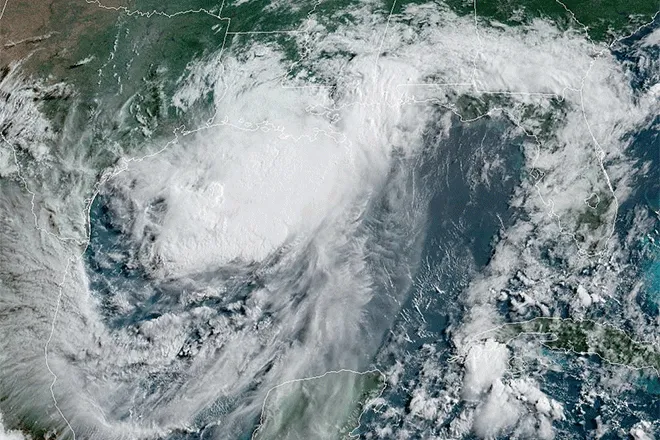
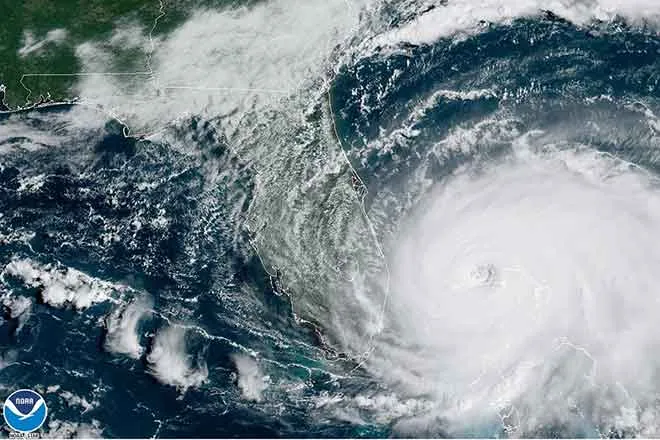
This week, Daily Yonder reporter Sarah Mallott brings us a story about the tradition of ballad singing in western North Carolina and how it was affected by Hurricane Helene, which devastated the area in the fall of 2024.
There was a wealthy merchant in London, he did dwell.
He had a lovely daughter, to you the truth I'll tell.
Oh, to you the truth I'll tell.
Tonight's the monthly ballad swap at Zadie's Market, a restaurant housed in what used to be the jail here in Marshall.
Out on the patio, in front of the dinner crowd, a group of 11 are sitting in a row of fold-up chairs.
They're taking turns singing ballads.
I will lock you in my dungeon, Your body I'll confine If none but Jackie Frazier Could ever suit your mind Oh, could ever suit your mind Most of these ballads were brought to Appalachia by settlers from the British Isles.
Traditionally, ballads were sung in private, among family.
Over time, singers began performing them in public.
Many ballads tell stories about heroes, betrayal, doomed romance, even murder.
Some can even be a bit raunchy They're called body ballads, as Donna Rae Norton explains Body ballads are like the dirty ballads And I was like, are there any kids here?
Right now, I know that there was like one that just left I think everybody else is old enough After making sure the coast is clear, Norton launches into a body ballad called the Darby's Ram The song cheekily tells the story of a very, very large ram The head on this rim was as big as Noah's Ark.
My dog run up its nostril and turned around and barked to my fa, to my fa, diddle day.
Norton's an eighth-generation ballad singer from Sodom Laurel, North Carolina.
She co-founded the Ballad Swap in 2023 with her cousin, renowned ballad singer Sheila K.
Adams.
I've always idolized her.
She just sounds like home to me. the Ballad Swaps become an important opportunity for these singers to share their tradition with others.
When Hurricane Helene tore through the mountains of western North Carolina in September of 2024, the future of the Ballad Swap became uncertain.
The old Marshall Jail, the home of Zadie's Market, was left full of mud and water.
For Norton, she was concerned about how the building's destruction would affect the Ballad Swap.
The Ballad Swap's sort of like my baby, And I was like, oh my God, we've lost this place.
What if it can't come back?
What if we don't have the same momentum that we had going before?
In the aftermath of Helene, amidst all the uncertainty, Norton found comfort in singing ballads.
I really leaned into the ballads more during that time as a way to like connect with myself and my people.
But not every ballad was a comfort.
Many of these traditional songs touch on themes of land and loss.
Darcy DeWolf is a ballad singer from Marshall.
She says that right after the flood, emotions were still too raw to tackle songs with those themes.
We did avoid for a long time any songs about rivers or waters rise.
I mean, it was like you think, oh, I'll sing this, and you get to about the second verse, and it's like the river's going to flood.
You're like, no, I can't, you know, too soon, too soon, I can't do this.
But with time came the desire to return to some of those ballads.
Helene wasn't the first historic storm that afflicted Western North Carolina.
In 1916, another flood swept through the Blue Ridge Mountains, changing the course of rivers and killing around 80 people.
And there was a ballad written about this storm.
It's called The Flood of 1916.
A few months after Helene, Sarah Elizabeth Berkey of Jackson County, North Carolina, decided to learn this song.
At first, she had a hard time with it.
I resisted, like my brain resisted absorbing it and memorizing that song. because the story is such a hard one.
Eventually, she did learn the song.
In the month of July, in the year 16, the most terrible storm you ever did see Made its way from the ocean wide And it struck with force on the mountainside The ballad singers leaned on their tradition in other ways, too.
While the old Marshall Jail was being restored, the group took their show on the road.
For them, it was a chance to be together doing something they loved, while also raising awareness about the storm's impact on their home.
Norton says the group performed sold-out shows in places like Charleston, South Carolina, Floyd, Virginia.
Just all these different things have blown my mind.
It's just been crazy.
Attendance boomed when the ballad swap returned to Marshall after being on the road.
Locals showed up in droves to support ballad night.
So did tourists and people who came to see how the town had fared since the storm.
Even though it's raining tonight, the patio at Zadie's is packed.
Ballad nights typically close with a group sing.
Norton introduces tonight's closing song.
We're going to close out with Jerusalem more.
Yeah?
So another fun one.
Everyone stands to join the ballad singers.
There's a Baptist preacher, you can tell him by his coat.
Don't you hear Jerusalem more?
He's got a bottle in his pocket, Teddy King Harley tote.
Don't you hear Jerusalem more?
Y'all can help.
Don't you hear Jerusalem more?
Don't you hear Jerusalem more?
Norton says surviving Colleen as a community revealed the preciousness of loved ones.
And traditions, too.
I think it was just sort of an eye-opener for a lot of people about how special things are and how fragile everything is.
For these singers, they've only become more committed to sustaining ballad singing for future generations.
For Yonder Radio, I'm Sarah Mallott in Marshall, North Carolina.
I'm Sarah Mallott in Marshall, North Carolina.
I'm Sarah Mallott in Marshall, North Carolina.
Thank God there's a song that's singing in my soul, and my soul's soft free.
Don't you hear?
Jerusalem more.
You can read more stories from Living Traditions and subscribe to the newsletter at dailyyonder.com slash living hyphen traditions.
And now we have a story from Daily Yonder reporter Ilana Newman, and she's going to take us to Colorado's San Luis Valley.
It's the spring migration of the Sandhill Cranes.
It's sunset in early March, and a chirping sound echoes across the fields of the San Luis Valley in southern Colorado.
Thousands of birds swirl overhead, coming down to roost.
Every spring, Sandhill Cranes migrate through this high elevation valley, bringing locals and tourists alike to stand next to wetland areas where the birds gather.
People have binoculars strung over their necks, ready to catch a close-up glimpse of these impressive birds.
That noise is pretty cool.
More than 20,000 of the subpopulation of Rocky Mountain Greater Sandhill Cranes come to the valley each spring to rest along their way to their summer home in the northern Rockies.
In celebration, the small town of Monta Vista hosts an annual Crane Festival, which brings thousands of visitors from all around Colorado and the country to see these unique birds.
This is the 43rd year that Crane Festival has been running.
That's Amy Engel, the director of the festival.
She said that around 2,000 people come to ticketed events during the festival weekend, which includes a craft fair, guided tours, talks from scientists, and a film screening.
This is a slow period, you know.
We're really busy in the summer.
That's when everybody comes really from the ending of hunting season till summertime.
There's not a lot going on.
So this is a great time of year to have the cranes here.
It's a great time of year to have a festival.
It brings in a lot of tourists and a lot of people to spend money in restaurants and shops.
And it's really great.
A 2020 study on the economic benefit of spring crane migration in Monta Vista found that visitors to the valley over the 30-day period when the cranes are present contribute over $3 million to the low-income. local economy.
Aside from the festival itself, even more visitors come to the valley to see the birds on their own.
You don't need a ticket to take a drive to the Monta Vista Wildlife Refuge a few miles south of town.
We headed down there to see the birds for ourselves.
There we met Mike Oldham, the administrator for the refuge, next to a field full of last year's barley crop.
The cranes depend on the grain as a food source during their layover in the valley.
And at one time, the valley was a lot more wet.
It's a little drier now.
And so it's a little harder for them to make their way and find the different habitats and the different, you know, foods and stuff like that that they need for the migration.
Cranes spend their night sleeping in shallow open water, their mornings and evenings feeding on grains, and their days loafing around in wet meadows.
The refuge is allowed to pump water earlier in the season than the surrounding farms, meaning that the cranes have the water they need to roost in.
Whatever the birds need, we try to provide here, so they've got it on the migration route, either north or south.
Sandhill cranes can live for over 20 years, and they mate for life.
What is really fun about the cranes is when they do what we call their dance.
And that actually is their mating dance.
That's Sarah, a Colorado Parks and Wildlife Service volunteer who has been helping out during the crane migration for 20 years.
The cranes danced as a mating ritual or to strengthen a mating bond, jumping and bobbing around each other acrobatically to show their romantic interest.
Everyone we talked to emphasized how incredible it was to see the birds up close, whether it was their first time ever seeing the Sandhill Cranes or they were frequent flyers at the festival.
Susan Turner and her husband drove down from Glenwood Springs, Colorado in their motorhome to see the cranes after hearing that there were thousands of birds present this year.
This is about our third or fourth time coming, and sometimes we see a few, and sometimes we see hundreds and thousands, I think, we might be seeing today, which is amazing.
So this is abnormal?
This is more than I think we've ever seen before, ever seen before, which is pretty special, pretty wonderful.
For Yonder Radio, I'm Ilana Newman. you can find the sandhill cranes on their migration route in the san luis valley in february and march for the spring migration and september and october in the fall and now it's time for our third and final trivia clue now while this is exciting it also means we're kind of wrapping this up and makes me sad but i'm going to deliver unto you the clue the majority of this town's population lives in one 14-story building, giving it the nickname, "The Town Under One Roof."
Do you know?
Do you know the answer?
Drumroll, please.
The answer is Whittier, Alaska.
Situated on the west side of Prince William Sound, Whittier is a popular stop for small to mid-sized cruise ships.
It's an access point for tourists who want to see stunning Alaskan glaciers and encounter local wildlife, including whales, bears, and moose.
But the most interesting thing about Whittier might just be the community's unique real estate market.
Most residents live in Begich Towers, a 14-story condominium that also houses the city's police department, the health clinic, a convenience store, a laundromat, and the school, which serves around 50 kids from kindergarten through the 12th grade, is connected to the building via an underground tunnel, which my eight-year-old brain says would be awesome.
Well, it happened again.
Another hour has taken us to this point where we must say goodbye.
You can tell us more about what you think, info at yonderradio.com and catch up on the latest anytime you want at yonderradio.com.
Thank you for listening, and we will talk to you next week.
Thank you for listening to Yonder Radio, a production of the Center for Rural Strategies, publisher of The Daily Yonder.
I'm your host, Jared Ewey.
The Living Tradition segment was produced by Nicole Musgrave.
Thanks to Don Castle and the Tennessee Sheiks, Steph Gunno and the Lone Tones, Quincy Ponfair, Leo Pozel, and Tim Merrimah for the great music.
Our editor and producer is Susanna Brown.
This episode was also produced by Anya Patron-Slepian, with additional support from Alana Newman and Julia Tilton.
Our executive producer is Joel Cohen.
The executive in charge of production is Adam Georgie.
Yonder Radio, Rural Conversations with National Reach.