Alabama Attorney General threatens legal action against six abortion pill providers

The Alabama Attorney General’s Office on Tuesday threatened legal action against six companies that it said were advertising or distributing abortion-inducing medication to Alabamians.
“Alabama’s law is clear, abortion is illegal in this state. These companies are not only breaking the law, they are deceiving Alabama consumers about the very real dangers of these drugs. That stops now,” Attorney General Steve Marshall said in a statement. “Anyone who tries to exploit Alabamians for profit while flouting our laws will be prosecuted to the fullest extent permitted by law.”
In doing so, the office effectively advertised where Alabamians seeking an abortion can get medication, said Robin Marty, executive director of the West Alabama Women’s Center, which provided abortion care before Roe v. Wade was overturned in 2022.
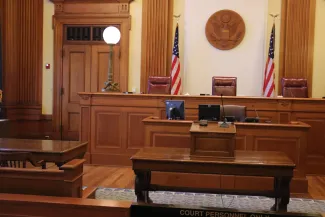
© iStock - Darwin Brandis
“As a person who is heavily involved in reproductive access for all people, I am surprised that he does not realize that what he has done has essentially provided an enormous commercial for these companies,” Marty said.
Alabama’s near-total ban on abortion, passed in 2019, went into effect in 2022 after the U.S. Supreme Court struck down federal abortion protections in the Dobbs v. Jackson Women’s Health Organization ruling, with exceptions for when the mother’s life is in danger. A performed or attempted abortion is a Class C felony under the ban, punishable by up to 10 years in prison, but the person seeking the abortion is not civilly or criminally liable.
Marty said the Attorney General’s Office’s press release told Alabamians where they could get medication for an abortion, which is something she cannot do as a provider.
“That has now improved the ability for people to find out where they can access abortion in a way that we were never able to actually let people know before, which is ironic, since we had been told that telling people where these companies were was in fact a criminal conspiracy,” she said.
The cease-and-desist letters were sent to Plan C, Southern Woven, ybycmeds, Abortion Pills in Private, Red State Access and Cambridge Reproductive Health Consultants. The letters demand the companies stop all advertising, sale and delivery of abortion-inducing drugs to Alabama consumers. Failure to do so, according to the statement, will result in an investigation and potential legal action.
Messages seeking comment from the companies were sent Tuesday afternoon.
According to the Federal Drug and Food Administration (FDA), the combination of drugs is safe to use up to 70 days of gestation. A 2015 study published by Dr. Michael Creinin, an OB-GYN at the University of California Davis Health who has researched the safety of mifepristone since studies first began in 1992, found that severe outcomes from mifepristone use requiring blood transfusion and hospitalization occurred in less than 1% of cases.
The letters from the Attorney General’s Office cite a 2025 analysis by the Ethics and Public Policy Center, a D.C.-based think tank that applies “the riches of the Jewish and Christian traditions to contemporary questions of law, culture, and politics,” found that 10.9% of women that took the medication experienced sepsis, infection or hemorrhaging within 45 days of taking it. The center partners with the Alliance Defending Freedom, a conservative organization that brought the Dobbs case.
Experts dispute that the center defines a serious adverse event the same way the FDA does, as a condition requiring hospitalization; threatens the life of a patient or causes disability and permanent damage or death. Creinin also criticized the methodology used by the center, saying in some cases it double-counted issues experienced by one patient.
The letters are signed by Deputy Attorney General Katherine Robertson, who is in the Republican runoff for Attorney General. Through the campaign, Robertson’s opponent Jay Mitchell, a former Alabama Supreme Court Justice, has criticized Robertson for accepting a $150,000 donation from Hugh Culverhouse Jr., a philanthropist who donated $250,000 to Planned Parenthood Southeast in 2019.
Messages seeking comment from the Robertson and Mitchell campaigns were left Wednesday afternoon.
According to reporting from Alabama Daily News, the University of Alabama’s law school was once named for Culverhouse but the school parted ways after Culverhouse was critical of the state’s abortion ban. In a 2019 Wall Street Journal ad, Culverhouse called for a boycott of the state because of the “unconstitutional and barbaric law.”

The Attorney General’s Office on Wednesday joined 13 other states in a letter to the U.S. Environmental Protection Agency (EPA) calling for tighter controls on mifepristone. Marshall said in a statement that as medical waste from the medication is discarded, it contaminates drinking water.
“There is a booming black-market for drug-inducing abortions operating completely outside of lawful medical oversight, and it has created a serious public health crisis. This is not just for those obtaining and using these illegal and dangerous drugs,” Marshall said.
Multiple states have considered legislation to create environmental restrictions around the drug or bills requiring providers to instruct patients to collect fetal tissue in medical waste kits and return it to the provider rather than flush it. The EPA may also conduct a review that could be used to restrict access in the future.
In 1996, the FDA Center for Drug Evaluation and Research issued a finding of no significant impact on the water supply from mifepristone.
Marty said that while the press release helped patients in a way that providers legally cannot, the state is focused on the wrong things when it comes to women’s health.
“They’re not doing anything to improve health care access for the people who are not getting abortions. There have been no moves to improve maternal health care in this state. There has been no moves to improve access or provide more support for contraception in this state,” she said. “At this point it seems that they are far more interested in making sure that nobody is able to access a safe abortion than they are making sure that our hospitals are not letting Black women die in childbirth.”
According to state data for 2020-2021, the maternal mortality rate for white mothers was 28.2 deaths per 100,000 live births. The maternal mortality rate for Black mothers was 77 deaths per 100,000 live births.
Only 30% of Alabama’s rural hospitals have labor and delivery units, leaving many expectant parents to drive long distances for care. Providence Hospital in Mobile announced on May 14 that it is closing its labor and delivery unit this summer.