Big Bend, Texas in crosshairs of conservation, border security

Click play to listen to this article.
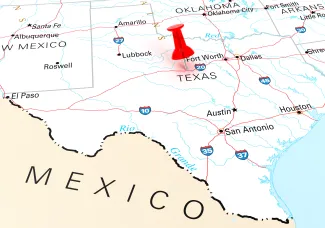
Construction could start as soon as later this year on a border wall in West Texas at Big Bend National Park and Big Bend Ranch State Park.
U.S. Customs and Border Protection and the Department of Homeland Security said hundreds of miles of a smart wall are needed to secure the border.
Grahame Jones, executive director of the Texas Conservation Alliance, said technology is already being used in the region to combat illegal crossings.
"Whether it be the surveillance balloon between Marfa and Valentine, out in the region, that’s been there for years – to the use of drones, the use of trail cams, and of course personnel," Jones outlined. "There’s ways to secure the border."
Jones pointed out the rough terrain in the region naturally limits movement and argued a large-scale wall is not necessary. He added hundreds of miles of a continuous wall will disrupt the migration patterns of wildlife, restrict access to the Rio Grande and affect private and public lands.
Contracts for the projects are expected to be awarded in the next few months. Property owners in the area have been contacted about leasing land for construction staging areas. Jones noted the project is moving quickly but the federal government is not being transparent.
"I think a lot of people don’t have a clear idea of where and how long these sections of border walls are going to be," Jones observed. "The public documents that I’ve seen suggest hundreds of miles of infrastructure across the entire Trans-Pecos."
Members of the Texas House of Representatives sent a letter to Governor Greg Abbott asking him to oppose the construction project. Jones added Texans can also get involved in the fight to preserve the west Texas landscape.
"It’s a federal issue, but at the same time, as Texans, we have a vested interest in this as well," Jones emphasized. "This is one of those advocacy issues that I recommend not only calling folks on the federal side, but also calling your state senators and your state reps."