Daily Audio Newscast Afternoon Update - August 3, 2026

© INDU BACHKHETI - iStock-1336427297
News from around the nation.
Acting-AG Todd Blanche nixes Trump’s $1.8B ‘anti-weaponization’ fund; Doctor says New York State air quality under threat from EPA truck standards rollback; Destructive AI book scanning practices raise concern for rare books; West Virginia city sued over police surveillance contract.
Transcript
The Public News Service Monday afternoon update on Mike Clifford.
Acting Attorney General Todd Blanche announced Sunday night he had issued an order officially rescinding a $1.8 billion anti-weaponization fund.
On X, Blanche said, My team and I have met with committee members and senators over the past several days and addressed any concerns or outstanding questions.
NBC News knows the deal clarifies that the tax audit immunity agreement applies by its terms only retroactively to claims open at the time of the settlement. and does not protect the president from examination of future tax filings.
Blanche's announcement comes two days before the Senate Judiciary Committee set to vote on his nomination to be attorney general in a permanent capacity.
Meantime, a doctor and long expert argues that New York's air quality will worsen from proposed Environmental Protection Agency rollbacks.
The EPA plans to remove certain standards on heavy-duty vehicles like semi-trucks, buses, garbage trucks, and more, beginning with the 2027 model year.
The Trump administration says this will save the industry up to $12 billion a year, but Dr.
Payal Gupta with the American Lung Association says there's a greater cost on human health.
The mixture of emissions trucks released has been linked to poor birth outcomes, reduced lung and cognitive development, and worsening of chronic respiratory and cardiovascular diseases.
While the administration and lobbying groups like the American Trucking Association to tout this as a cost-saving measure, the trucking industry made $906 billion in 2024.
I'm Edwin J. Viera.
And printed books are being cut apart and scanned to train large language models that are crucial in developing artificial intelligence.
Court records from a lawsuit against Amthropic Reveal, millions of books have already been destroyed.
The company called it Project Panama with a goal to destructively scan all the books in the world, and it purchased them in bulk orders from booksellers online.
Ken Gloss is the owner of Brattle Bookshop in Boston.
He says he's heard of AI companies needing more books, but he doesn't want to control what people buy.
If there's another use, that's more up to them, and I would not in any way want to get involved in asking, what are you going to do with this?
Gloss says the image of books being cut apart for scanning reminds people of book burning, but he notes books are recycled or disposed of every day.
I'm Catherine Carley.
And critics of an approved plan to equip law enforcement in Huntington, West Virginia, with surveillance technology from the company Flock Safety, say the contract would place disproportionately high numbers of cameras and other recording devices throughout the city.
Aubrey Sparks is with the ACLU of West Virginia.
And having these live camera feeds where they can check in and see what's happening at any given time, and having audio recorders that are going to audio record public spaces, presumably without people's knowledge.
Flock license plate readers create a data record of cars based on their license plate and other visual information such as dents or bumper stickers.
This is Public News Service.
And a new training is helping to prepare police, paramedics, and other first responders to better support older adults in rural Oregon during disasters.
Research shows older adults are disproportionately impacted by disasters, especially outside city centers.
Julia Brown is with Oregon nonprofit Age Plus, which helped organize the free training.
She says most emergency response systems rely on individuals to do things like pack a go bag and plan an evacuation route.
But not everyone is able to do so.
That really doesn't account for the number of older adults that are living independently, may not have easy access to transportation, may be living with chronic illness or disability.
Brown adds there are much more older adults who face these specific challenges in rural communities.
So far, the training has been piloted in five counties in North Central and Eastern Oregon, and Brown says it has been well-received.
I'm Isobel Charle.
And yesterday marked the beginning of National Health Center Week, highlighting the dedication of people working in over 1,500 community health centers across America, including hundreds of service delivery sites in the state of Tennessee.
Community health centers treat anybody, regardless of their ability to pay and their insurance status, according to Elisa LaPoult with the Tennessee Primary Care Association.
She notes that although there have been many closures in rural systems, these centers continue to play a key role in providing basic services.
This is the cancer screenings.
This is health checkups.
This is minor treatment for cuts, infections, and all the way up to diabetes care.
She adds that some locations provide medical and dental care and comprehensive health care.
The Tennessee Health Center Week 2026 theme, Planting the Seeds for Better Health, highlights the long-term return on investing in community health centers.
Danielle Smith reporting.
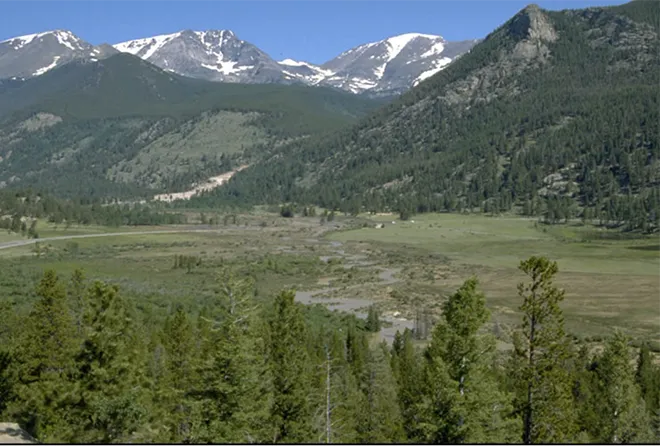
Finally, as election season heats up in Montana, a former wildlife commissioner says one issue deserves bipartisan attention, public lands.
The possibility of selling off public lands has become a divisive political issue in recent years.
Former Montana Fish and Wildlife Commissioner Dan Vermillion says it's an issue that unites people in the state, regardless of their political affiliation.
Public lands are sort of like a fundamental piece of Montana.
It's a fundamental piece of the Montana culture.
And it's a foundational piece of our economy, whether you're a rancher or, like me, somebody who's in the tourism business.
Conservationists point to the Trump administration's rescission of the public lands rule this spring, which means conservation is no longer on an equal level with other development uses on public lands.
I'm Laura Hatch reporting.
This is Mike Clifford, and thank you for starting a week with Public News Service.
Member and listener supported.
Find our trust indicators at publicnewsservice.org.