EarthTalk – How to avoid harmful farm chemicals?

©
Roddy Scheer & Doug Moss
Dear EarthTalk:
What can we do to get away from hazardous agricultural fertilizers and pesticides?
Mark Winston, New York, NY
Hazardous agricultural fertilizers and pesticides have had a long history. A previously commonplace and insidious pesticide, Dichlorodiphenyltrichloroethane, or DDT, was determined to be an ecosystem and human life disruptor. These scientific findings, supported by public outcry through the tireless work of individuals like Rachel Carson (author of Silent Spring), resulted in 1972 legislation that still exists today. However, other hazardous agricultural chemicals, like Paraquat and Phorat have yet to be fully regulated, leaving gaps within the move away from these harmful pesticides and fertilizers.
Regulation doesn’t necessarily mean removal of a chemical. Fifty years after DDT’s banning in the U.S. and global efforts to move away from it in select anti-malaria uses, concern from historical use still remains. Effects persist for decades after the last wide-scale use—making regulation as urgent as can be.
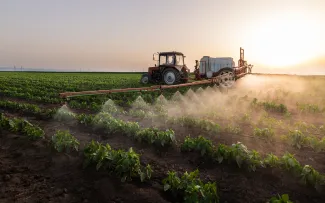
© fotokostic - iStock-1324890919
In regulating hazardous fertilizers and pesticides, understanding the importance of agriculture is key. Agriculture has long served as the basis for the global economy, providing products that are vital to human life as well as employment. Fertilizers and pesticides are undoubtedly harmful, but they are often essential to farming operations to meet demand. Recognizing the environmental effects presented by the use of these chemicals, many farmers have moved to sustainable practices, making eco-friendly switches within their farming operations.
Dr. Jose Ramirez, an expert in entomology expounded upon the viability of eco-friendly alternatives to agricultural chemicals: “Microbial pesticides and parasitic insects offer an environmentally-friendly alternative with the potential to alleviate huge economic losses to U.S. agriculture and benefit public health.” With these scientific advances, the global community has been able to continue its crack-down on hazardous agricultural chemicals without severely impeding agricultural production. Though most regulation is “patchwork,” meaning that it varies from country to country, governing bodies in most nations have taken charge in regulating the most harmful substances previously used.
Looking ahead, the best way to move away from these fertilizers and pesticides is through innovation and regulation. By empowering scientific efforts to find sustainable yet equally if not more effective alternatives, the agricultural community can remain strong and eco-friendly. Regulation can be supported through similar outreach and advocacy efforts, encouraging stronger limits and rules about hazardous chemicals, specifically based on what science dictates to be safe.
CONTACTS
- Phasing out the most dangerous pesticides becomes a global commitment, panna.org/news/phasing-out-the-most-dangerous-pesticides-becomes-a-global-commitment.
EarthTalk® is produced by Roddy Scheer & Doug Moss for the 501(c)3 nonprofit EarthTalk. See more at https://emagazine.com. To donate, visit https://earthtalk.org. Send questions to: question@earthtalk.org.