Nebraska researchers testing interspecies bird flu vaccine

Click play to listen to this article.
Nebraska researchers have developed a vaccine for the H5-1 virus, better known as bird flu, that could one day be used to protect both humans and the nation's food supply.
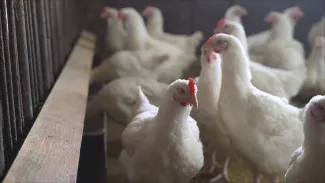
The U.S. Department of Agriculture says H5N1 has affected more than 206 million birds across the U.S. since February 2022. Two years ago, the virus infected dairy cattle for the first time.
That change prompted Professor of Biological Sciences and Director of the Nebraska Center for Virology at the University of Nebraska-Lincoln, Eric Weaver, and his colleagues to test a complex vaccine that can prevent virus transmission across species.
© Ruslan Sidorov - iStock-1197330374
It consists of two injections that build overall immunity and strengthen the respiratory system – the first entry point for the virus. Their tests were broad and far-reaching.
"And we designed a bird flu vaccine we found to be quite good at protecting against the transmission of viruses," said Weaver, "across nearly 30 years of evolution."
Weaver said that while early results in animal testing are positive, he cautioned that any potential use in humans is years away, as it requires much more stringent testing and multiple clinical trials.
Weaver warned that while the COVID pandemic was devastating in its own right, an agricultural pandemic poses an even greater danger by threatening the world's food supply.
"And right now, you've got H5N1 circulating and wiping out poultry farms, and it's also circulating in dairy cows," said Weaver. "Man, it's ripe for catastrophe. And I eat, and we all eat every day."
Weaver said the goal is to create a treatment that would allow farmers to "vaccinate your pig, your cow, your goat, your sheep, your chicken, and yourself at the same time."