Nebraska budget hole grows to over $1 billion, with 5 months before next legislative session

Nebraska lawmakers will likely have to contend with two separate budget deficits when they reconvene for the 2027 legislative session, with the combined shortfall currently set over $1 billion.
Legislative Fiscal Analyst Keisha Patent confirmed the situation at a Tax Rate Review Committee meeting on Wednesday. There, she provided lawmakers with a new financial status report, showing a $208 million deficit projected for the ongoing two-year budget that runs through June 30, 2027, and a $864 million projected deficit for the next biennium spanning from July 1, 2027 to June 30, 2029.
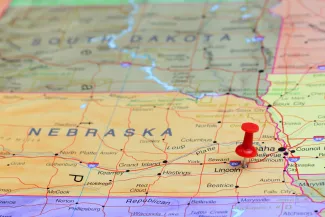
Lawmakers spent the 2026 session working to fill a fluctuating shortfall that hit its peak at roughly $646 million — the second consecutive session the Nebraska Legislature has dealt with a budget deficit. They ended the session with a $6 million surplus that was erased before the session officially ended due to monthly tax receipts that fell below economic forecasts.
Nebraska's situation mirrors Colorado's recent budget crisis, which expanded to $1.5 billion, showing how western states are grappling with revenue shortfalls.
Since then, three additional months of tax receipts came in below forecasts, leading to an estimated deficit of $223 million. Patent said the estimation changed to $208 million primarily because of standard accounting adjustments that cover transfers that are authorized in state law.
The true size of the deficits lawmakers will have to work with won’t be set until late October, when Nebraska’s Economic Forecasting Advisory Board has its next meeting. There, Patent said the board will make projections for the current budget cycle, the next biennium, and the following biennium that covers 2030 and 2031.
© zimmytws - iStock-511889079
The latest estimates were no surprise to term-limited state Senator Ben Hansen of Blair, who chairs the Tax Rate Review Committee. He said he was familiar with where the state’s finances stood as he was monitoring the latest tax receipts.
“The rubber meets the road now,” Hansen said. “What are we going to do about it? I think there’s going to be some tough decisions.”
Hansen noted it’s a bit uncommon for there not to be a special session called when the state’s tax receipts consistently fall below forecasts. There have been no signs from lawmakers that they are interested in a special session, though Hansen said he would be open to it only if senators were committed to having “serious discussions” rather than letting it devolve into a “circus.”
Governor Jim Pillen has indicated that he does not plan on calling a special session on the budget, instead issuing a memo earlier this month announcing a 5% spending reduction across all state agencies. If fully implemented, this would create roughly $276 million in savings per fiscal year, according to Pillen spokeswoman Laura Strimple.
“The governor’s actions will ensure state agencies have enough momentum on reducing spending when the Legislature convenes in January,” Strimple wrote in response to a question about a possible special session.
The memo prompted questions about whether the governor has the authority to reduce the state’s budget without legislative approval. Hansen said he believes it is within the governor’s authority to adjust the budgets of code agencies, which report directly to him, but there may be more gray areas in areas of the budget that are governed in statute.