New Mexico has unusually active start to wildfire season

A new forecast released Monday predicts that New Mexico will reach the peak of its wildfire season later this month, following what has already been an unusually active season in the state.
Forecasters with the National Interagency Fire Center said all but the eastern third of the state will experience above-normal wildfire potential as the state heads toward an expected peak in late June. After that, they predict conditions will improve beginning mid-July thanks to expected monsoons.
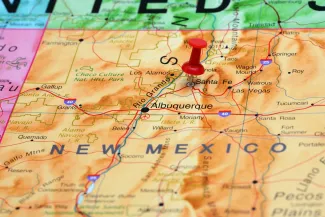
The increasing wildfire threat occurs amid a sharp increase in the number of wildfire ignitions in the first five months of 2026 over the same period in previous years, according to New Mexico State Forestry data.
So far this year, 534 wildfires have ignited on state or private lands or grown large enough to impact state or private lands. That’s the highest number of wildfire ignitions between January and May since at least 2021, where between 249 and 389 wildfires ignited.
Several culprits are behind the unusually high number of ignitions, said state Forestry Communications Director George Ducker. The biggest is the woefully low snowpack that afflicted New Mexico and the rest of the year, he said. But he also noted that dry lightning caused a spree of wildfires in the eastern plains earlier this spring, and ongoing drought has exacerbated dry conditions even in areas that don’t receive snowpack.
“So you have all those dried-out fuels, and we’ve had early onset lightning,” he said. “We’ve had lightning starts, and those have been wind-driven, so they’ve chewed up a lot of acres.”
According to state Forestry data, lightning sparked 26 wildfires that consumed nearly 43,000 acres. That’s the highest number over the past five years apart from 2023, in which 39 lightning-sparked wildfires burned through 65,500 acres.
The high number of wildfire starts is one factor behind Governor Michelle Lujan executive order in May declaring a wildfire and drought emergency. She urged New Mexicans to abide by statewide fire restrictions and told counties to consider implementing fireworks ban.
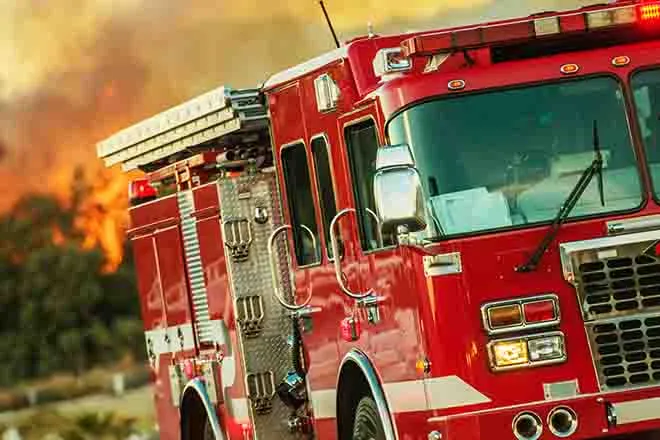
© iStock - toa55
Ducker said he was heartened to see that only two campfires this year have escaped and ignited wildfires. That’s the lowest number since 2021, when between six and 13 campfires caused wildfires.
“We’re doing really good on campfire starts,” he said. “Hopefully, that’s a product of the statewide restrictions that we put in place.”
But Ducker said the state is remaining vigilant about higher-elevation areas that did not receive the benefits this year from snowpack, which lingers on top of heavy fuels and reduces their flammability.
“They’re very susceptible to fire at this moment,” he said. “So we’re all looking at the eastern plains and the grasslands and responding to those fires, but we’re definitely also keeping an eye on the high-elevation areas as well.”
The biggest wildfire this season is the Seven Cabins Fire, which started after a fatal plane crash east of Carrizozo. As of Monday, that fire had burned nearly 30,000 acres and was 52% contained.
While the state’s wildfire season has seen an unusually high number of ignitions, the total acres burned so far is roughly 75,000, which is among the lowest in recent years. That bucks national trends discovered in a recent study, which found that while wildfire ignitions have decreased across the West over the last 30 years, the acreage they consume once started has increased.
Ducker said he is hopeful the monsoon will begin on time and be “productive” in reducing wildfire risk across the state. But in New Mexico, he noted, nothing is guaranteed until the skies open up.
“Not that I can speak with any degree of certainty: We’ve come to learn to expect any type of weather at any point in the year in New Mexico,” he said.