Next border wall could stretch across West Texas

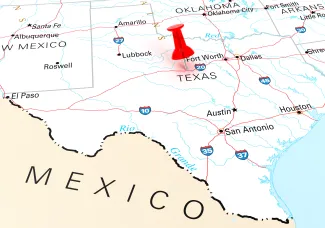
Despite challenges from Texas lawmakers and environmentalists at the local, state and national levels, the Trump administration is continuing with plans to build a border wall through the Big Bend area of West Texas.
The latest map from U.S. Customs and Border Protection shows 30-foot wall segments would be built in two parts of Big Bend Ranch State Park.
Dave Cortez, director of the Lone Star Chapter of the Sierra Club, said residents in the area have put aside political differences to oppose the construction.
“You take Brewster County, Presidio County, and the other counties in the Big Bend, and the local sheriffs and other local law enforcement have come out and said, ‘We don't need this. Give us more aerial technology, not steel in the ground,’” Cortez explained. “But that keeps moving forward.”
The Trump administration said the changes are needed to fight illegal immigration. The latest statistics from Customs and Border Protection show fewer than 3,100 illegal crossings took place in the area last year.
Cortez is encouraging Texans to urge Governor Greg Abbott and members of Congress to fight the projects.
The Department of Homeland Security recently waived dozens of federal environmental preservation laws to allow the work to move forward. Plans for the area have changed multiple times over the last several months, and Cortez noted local elected officials and residents are not sure what is happening.
“We have to look at the Department of Homeland Security issuing multibillion-dollar contracts to GOP donors and ask, why is this happening this way?” Cortez contended. “Why is this money being rolled out so fast, laws being waived?”
The area is a major economic driver for the state. Presidio County and several advocacy groups have sued the federal government over the proposals. Cortez stressed the environmental impact of walls, roads and fences would be devastating to the environment and people.
“It's a generational displacement of wildlife, of habitat, of land that has been managed and cultivated by families for hundreds of years,” he added.