North Dakota researchers look to skies, data on hail mitigation

© Dominic Fial - iStock-1325278570
Click play to listen to this article.
North Dakota is no stranger to a scientific effort known as "cloud seeding" to minimize the impact of hailstorms but regional researchers said a broader set of data is needed to guide future decisions and better protect communities and property owners.
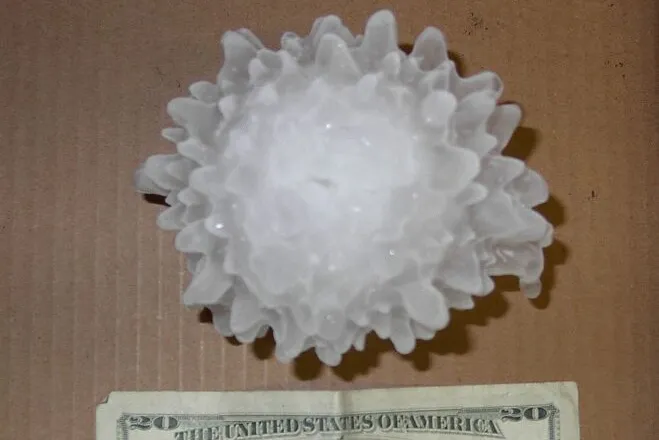
The University of North Dakota said for several decades, the state's project has allowed pilots to fly into selected storms and release tiny particles into the clouds, creating many small ice particles instead of fewer large hailstones. In the western half of the state, the approach was meant to reduce hail damage to crops.

© iStock - Eyematrix
Marwa Majdi, assistant research professor of atmospheric sciences at the university, said the time is right for her team to see what's working and what is not.
"It'll then help communities to understand what the evidence supports and whether hail suppression efforts are actually reducing the most damaging hail," Majdi explained.
Majdi noted questions increasingly arise when an intense storm harms livestock, homes and local businesses. She emphasized the university values collaborating with the state on weather science. Nationally, it has been a hot-button issue with online disinformation fueling theories about the government controlling the weather for political reasons, prompting the National Oceanic and Atmospheric Administration in 2024 to debunk several claims.
Majdi stressed by providing clear and independent information, decision makers can determine how to reshape the program, giving agricultural towns the best tools in their fight for economic survival.
"That can mean more stable farm income and fewer catastrophic losses," Majdi added.
The university said when a hailstorm results in an extensive damage, communities face higher repair bills and insurance costs.
Project officials said part of their effort will involve looking over a detailed database of storms from 2016 through 2024. An artificial intelligence system will also be developed to aid the scientific work. If they get all the funding needed, researchers hope to provide study results four years from now.