Scientist: More protections for monarch butterflies needed

The U.S. Fish and Wildlife Service has pushed back federal protections for monarch butterflies to 2030 and conservationists argued more should be done to protect the species.
The iconic insect was set to be listed as threatened in December of last year but the Trump administration did not finalize protections. A number of conservation and wildlife advocacy groups filed a lawsuit to compel the administration to act. The U.S. Fish and Wildlife Service agreed to issue a final ruling in June 2030. Since the 1990s, monarch butterfly populations have declined by 80%.
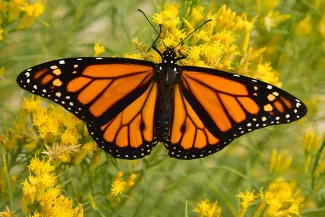
Monarch Butterfly - Courtesy USFWS - Tom Koerner
Tierra Curry, senior scientist at the Center for Biological Diversity, said federal efforts and protections are vital to protect monarch butterflies, in addition to everyday community action, including converting yards into pollinator gardens or planting native milkweed in flower pots.
"We still need just a massive coordinated national effort to get more pollinator plants in the ground, to plant safe corridors for their spring and fall migrations, to keep attention on them so that everyday people do the things that they can to help support monarchs," Curry emphasized.
The monarch butterfly embarks on one of the longest migrations of any species on the planet, leaving Canada in the spring to travel to Mexico. The monarch, which is the weight of a paper clip, flies as many as 3,000 miles in a single migration cycle.
As climate change makes weather patterns less predictable, researchers say hot or cold snaps can affect the migration and reproduction of monarchs. One of the other major drivers of habitat loss is the avocado industry in Mexico, which uses monarch overwintering grounds for land to grow the fruit. Curry stressed the avocado industry has greatly affected the monarchs.
"The United States imports so many avocados now and those avocados are grown exactly where the monarch butterflies go to overwinter. So there's drought and pesticide use and just too many avocados being grown in too small of an area that also supports the monarchs," Curry stressed.
The Trump administration has protected fewer species under the Endangered Species Act than any other presidential administration in history. The administration has also worked to roll back protections for wildlife, issuing new directives allowing for the accidental killing of protected species.