Study: Hospital wastewater reveals deadly fungus earlier

A deadly fungus called C. auris can be detected in sewer water from hospitals and nursing homes five months before it shows up in clinical tests of patients, according to a new study.
The strain is resistant to many antifungal medicines and can persist on surfaces for months.
Edwin Oh, professor and director of the Center for Water Intelligence and Community Health at the University of Nevada-Las Vegas, said more than a third of patients with an invasive infection will die.
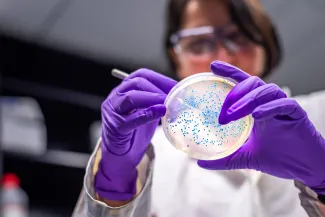
© Manjurul - iStock-1131003688
“C. auris, it’s transmissible across patients because patients come in contact with contaminated surfaces or objects in healthcare facilities, and then it gets either onto your skin or into your system,” Oh explained.
In 2022, Nevada experienced the largest recorded C. auris outbreak, when it turned up at 22 healthcare sites. As of 2025, the Silver State reported more than 1,600 C. auris infections cumulatively since 2021, amounting to 13% of all cases in the nation.
Past studies analyzed samples from wastewater plants but the new study showed it is more useful to take samples from the sewer directly at the healthcare facility. Researchers said it gives hospitals a new tool instead of relying on case-by-case testing for people who are ill.
Oh added people can lower their risk by washing their hands thoroughly and regularly when in a healthcare facility. He stressed that hospitals also must follow strict disinfection and infection-control procedures.
“A number of different interventions have been proposed in dealing with C. auris, like a UVC light that can kill a pathogen like this,” Oh emphasized.
The university is building one of the world’s largest C. auris research repositories and hopes to develop new antifungal therapeutics and eventually a vaccine.