Utah’s anti-gerrymandering law may go back to voters: Prop 4 repeal effort files 200,000 signatures

© Vadym Ivanchenko - iStock-1483193368
The effort to repeal Utah’s voter-approved, anti-gerrymandering law known as Proposition 4 hit a big milestone Sunday night as supporters submitted more than 200,000 signatures to county clerks for verification.
But the effort is still far from over.
The question of whether the repeal will appear on this year’s November ballot still stands. Even though the group Utahns for Representative Government has filed well over the 140,748 signatures required, clerks still need to verify whether they’re valid. And they have to meet specific thresholds in at least 26 of Utah’s 29 Senate districts.
Plus, the opposition group Better Boundaries — the original sponsors of Proposition 4 in 2018 — still has time to encourage voters to submit a request to their clerk’s office to remove their signatures. Depending on when they signed, voters have up to 30 days after they signed to request removal, or up to 45 days after their signatures are posted to the lieutenant governor’s website, according to Utah law.
We likely won’t know for at least three weeks whether the question qualifies — but the Utah GOP cleared a major hurdle when it turned in its final batches of signature packets before its 5 p.m. deadline Sunday evening.
After delivering totes full of signature packets to clerks offices that night, the Utah Republican Party announced in a news release that Utahns for Representative Government had submitted “well over” 200,000 signatures from voters across Utah.
Utah GOP Chair Rob Axson told Utah News Dispatch on Monday that he didn’t have a firm total for how many signatures were submitted Sunday night, but “it’s at least tens of thousands above 200,000.” He said he’s confident the measure will qualify.
“We are deeply grateful to the more than 200,000 Utahns who added their names,” Axson said in a prepared statement. “Their participation reflects faith in self-government and in the right of citizens to decide important questions at the ballot box. To the thousands of volunteers throughout this process, thank you.”
According to the latest tally posted on the lieutenant governor’s website Friday morning, 88,948 signatures had been verified. Of the more than 200,000 the Utah GOP says have been submitted, at least 51,800 more need to be valid — while meeting specific thresholds in at least 26 of Utah’s 29 Senate districts.
County clerks have 21 days from when they receive each signature gathering packet to verify signatures. The final day for clerks to verify signatures is March 7.
Utah has one of the most difficult ballot initiative processes in the country. Axson said it was indeed a tough task, but he credited Utahns for stepping up — including “thousands” of volunteer signature gatherers and those who signed.
“It’s a herculean task. It’s definitely a heavy lift, but we appreciate the importance of that process, of returning (the question) back to Utahns, and that’s what we’ve done,” he said. “We’ve put this back on the ballot, and now we get to trust what Utahns decide they want to do. … We’ll trust and respect whatever that outcome is in November when they vote.”
In the weeks leading up to their deadline, critics watching daily tallies posted to the lieutenant governor’s website had said the effort seemed slow-going and likely to fall short. But Axson had said those verification tallies lagged weeks behind the number of signatures submitted, expressing confidence in the efforts’ trajectory.
Earlier this month, when Utah News Dispatch pressed Axson on how many signatures the repeal effort had actually gathered, he declined to specify — saying there’s “no advantage” to sharing that information while there’s an active opposition campaign to the repeal effort.
“If they want to play the games that they’re going to play, that’s their choice, but I don’t need to provide them with a game plan on how to do that,” Axson said at the time of Better Boundaries’ campaign urging signers to remove their signatures.
© Delpixart - iStock-607610082
Elizabeth Rasmussen, executive director of Better Boundaries, said Monday morning that the group will continue to encourage voters to pull back their signatures. In recent weeks, the group has raised alarms about instances of some signature gatherers using misleading tactics to get voters to sign.
“We are closely monitoring the signature verification effort and will continue to help Utahns who were misled learn how to remove their signature,” she said.
Already, that effort has been gaining traction, with clerks across the state already receiving thousands of requests to remove their signatures, KSL reported last week.
Monday morning, Salt Lake County Clerk Lannie Chapman told Utah News Dispatch that she has received more than 1,300 requests from voters to remove their signatures — a high number compared to past initiatives. For comparison, she said during the last statewide effort to repeal a law to ban collective bargaining for public unions, she only saw 12 requests to remove signatures.
“This is the first time in Salt Lake County that we’ve seen such a large demand to actually have people’s names taken off of the petition packets,” she told KSL last week.
To block the repeal question from the ballot, the decline to sign effort doesn’t necessarily need to get 60,000 voters to remove their names. If the repeal effort falls short of required thresholds in just one needed Senate district, the effort would fail. Those thresholdsrange from about 3,000 to 5,700 signatures required, depending on population.
The Utah GOP said in Sunday night’s news release that their signature totals “far exceed statewide and Senate district requirements” in all 29 districts, while 26 are needed to qualify.
“So they would need to get us to come up short in four (districts),” Axson said. “So they’ll have their work cut out for them.”
Axson encouraged those who signed to let their signatures stand.
“Signing a petition simply gives the people a voice,” Axson said. “Efforts to pressure Utahns into removing their names are efforts to prevent the public from even considering the question. Those who fear the voters cannot be trusted.”
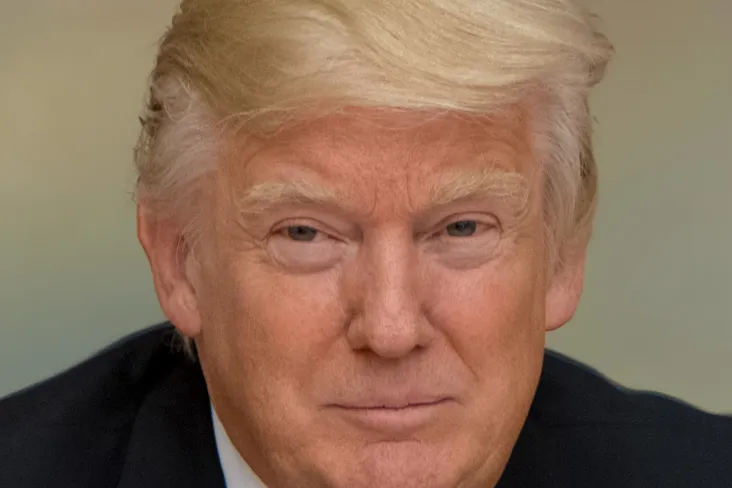
To get the repeal question on the ballot, the Utah Republican Party pulled out all the stops. The party enlisted the help of conservative influencer Scott Presler to help gather signatures. And last month, President Donald Trump urged Utahns to sign on to the petition in a post on Truth Social.

© legacyimagesphotography - iStock-160735792
A dark money group that helped finance Trump’s presidential campaign in 2024 also bankrolled the Proposition 4 repeal effort. The nonprofit Securing American Greatness contributed more than $4.3 million to Utahns for Representative Government, all of which was spent on the political firm, Patriot Grassroots, to help recruit signature gathers, according to the group’s financial disclosure reports.
Though reports of instances of misleading tactics, some fraudulent signature packets, and in some cases assaults on signature gathersmade plenty of headlines in recent weeks, Axson said the Prop 4 repeal effort was largely positive and made up of thousands of Utahns who wanted their voices to be heard in the state’s ongoing redistricting debate.
“Utahns collectively stood up and wanted their voices to be heard,” he said.
He added that “in most of the state, we stopped gathering over a month ago.”
“If we were just trying to run up the (statewide) numbers, we probably could have submitted well north of 300,000,” he said.
But rather, he said organizers strategically focused their efforts on Senate districts where they needed more signers.
“We were going where we needed to go, rather than just padding the statewide numbers,” he said. “This issue was broadly supported by a substantial percentage of Utah voters, and now let’s respect giving the final say back to the people of Utah.”
How did we get here?
Back in 2018, Utah voters narrowly approved Proposition 4 after the anti-gerrymandering group Better Boundaries sought the measure to create an independent redistricting commission to draw the state’s political boundaries while requiring a list of neutral criteria that map drawers had to adhere to.
The Republican-controlled Utah Legislature soon after repealed and replaced that voter-approved law, arguing that the Legislature has the sole authority to redistrict. Lawmakers turned the independent redistricting commission into an advisory body that they could ignore — which is ultimately what lawmakers did in 2021 when they adopted their own map that cracked Salt Lake County into four safe Republican congressional districts.
Pro-democracy groups including League of Women Voters of Utah and Mormon Women for Ethical Government then sued, alleging the Legislature violated Utahns’ constitutional right to reform their government through ballot initiative by repealing and replacing Prop 4.
After the lawsuit spent years winding its way through the courts, the Utah Supreme Court in 2024 issued a groundbreaking rulingthat sided with the plaintiffs, landing the case back in district court. Third District Judge Dianna Gibson then ordered a remedial map-drawing process to replace the 2021 congressional map, which she voided as the result of an unconstitutional process.
Ultimately, Gibson picked a map submitted by the plaintiffs to be used for the 2026 elections after she determined the remedial map proposed by the Legislature still did not adhere to Proposition 4’s neutral map-drawing criteria to the greatest extent practicable. The map she picked created one Democratic and three Republican congressional districts — to the dismay of Utah’s GOP-controlled Legislature.
The Utah Legislature has condemned the court’s rulings in the case, with Republican legislative leaders continuing to argue the Utah Constitution says the Legislature has the sole authority to redistrict. They also continue to fight that case in court, while two of Utah’s Republican members of Congress filed a separate lawsuit in federal court seeking to overturn the court-ordered map.
In November last year, Axson founded the group Utahns for Representative Government to put Proposition 4 to the test again during the November election.
“Our goal is simple,” Axson said Monday. “Let Utahns decide. We believe in the people of this state, in the principles of representative government, and in a process that invites participation rather than restricts it. In November, the voters will speak — and their voice will be the final word.”