Wyoming drought response under scrutiny in wildfire season

A decades-long drought with no end in sight is stirring debate among environmental experts in Wyoming and other western states.
Climate change is exacerbating conditions for more frequent and severe wildfires.
Trent Ford, climatologist at the University of Illinois Urbana-Champaign, said changing precipitation patterns are just one driver of dried-out trees and other vegetation fueling the fires.
"Warming trends have enhanced evaporation, so how much water is leaving the land, going up to the atmosphere as gas," Ford explained. "Warmer temperatures during the winter has also caused less precipitation to fall as snow."
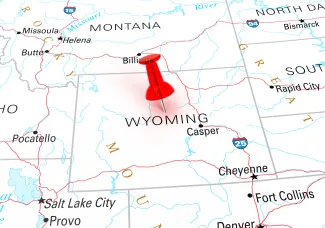
After a near-record dry winter, Wyoming recorded its driest spring in decades. Today, the vast majority of the state is experiencing extreme or severe drought. Experts with the National Weather Service’s office in Riverton reported the monsoon season expected in late July could bring relief but it would need to rain every day for several weeks to improve drought conditions.
Elizabeth Koebele, assistant professor of political science at the University of Nevada-Reno, noted as Wyoming struggles to manage shrinking water supplies, cities and other municipalities are tapping just 20% of the region’s water.
"Eighty percent of our water goes to agriculture," Koebele pointed out. "About 55% of our water use also goes to growing alfalfa hay, essentially feed for cattle."
Koebele believes the biggest opportunities to save water are in the agricultural sector. In 2024, alfalfa farms in the Colorado River Basin drew more than 2 trillion gallons of water, enough to supply 40 million people for more than three years. The amount of hay exported to places like China and Saudi Arabia has more than doubled over the past two decades.
"If we're really going to solve some of the deeper problems associated with drought and long-term water scarcity, at least in the Western United States, we really need to be thinking about where most of our water is used," Koebele urged.