The Yonder Report: News from rural America - June 5, 2026

© Dean_Fikar - iStock-503150251
News from rural America.
Introducing a new program by The Daily Yonder and the Center for Rural Strategies: Yonder Radio! This is a new 60-minute show featuring nuanced stories that represent the 60 million people who live in rural America and the distinct communities they call home. This week, we begin by talking with reporter Kaitlyn McConnell about a small town in Missouri that is recovering after a tornado hit last year. Then, we head to Minnesota with Arts Midwest reporter Frankie Felegy, to hear about a town that hosts a festival to celebrate the birthday of a local owl. We’ll also take a trip around the world with travel writer Rolf Potts, who gives insight on how to represent rural places in writing and storytelling. We kick off Pride Month with a discussion about representation in data, and how much data exists about rural queer people. Then, our partners at ICT have a story about the Supreme Court’s upcoming ruling on birthright citizenship, and how it could affect Native American Tribes. Our featured artist this week is Nico Albert Williams, an Indigenous musician who is part of the metal band Medicine Horse.
TRANSCRIPT
Hey, I'm Jared Ewe, the host of Yonder Radio.
Each week, we bring you rural conversations with National Reach.
This week, no different.
Caitlin McConnell goes to Desark, Missouri, a town devastated by a tornado last year.
And now she talks about their journey of survival.
We also take a trip around the world with travel writer, Rolf Potts.
Talks about representing rural places.
And we have a hoot at an owl festival.
I'm sorry it needed to be said.
Pride Month also is June.
And our daily Yonder data reporter, Sarah Mallott, talks about representation in data sets.
Donna Callender wraps some advice in warmth about the U.S. Postal Service.
It's very important.
And even bigger, the Supreme Court.
Talking about birthright citizenship.
Our friends at ICT bring us a conversation about what this will do to the Native American community.
And our featured artist is Nico Albert Williams, an indigenous musician who I think she and her band may have invented the genre of indigenous sludge metal.
If you've never heard it, well, we've got it at Yonder Radio.
Thank you. this is yonder radio how are you doing my name is charity we all be your host these are rural conversations with national reach and we appreciate you being part of the crew coming up today we have some insight on postmarks with the stamp on your envelope that's very important we're going to have that that could help you in your life we will mention leo dicaprio twice we could turn this into a mild buzz drinking game.
Every time you hear Leo DiCaprio, that happens.
And also a musical guest that involves sludge metal.
That's all on the way on Yonder Radio.
But first, from the Daily Yonder Newsroom, it is the Daily Yonder News editor, Jan Patalsky.
What is happening in rural America?
Hi, Jared.
We're starting today with the Ohio Newsroom that brings a story about Wright State University, that's an Ohio institution that just received $2.5 million in grant money from the U.S. Department of Ed, to develop a program to educate folks, both the educators and the students, on AI fundamentals.
They specifically want to develop a curriculum around best practices and basic fundamentals, focusing on rural schools.
All right, Jan, hear me out.
A new old McDonald that goes A-I-A-I-O.
All right, maybe that didn't hit, but I felt it was pretty good.
No, it was really good.
I loved it.
Okay, no, I feel better about it.
I will be singing it to myself throughout the day.
From ProPublica, Alaska's deteriorating schools, what is the story?
ProPublica brings us an article about how Alaska will more than triple its funding for school construction and maintenance this coming budget year.
The legislation was just passed.
However, it still is awaiting Governor Mike Dunleavy's signature.
If signed, it will allocate $148 million toward that cause, which is up from $40 million in the fiscal year of 2026.
It's of interest to us because the worst conditions are found among rural schools, which also often double as emergency shelters.
Now, it's obviously good news.
However, we need to remember that despite this infusion of cash, that only covers about 13% of the total Alaska school needs for maintenance.
So not near enough.
And from AP via KFF Health News, ICE detainees, medical neglect?
Yes, AP and KFF conducted this investigation into this story.
You know, I'm not going to be bringing too many details about it.
I just wanted our listeners to pay attention to this one.
It focuses on hundreds of detainees across at least 33 states who allege in federal lawsuits that the immigration detention facilities continuously failed to provide them with medical help and medical care that they need.
In particular, they said they didn't get medications on time or at all.
And among the conditions listed, they named high blood pressure, diabetes, depression, epilepsy, Parkinson's, and HIV.
It's important to remember that those legal proceedings towards those detainees are in vast majority civil, not criminal.
And overall, it involves hundreds of thousands of people having been detained over the past several months.
Jan Patolsky bringing news and often necessary introspection.
Thank you so much.
Thank you, Jared. and that was Jan Patalski, news editor of the Daily Yonder and now a Daily Yonder contributor in Caitlin McConnell now she's all about the Ozarks and small towns and she went to Missouri to see a town that was struck by a tornado last year she visits DesArc and the DesArc Museum and Community Center which is one of the buildings that's still standing it was all created to preserve the history of the town And now we get to hear about its present.
Kaitlin McConnell is here.
She wrote Ozark's Notebook.
After a tornado, Desark is down but not out.
And Kaitlin, you open this up and you say, Desark's better days flutter in minds like ghosts, popping up in personal memories and via Google Maps.
And wow, that is stark because landmarks that had been in Desark, Missouri are not there anymore.
Talk about that.
It's a really heart-wrenching moment for this community, which is really in a very rural part of Missouri.
I had actually never been to DesArc until I did this story.
And so I never saw it before the tornado came through.
I was on Google Maps and the images that they have on Google Maps are from before the tornado.
And it was really stark.
I mean, it was actually like looking at what I would imagine a ghost would be like here in Missouri, We deal with a lot of tornadoes and they're tragic and change life in an instant.
And that's what happened here in this community where one second it's like how it was, then one second it's not.
Before the tornado, what was the picture of Desarc?
I got the sense that it was, you know, a thriving little town, especially in the past.
It had suffered a lot of the same things that small rural communities have in terms of population decline and people moving away.
But it still had a charm about it.
And, you know, vintage buildings and community structures that kept people connected to their neighbors.
And unfortunately, in the tornado, a lot of those things were destroyed.
And so you had, you know, a sense of place that really doesn't exist in the same way that it did before.
A lot of folks have moved away.
Even its very small population to begin with really found a decline after the tornado because their homes were destroyed.
And there wasn't really maybe a reason in their mind to rebuild them in the same place anymore.
It's emotional visiting a place like that.
You know, you can sense the loss that has come through.
And, you know, that was something that really struck me about this particular story is the fact that this museum is still there, which the irony of that to me was just really overwhelming because it was already the place where memories were kept.
But now when you have so few places left and it was one that survived somehow, it's managed to keep that story alive.
Well, let's jump to that because there is this person who seems pretty optimistic, Jackie Brandmeier.
She is running this building that's still there.
From her perspective, keeping the museum going is a way of keeping that memory alive.
And, you know, she grew up in the town, her family have deep connections there.
And so for her, it's more, and the board, you know, it's not just her, but the people who run the museum, it's about preserving what they can. and adding to that story and helping keep a sense of community alive because the museum also is a community center.
They have part of it that's dedicated to birthday parties and quilting events and different things that bring people together.
Yeah, I don't think that it's necessarily the goal is revitalizing the town.
That's never been, you know, what I got the sense of when I talked with them.
It's merely keeping the connections that exist and reminding people that this was a place, even though it doesn't look like what it used to be.
Yeah, there is this constant duality in your article of people being hopeful, but also tinged with the bitterness of reality.
The post office says they're going to rebuild, but the locals are like, they're not going to rebuild.
Every time they open the door, there's some reminder of what's actually happening as compared to what they hope might happen.
Yeah, and again, I don't know that, I mean, the people I talked with didn't act like they think this is gonna be a lot better.
I mean, I don't wanna be a downer.
This story is one that's of reality.
It's not a matter of illusions about what's going to be better, really.
It's about salvaging what's there.
And I think, though, that it is parallel with so many other rural communities that don't suffer tornadoes but do suffer the decline of time and are faced with a lot of the same challenges.
This way, it was just all of a sudden in a way that, you know, for most places, it's over a lot of years.
Jackie, you know, she's worried that what happens to the museum if there aren't other people who step up, you know, over time to keep it going?
This is an exceptional case, but it's really part of the story of rural America that you need people to step up and continue a story.
If it's going to succeed, you can't just rely on the past. very black and white situation where it went from something that was optimism and community and thriving to survival.
I don't want to paint this picture that Desarc was this metropolis and like a Mayberry before this happened, because I don't get the sense that that was the case.
I mean, it was definitely a quaint place from what I've seen and what I've heard, but it was a sleepy town.
But it did exist.
Chances of it recovering in a meaningful way is probably lower than it ever would have been in its past.
And so it's more about recognizing the spirit of why people need places that are meaningful to them.
What is the role of people in stepping up to keep those stories alive?
You are definitely the reality on the ground.
I've been trying to pull you in some optimistic direction, but I think in honor of the people of Desarc, you are just keeping it real.
I think that's, I mean, that's what I try to do in all the writing I do.
I mean, I'm definitely not a, I mean, I'm a journalist.
I'm not a cheerleader.
I want to celebrate the good things.
And in this case, I think this is a good thing.
The fact that they even feel the spirit around keeping this museum going is really important and inspiring to me.
But I also think that there are hard situations that many communities face and it helps us all to understand and sympathize or maybe help if we can.
But time is hard and time marches on and it's something that, you know, we need to understand and realize it affects people across the country.
Well, if Yonder Radio is anything, it's a celebration of storytelling and journalism.
And you, Caitlin, should be celebrated because your Ozark credentials run deep.
We know that.
And before you go, you have to tell me about the rock picking awards you're doing.
Yeah, this is Ozarks Alive's latest initiative.
It's launching in 2026 as a way to recognize rural Ozarkers for the work that they're doing behind the scenes to share and celebrate our culture.
And so there's a series of different categories ranging from historical preservation to creative arts, music, community building, all sorts of different things.
And it's going to be a nominated and application process.
And then there's going to be an awards event in November to recognize them publicly.
So I'm really excited about it.
Well, you can read Caitlin in Daily Yonder regularly and also learn more about her and the Rock Picking Awards at OzarksAlive.com.
And thank you so much for going to Dez Arkin and sharing with us their story.
Oh, well, thank you for having me on this visit about it.
I enjoyed it.
That's always a pleasure to have Caitlin's Dispatches from the Ozarks on the show.
And OzarksAlive.com, the Rock Picking Awards are live now.
We'll have a break coming up soon, but first we have a treat for you.
We know that rural music can get pigeonholed, banjo plucked, guitar strummed in the country music box.
But this week, we have Nico Albert Williams, a founding member of the metal band Medicine Horse.
And they're not just metal.
They call their music indigenous sludge metal.
She's a member of the Cherokee Nation.
And after relocating to her tribe's post-removal homeland in Oklahoma, Nico embraced food as a powerful way to reconnect with her Cherokee identity and community.
She's been featured on shows like Chef vs.
Wild and even was a chef for one of our most famous celebrities.
You will hear about this and more in our conversation.
A lot of times people will say to someone in just a happy interjection, they will say, you rock.
And they don't mean it.
But with you, they mean it.
Because you rock.
I hope so.
I try to rock.
You're like two lives here.
Because here you are, you are at Burning Cedar Sovereign Wellness.
This is your place.
And what does it do?
We're an intertribal community center here in Tulsa, Oklahoma.
So the city itself sits on the tribal reservation land of the Osage, Muscogee Creek, and Cherokee Nations.
And I'm a citizen of the Cherokee Nation myself.
We're an intertribal space with the mission of addressing like socioeconomic disparities, health disparities, cultural disconnection for the Native community, all around like land reconnection and cultural reconnection and ancestral knowledge.
In mere moments, you will be introduced to Indigenous sludge metal.
But I wanted to get to one part of the culture, the food, because, you know, indigenous food well.
Take us on a journey through a menu, a Nico menu.
What would that feature?
Oh my gosh.
Well, the most important thing about indigenous food is that it's always seasonal and it's tied to land.
So it really depends on where you are and when you are, what that menu would look like.
So right now it's springtime in Oklahoma and there's a huge like milk crate full of wild ramps sitting on my kitchen counter that need to be cleaned.
If I were making a meal right now, it would have something to do with some beautiful wild ramps, maybe some strawberries.
And strawberries are really important food to Cherokee people culturally.
All of our foods are really tied to, you know, our identity and our connection to the land.
So what the land gives us in the season that it has it, and then just whatever we can be creative and make out of that.
Well, I believe Leonardo DiCaprio ate some of your food.
Is that true?
He did.
There was about five or six months there where I fed him every day.
And did you get any feedback from him?
He didn't fire me.
I think if he didn't like it, I wouldn't have lasted very long.
That's true.
I definitely felt confident that he was enjoying what I was making.
That was on the set of Killers of the Flower Moon.
Yeah, I kind of just waited at home for him to get back from set from the day of shooting and would have some kind of dinner waiting.
He was on a very, very strict diet at the time, trying to look a certain way for that character.
And so I had very specific guidelines that I had to follow.
Leonardo DiCaprio is in her quarter.
Does that matter to you?
I don't know.
But it's something we should probably say.
Not only are you the executive director of Burning Cedar Sovereign Wellness.
I mean, you are a queen on that stage.
You really own the stage with your presence and your voice.
Thank you.
In your band Medicine Horse.
Tell me how this came about.
My husband is a lifelong musician in the metal scene.
One of his latest projects in somewhere around 2018, my team, was a band called She the Circuit.
They were in the studio one day and I was still in the restaurant industry at the time and maybe it had a frustrating or stressful day.
And he was like, you should just throw some some background screams on this track and just see what it sounds like.
And after a few really cringy, like absolutely horrible attempts, he helped me find that spot in my throat that I was looking for to scream.
And it actually turned out to be pretty formidable.
And I was like, oh, I kind of like this.
That first band that we did together, She the Serpent, we ended up making it a dual vocal band.
In our pandemic bubble was our very good friend Garrett Heck, who is an incredible songwriter, drummer, guitar player, voice of an angel, singer.
Kyle, my husband, really wanted a project where he could play guitar because he'd been a vocalist for so many years.
There comes a time in every man's life when they want to wail on their trusty axe.
Yeah, he was like, I don't want to mess with being the lead vocalist anymore.
That's all you now.
Like, I'm pushing you out there.
Man, once we started playing it and added some more personnel, it really felt like something really special.
Pursue it.
So we really put together this really great team of musicians to kind of flesh everything out and bring it to life.
And that's what medicine helps me keep.
Well, speaking of flesh, it sounds like someone might be on fire in dead medicine.
I don't know where that's coming from.
Beelzebub, are you in Nico?
I mean, because there is a deep darkness to those vocals.
But then I listen to you in Turning Tide and you're like a melodic angel.
How do you do that?
The scream part really came from Kyle Cochini and helping me find that part of my voice and in my chest.
A lot of it is hereditary.
Like I hear, I feel my dad coming out in there because he has this kind of booning voice.
Part of that is just in me and I need to just find the right way to control it.
Finding things that need to be screened really helps, helps the delivery.
You know, the work of Burning Cedar Sovereign Wellness is gentle guidance and making change by helping the community understand different ways of living and reconnecting to ancestral knowledge.
And a lot of that needs to be done slowly and carefully and quietly.
And then it's nice to have the opposite end of an outlet.
It's good to have balance.
That's one of our teachings, right, in Cherokee culture is that wellness is balanced.
So you have to have the light and the dark.
You have to have the heavy and the light.
Yeah.
So a girl needs an opportunity to scream.
Well, look at more about Nico and you'll learn more about food you should be eating.
Also the band Medicine Horse and, of course, Burning Cedar, Sovereign Wellness and the work you're doing there.
Thank you so much for joining us today.
Yeah, it's been a pleasure.
Thank you for reaching out.
This was fun. that was nico albert williams with the band medicine horse you can listen to the band wherever you stream music and learn more about nico's other less scream filled work at burningcedar.org well we have more music after the break but coming up important information about postmarks we're going to bring in our second leo dicaprio adjacent person and one more order of business though.
The first trivia clue.
We'll give you three clues in total, then reveal the answer at the end of the show.
The answer to this week's trivia clue is an upcoming celebration held every summer since 1979 in rural Massac County, Illinois.
We have more clues coming up on Yonder Radio. music guitar solo Yonder Radio, rural conversations with National Reach.
My name is Jared Ewey.
I'm your host, which means I'm like that giddy kid who won't stop sharing things with you.
And right now, we have a conversation between Daily Yonder reporter Susanna Brown and Rolf Potts.
He's a travel writer based in rural Kansas, and he's written many books, most notably Vagabonding, an uncommon guide to the art of long-term world travel.
Rolf was last on Yonder Radio talking about representation of Kansas on screen.
Now he's here talking to Susanna about travel writing at a meta level and how you write about places around the world, especially rural locations.
Here's Susanna with Rolf.
So with writing and your travels, how has it shaped the way you think about who is telling a place's story?
Yeah, well, by definition, travel writers are outsiders who aren't speaking for a place so much as addressing that they are in a liminal space, addressing that they're outsiders and sort of making sense of that place for their home audience.
And travel writing is sort of a complicated genre because there's a very strong consumer-oriented side to it that isn't really about culturally making sense about a place so much as sort of giving people vacation ideas and maybe talking about what they might be able to eat there or where they might be able to stay or interesting festivals that they can go there.
I like to think that I'm more in the literary tradition of travel writing.
It's more of an inquiry into place and sort of trying to understand those places through the lens of the people that live there.
So travel writing is a genre with a very long and complicated history as a genre, but I'm a big believer in it.
I think that a lot of bad travel writing is writing that makes broad generalizations based on brief experiences, and it doesn't really consider that local people might be telling stories about themselves.
Being from Kansas, as I am, a place where most tourists don't go, and where sometimes people come to this place, Kansas, with stereotypes about what they might find there, I think that's made me more sensitive as a travel writer to places that might have less of diversity of expectation when traveling there.
Yeah.
Would you say you think differently about travel writing when you are talking about a rural place, when you're writing about a rural place?
Yes.
I think even through the consumer lens of travel writing, you can go to any big city and have a rundown of microbreweries to go to or theater festivals or something like that. whereas rural places, unless they have a landmark that is specifically going to bring there, oftentimes readers don't know or even editors don't know why this place should be centered, why it should be important.
I like to think that one of my powers as a travel writer is a person who's come from a fairly provincial part of the United States, and so I'm attuned to provincial parts of other places.
You have the right attitude.
I mean, there's places to eat in rural places.
There's local culture.
There could even be local plays or drama or sports or music.
It's just on a different scale.
And sometimes it's a lot more rewarding because you're outside of that consumer expectation.
I was raised by a couple of school teachers, and they taught me that the best thing you can be is curious.
And so that hopefully, I don't want to be too self-congratulatory, but hopefully I am the kind of travel writer who is attuned to the sorts of things in rural places that other people might miss because they're used to urban places.
So you also think a lot about film and media representation and how media can become the dominant image of a place.
So through this understanding and your travel writing, can you talk a bit about how does that affect tourism for better or for worse?
Years ago, when I was an early travel writer, I wrote a story about a movie that was filming in Thailand called The Beach, starring Leonardo DiCaprio.
And it was so interesting to see that happening.
I was actually an extra in that movie.
I got fired as an extra because they realized I was a journalist and they didn't want me to write something salacious about Leo.
That's amazing.
One of the ironies I realized was that the producers went to Thailand.
They found a beach in Thailand that fit the story, but then they decided it didn't quite look like Thailand enough.
So they planted a bunch of coconut palms there to make the beach in Thailand look more like what they thought a beach in Thailand should look like.
And so I think this happens a lot, Mutiny on the Bounty, When producers went to Tahiti to shoot Mutanty on the Bounty, they brought some white sand from New Jersey to make the beaches look more like what they thought beaches should look like.
And so this is a common thing.
And then sometimes the tourist industries and places are built on movies that aren't even about those places.
Like King's Landing in Game of Thrones is filmed in Dubrovnik, but Dubrovnik is not part of Game of Thrones.
But tourists in hordes go to Dubrovnik because they love Game of Thrones.
The same reason people go to Petra in Jordan because they love Indiana Jones and the Last Crusade.
Tourism and travel has a weird relationship with movies.
And from the very beginning of my travel writing career, it's been something I've been thinking about.
Yeah, I think it probably leads to a lot of disappointed tourists who are going to a Thai beach that they think, you know, they saw a version with Leo there.
And maybe when they go to that Thai beach, it's not going to look like what they imagined.
Well, for starters, because they'll see 200 other tourists who have the same fantasy, right?
How has your work on understanding representations in media and all these examples you give of a place not showing the reality of what that place is like, but how has that changed the way you personally travel and do your own work?
Well, it's become a part of my mission as a travel writer and nothing against consumer travel writing.
I mean, there's a huge market for that.
It needs to be done.
People need to know where to get a bowl of soup or a nice hotel in a given city.
But I really think that travel writers need to go beyond the obvious and beyond receive stereotypes when they go to places.
Because otherwise, you're just sort of fulfilling the expectations you had when you went there.
How can you surprise yourself by a place?
Just travel in local economies.
Take the buses that local people take.
Take the ferries that local people take.
Eat at restaurants where local people eat.
And the secret is to look at a place that's full of diners, right?
I remember I was in Bukitengi, Sumatra once.
And TripAdvisor had recommended this place to eat Rendang.
And I walked through this crowded market looking for the Rendang restaurant.
And when I got there, it had just opened.
It was empty.
And I was the only person there.
And the Rendang didn't taste that well.
And then I walked back to this crowded market.
And it's like, oh, my God.
I'm in a market full of local people eating delicious food.
And I followed TripAdvisor instead of my own nose and eyes.
And so I'm a big fan of finding that local economy wherever you go.
Yes, follow your nose and eyes and also Rolf's writing.
And that's how you will get to the places you should be.
Where can people find your work?
RolfPotz.com.
You can find my social media there.
You can find links to all of my books.
And you can find a little window into my career.
Thank you for all of your travel writing and your thoughts for Yonder Radio.
I'm happy to talk to you today.
That was Susanna Brown with Rolf Potts.
You can find more about his work at RolfPotz.com.
And that's R-O-L-F-P-O-T-T-S.com. now it's time for another song from Nico Albert Williams she's in the band Medicine Horse now their song She which we're about to play is over six minutes so if you're looking for an epic jam well they've got it here we're going to play some of it here's She on Yonder Radio She Until the night she sleeps Passing into me Sweat sucking machines One eye open Looks to the door The still of the night Has been unstilled before She In the heat of the day She hides Watching Waiting In darkness She rides She rides She rides That was She by Medicine Horse.
You can find more of Nico and the band on Instagram at MedicineHorse918.
Well, June is Pride Month, and today we're bringing you a conversation between Daily Yonder reporter Alana Newman and Sarah Mallott.
Sarah is a data reporter for the Daily Yonder, and here's Sarah and Alana talking about why data is important for representation and what it means to be queer in rural areas.
So, Sarah Mallott, you and I are both queer people who have lived in rural America.
Why was it important for you personally to look into the data on queer people in rural America?
In my newsletter, The Rural Index, I like to write about things that are of personal interest to me.
I was sort of curious for Pride Month if I could do an issue that was specifically about any existing data that could capture rural queer people.
My first thought was that there are a lot of stereotypes about where queer people live and who they are.
And I wanted to see where the data booked the stereotypes and maybe where it confirmed them.
And, you know, I was not surprised to find that there's like not a lot of good data on rural queer people.
And so, you know, some of the sources that I did find that captured good data on queer people either didn't break it out by geography or by a small enough scale geography that we could analyze for a rural analysis.
I found some census data at the county level about same-sex couples.
There are huge margins of error.
It's really hard to sometimes capture reliable data on small populations because it'd be hard to get a representative sample size.
When you add in another small population on top of rural, which is queerness, you get an extra small sample size.
And so that makes things really difficult.
There are reasons why people might not self-disclose their identity, especially in a national survey.
So this all kind of leads to a misrepresentation of how queer rural America actually is.
We know that queer people live in rural America.
We see them, we tell their stories, we are them.
But also data becomes one of the ways that we allocate resources as a country, as a state.
Can you talk about some of the risks of being overlooked because of not being represented in data like this?
One of the important parts about data collection is that it is really important when it comes to the allocation of resources and to gaining policy attention.
Representation is important.
And one way that we can represent queer Americans is to identify where they are. and how many there are and what they value.
But this topic is a black hole a little bit, especially when you overlap queer and rural to areas that seem to be lacking in the appropriate data needed to make policy decisions and resource decisions.
And even for organizations to write grant reports, like asking for money to say, hey, this is the population that we're serving.
We need to be able to describe the places that we live and serve.
That's why data is important for democracy and representation.
Thank you so much, Sarah, for coming on and chatting with me about this.
It's June and it's Pride Month and let's go celebrate.
Thanks, Alana.
That was Sarah Mallott and Alana Newman.
Sarah is the author of Rural Index, a data newsletter that brings a new interesting map or graph to your inbox every other week.
Data geeks rejoice.
We have Sarah Mallott.
If you're looking to celebrate pride in rural America, there are events happening all over the country.
Lost River Pride takes place in Lost City, West Virginia on June 13th.
Small Town Pride happens in Spencer, Massachusetts on June 27th.
Durango, Colorado has Pride celebrations from June 24th through the 28th.
And we want to hear how you're celebrating Pride.
Send us an email at info at yonderradio.com and share your story.
Next up, our regular contributor, Donna Callener.
Here's a story about one of our favorite institutions, the United States Postal Service.
A new Postal Service rule took effect last December.
It didn't change existing postal operations or postmarking practices, but it clarified something important.
Specifically, a postmark confirms only that a mail piece was in the possession of the Postal Service on the marked date.
That postmark is generally applied at the first automated processing center a piece of mail passes through.
For many of us who live and work in rural areas, a piece of mail might take two or more days to reach that first automated processing center.
I live more than 50 miles from one of those.
That center sends one truck a day to my local post office.
It arrives in the morning carrying mail for carriers to deliver.
That truck picks up the previous day's collection of outgoing mail, and after that truck unloads at the regional automated processing center, that's when most of our mail gets postmarked.
So if I put a bill payment in my mailbox and the carrier picks it up today, it won't get beyond my local post office until tomorrow at the earliest.
It's in postmark limbo, out of my control, but not yet acknowledged, as in US Postal Service possession.
Putting mail in a rural mailbox with the flag up, even several days ahead of a deadline, may not be worth the risk when the date on a postmark matters.
That includes tax returns, absentee ballots, bill payments, legal documents, anything where an automated postmark applied after a deadline could cost you a penalty or cause you heartache.
So take time-sensitive mail to the counter at your local post office.
Request a free hand-stamped manual postmark with the current date.
Watch them apply it in your presence.
Thank the clerk who applies it.
They're probably proud to do so because a postmark that bears the name of your town is a celebration of a rural community, and there's no substitute for a hand-stamped manual postmark when the date counts.
This is Donna Kalner from 45 Degrees North for Yonder Radio.
Well, we're about to take a quick break, but first, we'll give you the second clue to this week's trivia.
Over the years, this festival has featured dozens of celebrity guests, including Noel Neal, Margot Kidder, Elizabeth Tulloch, Tyler Hoechlin, and Tom Welling.
If you're like me, you may have known one of the people listed there, but they're all people who have gained some notoriety being part of the subject of this festival.
Coming up, we've got Frankie Fellegi on the way.
Oh, and in a world of obloviating about politics, especially birthright citizenship, which has come up, There's one conversation we probably should have had a long time ago, and ICT delivers that on the way on Yonder Radio. music plays Yonder Radio, rural conversations with National Reach.
Hi, I'm Jared Iwi and get to bring you some insightful conversation.
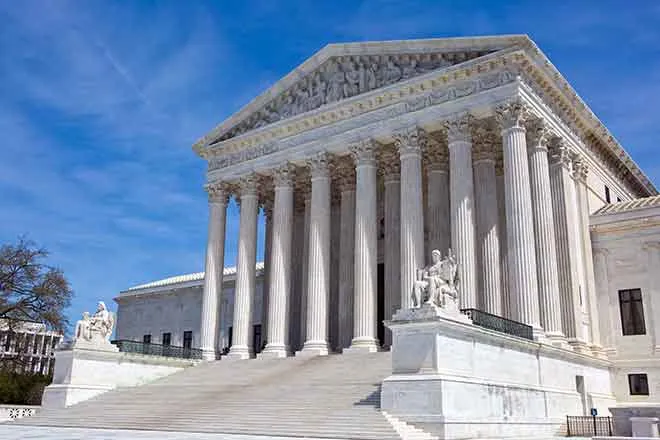
Trump's day one birthright citizenship executive order made it to the Supreme Court.
And today we're bringing you a conversation between Polly Deniclaw, the Mountain West correspondent for ICT, and Matthew Fletcher, the University of Michigan federal Indian law professor.
Let's take a listen.
Here's Polly.
Matthew, the first question that I have is, can you please talk a little bit about the recent Supreme Court case and what question is before the court?
Well, the court had oral argument recently, and the issue there has to do with first day Trump administration executive order ostensibly attempting to strip people of birthright citizenship.
Birthright citizenship is the rule under the 14th Amendment that states if you are born within the exterior boundaries of the United States are automatically a citizen.
JILL STEINER: Justice Gorsuch asked a very pointed question about whether or not Native Americans would be considered birthright citizens.
So, could you talk a little bit more about that?
JOHN WHYTE: Section two states that there are these individuals within the United States called Indians not taxed.
And the question that Justice Gorsuch asked the attorney for the United States was, does that provision somehow limit the ability of Indian people to become citizens automatically by virtue of the fact that they were born within the exterior boundaries of the United States?
Simply put, are American Indians automatically citizens under the birthright citizenship rule?
And unfortunately for everybody really involved, the United States attorney basically said, I don't really know.
I have to think about it some more.
Really, the background there is that there is an 1883 United States Supreme Court case about a guy named John Elk, who basically said he'd given up his tribal membership.
He had given up his relations with the tribe, his treaty rights, and he wanted to vote in an election with the United States.
The jurisdiction in which he was located was Nebraska.
And they said, no, you're an Indian unless Congress passes a law explicitly granting citizenship to you or individuals in your classification.
And the Supreme Court affirmed that decision, basically saying that unless Congress passes a law granting citizenship to Indians, they are not citizens under the birthright citizenship provision.
And so this current case that is going through the Supreme Court, what impact could it have clarifying that?
That's a good question.
My sense is from reviewing the transcripts and the briefing that a majority of the Supreme Court is going to strike down the executive order first, primarily because Congress actually passed a law at some point in the past granting citizenship to individuals who are born within the United States.
This is sort of related to the Dreamers Act, where children born to non-citizens inside the United States are extended citizenship.
So it sounds to me like the court is actually going to punt away the question about the core question about birthright citizenship under the interpretation of the 14th Amendment.
But when that happens, I'm 100 percent sure, 99 percent sure the Trump administration will just re-tap, just try to figure out a different way to do the same thing.
I strongly suspect, based on the oral argument, that there's not a majority on the court for restricting birthright citizenship.
But there are a couple there's a provision in the first section of the 14th Amendment referencing persons under the jurisdiction of the United States and sort of reads anybody born within the exterior boundaries and who is under the jurisdiction of the United States is a citizen of the United States.
And so there's a lot of discussion about what under the jurisdiction of the United States means.
And the Elk case and some framers of the 14th Amendment way back in the 1860s and early 1870s opined that Indian people are not under the jurisdiction of the United States because their loyalties lie with an Indian tribe.
Actually, the discussion back in that era, which is more than 150 years ago, was a tad more racist, intended to focus on things like whether an Indian person was civilized, whether they spoke English, whether they went to a Christian church or something to that effect.
But fundamentally, the question of jurisdiction is kind of an interesting one.
I don't really think personally that the court is going to delve down the road and say that Indian people are not citizens because they're not under the jurisdiction of the United States. anybody who lives on an Indian reservation right now fully knows they're under the jurisdiction of the United States one way or another.
We have a colonizer and they have sticky fingers.
Let's just say that.
I really would like to see Elk v.
Wilkins just completely eradicated from the face of the planet.
I'm 99% sure that case is just dead wrong.
Indian people born within the United States are absolutely citizens of the United States.
And just because some U.S. Supreme Court case interpreted the Indians Not Tax Clause, which is not even in the birthright citizenship part of the 14th Amendment, to mean that Indian people don't have birthright citizenship is just flat wrong.
But I don't know that the court will actually ever do that.
They don't even need to touch that case if they do these things correctly.
But you just never know with these guys.
It just takes five votes to change everything.
Matthew, can you talk a little bit about what the next process is for this case for folks who may not know?
It's going to take until the end of the court's regular session, probably the end of June, for the court to issue an opinion.
If I'm right and the other prognosticators are right, the court will probably strike down the executive order, at which point, assuming that happens, I assume the Trump administration will then either seek some sort of repeal of that one federal statute that grants citizenship or just try to reorient its executive order to try to bring the issue up again through the court system.
And then in a few years, we might have to do this whole thing all over again.
In a lot of respects, this is a big, giant smoke show from the, you know, the politicos in the Trump administration.
For them, it doesn't really matter if they win or lose on a political matter, that they're just trying to stake a claim to try to create racial, a racial caste system under the 14th Amendment, which is actually the exact opposite of what it's intended to do.
Well, Matthew Fletcher, thank you so much for joining the ICT Newscast.
Pleased to be here.
Thank you so much, Polly.
Thank you so much, ICT, for sharing segments of your weekly newscast with us.
You can find it on their website, ICTnews.org, and on YouTube.
Next up, we have Frankie Flegi from Arts Midwest.
She always brings us vibrant stories with great photographs.
And today, it's owls.
It's owls.
It's always owls, if you know anything about Twin Peaks.
That's true.
Oh, wow.
Twin Peaks.
That's deep.
Houston, Minnesota has the International Owl Center.
Why were you there?
It's this tiny little town, a thousand people.
And there are actually more owl artworks in this town than people.
Okay, that's impressive.
How does this happen?
We go back to 1996.
This place started as the nature center in town.
It's a really, really beautiful area of Minnesota.
It's called the Driftless Region.
And then at some point, staff acquired this owl.
Actually, her name is Alice.
Great horn owl.
She was permanently injured and they thought, hey, let's use her for educational purposes.
And so it slowly transformed into this place of education and programming for kids and adults and just community building around teaching people about owls and how to protect them.
But then it becomes a global phenomena.
What is this bridge that takes them from Houston to the world?
So when you acquire an owl, you naturally have to host her a hatch day party.
We love birthdays.
This whole art festival started as a hatch day party for this great horned owl, Alice.
One of the people at the owl center said, hey, we'll make this coloring page and kids can submit some artwork like color in the lines, color pencil and whatnot.
And then they started offering a prize to the art that came the furthest away.
And so people from across the state started participating. people from across the country.
And when this happened, they're like, actually, we probably should just do original art instead of a coloring page.
And that started taking off.
They started getting more and more and more from across the world, especially Australia and Indonesia, because that's actually as far away as you can get from Houston, Minnesota.
And then around 2019, they noticed that one of the participants posted their art for the contest on one of Russia's biggest social media networks.
And they went from like 400 entries a year to 4,000.
And this is all Alice the Owl.
She did this.
It was all Alice the Owl.
And the kids don't necessarily have to make artwork of Alice the Owl.
They can be anything that is owl inspired.
So there's any kids from anywhere from zero, actually, to age 18 can submit their own artwork as long as parents don't help them and AI doesn't help them.
It's a whole weekend festival once a year in the spring slash late winter, and folks get together to celebrate owls.
They build nesting boxes.
The owl art is displayed across not just the owl center, but also local art galleries.
They're displayed in storefronts across town.
The little street poles that usually have the city banners are replaced with artwork by these kids of owls.
It's really cool.
This is what every organization wants to have happen.
They have their passion, go global and help the entire community.
And that's what has happened here in Houston, Minnesota.
And we know about it because of Frankie Flegi.
And one day Arts Midwest, you're going to have your big viral moment.
Maybe it's people drawing pictures of Frankie and celebrating her on her birthday.
Please don't do that.
For delivering these incredible stories.
Well, thank you so much for coming by.
Absolutely.
This was such a joy.
That was Frankie Falleghi from Arts Midwest with a fun story about a festival to celebrate owls.
And now I know you've been on the edge of your seat for this one.
I have one more trivia clue for you before the answer is revealed.
Here's the final clue.
The festival celebrates truth, justice, and the American way.
As represented by one of our country's favorite on-screen aliens.
Are you ready?
The answer is...
The Superman Celebration in Metropolis, Illinois.
Today, we have a special guest to bring us the answer to our trivia question.
Journalist and author Keith Roysden, who I should say has a new book out now, Seven Angels.
But this isn't why you're here today.
Tell us about this celebration that takes place in Metropolis, Illinois.
Well, Metropolis, Illinois, for a town of about 6,000 people at the very southern tip of Illinois, is fun, especially this time of year, because they do an annual Superman celebration.
It brings 10,000, 20,000 people to town.
They go to the Super Ring Museum, which has 75,000 pieces of a Superman accouterin and ephemera.
And there's a 15-foot statue in a town square, which is just made for selfies.
The city in real life was founded in 1839, so 99 years before Jerry Siegel and Joe Schuster invented Superman.
And at some point in the 1970s, the Illinois legislature designated Metropolis, Illinois officially as Superman's hometown.
In a super heroic effort, the local Metropolisans captured the moment.
They even renamed the newspaper in the town Metropolis after the Daily Planet.
It's the Metropolis Planet.
Oh, you can't top that commitment.
They're all in.
Keith Roysden, journalist for decades, can we say?
Oh, God, like a thousand years.
Also author with his book out now, Seven Angels.
Thank you so much for apprising us on the Superman celebration in Metropolis, Illinois.
Thanks for having me.
And now it's time to, we're doing this already, say goodbye.
Thank you so much for everyone who had a brush with Leo DiCaprio and then joined us for an interview during this show and everyone else.
And you can hear it again, if you'd like, at yonderradio.com.
And you can tell us how we're doing.
Simply email us, info at yonderradio.com.
And thank you for listening to Yonder Radio.
Thank you for listening to Yonder Radio, a production of the Center for Rural Strategies, publisher of The Daily Yonder.
I'm your host, Jared Ewing.
Thanks to Don Castle and the Tennessee Sheiks, Steph Gunno and the Lone Tones, Quincy Ponfair, Leo Pozel, and Tim Merrimah for the great music.
Our editor and producer is Susanna Brown.
This episode was also produced by Alana Newman with additional support from Anya Patron-Slepian and Julia Tilton.
Our executive producer is Joel Cohen.
The executive in charge of production is Adam Georgie.
Yonder Radio, Rural Conversations with National Reach.