The Yonder Report: News from rural America - September 25, 2026

© Dean_Fikar - iStock-503150251
News from rural America.
We start out this week’s show with a conversation about healthcare affordability in Tennessee with Daily Yonder health reporter Madeline de Figueredo and Beth Beaudin-Seiler, director of the Healthcare Value Hub. We’re taking a deep dive into the state of rural journalism this week with field notes from Jeremiah Ariaz, a photographer in Kansas, and a story from Daily Yonder contributor Kim Kobersmith about the Marfa Sentinel, a newspaper that started a coffee shop/bar to help fund local reporting. Then, we head back to Appalachia, where Roy "Bam" Haslip, Former Lewisburg, Tennessee City Manager, responded to our question “What is Rural"?” for Rural Assembly Everywhere, and we talk to filmmaker Emma Dessau about her newest documentary, “Roe Was Never Enough”, about abortion access in Appalachia. Finally, we have a story from our host, Jared Ewy, about a Tarantula Festival in Colorado. Our featured musician this week is Alex Dunn, a singer-songwriter from northern New Mexico who is touring both solo and with a band across the West this fall.
TRANSCRIPT
Hey, I'm Jared Ewe, the host of Yonder Radio.
Every week we bring you rural conversations with national reach to listeners around the country.
We're doing it again as we begin with a conversation about health care affordability in Tennessee with the results of a fascinating nationwide survey.
We're taking a deep dive into the state of rural journalism this week with field notes from a photographer in Kansas and a story from Daily Yonder contributor Kim Cobra Smith.
She always brings it and doesn't fail us this time with a story about the Marfa Sentinel, where you can visit the paper and enjoy a drink.
Then we head back to Appalachia to talk to filmmaker Emma DeSau about her newest documentary, Roe Was Never Enough.
That's about abortion access in Appalachia.
And finally, we have a story from me about my trip to the Tarantula Festival in Colorado.
I'll never be the same again.
Our featured musician this week is Alex Dunn.
He's a singer-songwriter from northern New Mexico.
And we have all that and trivia and news and you with another episode of Beyonder Radio.
Thank you.
Thank you.
Thank you. yonder radio rural conversations with national reach hey charity we here with you and today we will try to overcome our fear of spiders we're going to talk to alex dunn who is one of those people who may have had no other choice but to be a musician and we go to a newspaper that serves drinks while they print the news all that with trivia music and now jan patolsky news editor for The Daily Yonder, here now with the week's top rural headlines.
Hi, Jared.
This week, a couple of stories for you, starting with Axios, a story about a new New York Times Siena poll in which voters give edge to GOP over Democrats on handling AI.
I thought that story was interesting just because of onslaught of reporting on the backlash in rural areas against data centers.
Well, OK, so I'm a little surprised.
Are you surprised that Republicans get a lead in the trust margin on artificial intelligence?
Yes, I was surprised when I saw that.
And, you know, when you dig into the numbers, it becomes a little more nuanced.
First of all, the lead is really marginal within the margin of the polls errors.
It's 42 to 40 percent.
More importantly, GOP really leads only with the older voters aged 45 to 64, 50 percentage points.
However, they lag behind younger voters between 18 and 29 by 32 points.
Well, this, I think, sets up for amazing holiday family get-togethers with a clear division between the youngs and the olds.
Fight!
Definitely, and extra spicy because the same poll also showed that on other issues traditionally favorable for Republicans, the Democrats also held somewhat of an edge on the economy, cost of living, even immigration.
My big question always is, did a robot do this poll?
And from Grist, you get the Montana Free Press Mountain Journal talking about dirt bikes and ATVs.
I sense conflict.
What's the story?
That story is about how the United States Forest Service wants to change a rule relating to access with motorized recreational vehicles to its trails.
What would it become a trail unless it's explicitly designated?
Yes.
So currently, unless the trail is explicitly open to motorized recreation, you cannot enter it on an ATV or snowmobile or any other device like that.
The change would make it the reverse.
So Forest Service would have to go back and explicitly close specific trails to that traffic.
Otherwise, anything would be fair game.
This seems like it could lead to some issues.
What are people saying?
Tons of different groups, including sportsmen, backcountry horsemen, conservation organizations, other recreation, non-moderized recreation groups are up in arms about it and promise to put up a fight.
A lot of those areas are located in traditionally GOP strongholds, so it will be interesting to see how it plays out.
So if you're in the sign-making business, get a hold of your buddies at the Forest Service, because this is going to add to the trail to chaos.
As always, good economic development advice at the end of the show.
With Jan Patalski, news, economic advice, and the future of Thanksgiving.
Well, thank you so much for stopping by on Yonder Radio.
Thanks so much, Jared.
Now, the Healthcare Value Hub conducts the CHESS survey. the Consumer Health Experience State Survey across the USA to collect data on health care costs.
And now we have Daily Yonder health reporter Madeline DeFigureto in conversation with Beth Bowden-Seiler.
She's the director of the Health Care Value Hub about health care affordability in Tennessee and what that means for all of us.
I am joined by Dr.
Beth Bowden-Seiler, who is the director of the Healthcare Value Hub at Altarum, and she leads the Consumer Healthcare Experience State Survey, also known as CHESS.
Dr.
Beth, can you explain to me what CHESS is?
Yeah, thanks so much for having me.
As you said, the Consumer Healthcare Experience State Survey is what we fondly call the CHESS.
It's designed to elicit respondents' views on a wide range of health system issues, including health care affordability burdens and experiences, confidence in navigating the health system, worries about affording health care both now and in the future, and support for policies aimed at improving health care affordability.
And so this is a national survey, correct?
It goes out and measures these metrics across different states.
Yeah, it's a state-level survey, but we have run the CHESS 71 times in 38 unique states, and this is the second time that CHESS has been ran in Tennessee.
So we field it using a web-based panel of approximately 1,500 Tennessee adults, and this particular survey ran from June 30th to July 31st of last year.
When you look specifically at rural Tennessee, what has stood out to you about how people are experiencing healthcare affordability in this moment?
Yeah, I think one of the things that stands out to me the most is that when we look at rural and non-rural respondents in Tennessee, there are quite a few areas in which we actually don't see a ton of difference.
There are some that we saw, but I think the bigger emphasis here is that both rural and non-rural respondents to our survey are feeling these affordability burdens.
They're having to make some trade-offs.
When we talk about health care affordability burden, what that means to us is that we aggregate together a couple of variables.
We look at any person that has reported skipping care in the last year, whether someone has reported having experienced a financial burden due to health care costs.
So any of those things reported, we consider that to be a health care affordability burden.
When we look at that in Tennessee, across the state, 74% of respondents said they had one of those things happen in the last year.
When we look at it between rural and non-rural respondents, 80% of rural respondents reported having a health care affordability burden in the last year. 73% of non-rural respondents reported having one of those health care affordability burdens happen.
When we look then a little deeper at just the skipping care, foregoing or delaying care in some way, we saw that across the state of Tennessee, 72% of respondents said they've had to skip care in the last year due to cost.
When we look at rural and non-rural, 79% of rural respondents reported at some point in time in the last year, they skipped something due to medical costs.
Non-rural reported 70%.
So we do see some differences there when we look at those health care affordability burdens.
We ask respondents about their worry about affording health care both now and in the future.
And across Tennessee, 76% of respondents said, I'm worried or very worried about affording health care both now and in the future.
And that stood the same for both rural and non-rural respondents, 76%.
When we asked about that financial burden across Tennessee, 45% of respondents said, yes, I had something like that happen.
Both rural and non-rural respondents also at 45% said that.
I'm wondering if you have any insights on what types of policies respondents perceive as being harmful or helpful.
Yeah, that's a great question.
So health care affordability tends to be a nonpartisan issue.
It's a non-geographic issue.
So there's no real difference between rural and non-rural groups for the proposed policies that we had in the survey.
Having a policy that sets standard prices for drugs to make them affordable, 91% of Tennessee respondents across the board said they would support policies to do that, making it easy to switch an insurer if their health plan drops their doctor.
Again, 91% across Tennessee said yes, that they would support policies that allowed that to happen.
One of the areas we saw a little bit of difference, and this was a four percentage point difference, was strengthening policies to drive competition in healthcare markets to improve choice and access. 84% of non-rural respondents said they would support policies that did that, while 88% of non-rural respondents said they would support policies that did that.
But across the board, we really saw a lot of congruence and a lot of agreement.
It seems like it's such a rich source of information, this survey.
How is the CHESS used once this information becomes available?
Yeah, so our analysts will produce five briefs for each state that we work in.
The first one's an overall affordability brief, and it discusses a wide variety of healthcare affordability burdens.
The next set of briefs are on prescription drug costs.
That really narrows into the burdens and trade-offs that respondents reported regarding their prescription drugs.
We have a medical debt and surprise medical bills report, a report focusing on hospital costs, and finally a report that focuses on access and fairness in the health care system.
And all these briefs can be found on our website, healthcarevaluehub.org.
Our hope is that the evidence that we generate from these briefs can be used by health advocates in the state of Tennessee to talk to the legislator about policies that folks would support about the prevalence of these health care affordability burdens to educate legislators, but other decision makers as well.
I think the eternal optimist in me wants to just end on a note of, is there anything that this survey has offered that brings you hope?
I think what brings me the most hope is the level of agreement that folks have, the level of support that people have to make a change in this area is what brings me the most hope, because that's really what it's going to take, is that folks coming together, looking at the evidence, and agreeing that we need to do something about this.
Well, Dr.
Beth Bodenseiler, thank you so much for sharing this data reporting.
We are really excited to be able to use this as a resource in our own reporting and then also share it with our audience so that they can continue to learn more about healthcare affordability in their own state.
Thank you so much for having me.
That was Daily Yonder health reporter Madeline DeFigureto. and Beth Bowden-Seiler, director of the Healthcare Value Hub.
To check how your state is doing with healthcare affordability, according to the Consumer Health Experience State Survey, visit healthcarevaluehub.org and or look at the stack of bills on your table.
And now going to northern New Mexico and up in southwest Colorado, there's this phenomenon known as Alex Dunn.
He's making music that echoes across the sagebrush-covered desert and into the San Juan Mountains.
He's been on tour this summer, and that's where we caught him.
Oh, this is so rock and roll right here.
We caught him in a van on his hotspot, and we're going to talk to him about his inspirations behind his songwriting.
Alex Dunn, who just said the most rock and roll thing ever on this show, he says he's hotspotting from his van while on tour.
Alex, where are you?
in Ronan, Montana right now.
Not Ronan, but Ronan.
Now, people go to an Alex Dunn show.
What, in your mind, should they expect?
If you're coming to my solo show, you're going to get more stories in the John Prine, Towns Van Zandt sort of adventure.
With the band, though, that's, you know, we have a rockin' good time.
That's, you know, akin to going out to a honky-tonk.
I find myself at the end of the day Staring down the window of the car I don't know the man behind the wheel But he said he'd take me far Yeah, I mean, your look, I don't know, it's like John Lennon and Charlie Daniels maybe had a kid, there's the mustache.
Was this intentional or did you have no choice but to be a musician?
I don't think I had a choice.
Well, I had a choice to be an artist and that's what I chose.
And so I've worked in different mediums.
I went to college for sculpture and then I got really into painting after.
And then while I was on the boat commercial fishing up in Alaska for about 11 seasons doing that, I just had to start strumming the guitar and singing.
What is it like working on a fishing boat?
You know, it's kind of like voluntary jail.
You got to really be wanting to do that.
I think the fishery I was doing is more of a leisure fishery in a sense compared to, you know, doing crabbing up in the Bering Sea or something. but it's still, you're with four other people on a boat for four months.
But while you're there, I love this story about you, that you start to harmonize with the boat's engine.
Does this make you the musician you are today?
Yeah, maybe I'm stuck in like an F sharp or something.
Yeah, because the engine was humming, and I didn't realize it at first.
I was like, why do half of my songs just sound so horrible?
And like, I'm just can't.
Oh, yeah, that's right, because the engine, you know, I just wasn't really thinking about it.
But it's just such a low hum and it's always there.
Now, I watched your video for the song Dance With You Again.
And you're climbing rocks in New Mexico.
It's a beautiful song.
Do you sing because you are more able to convey the things that are otherwise hard to say?
Yeah.
I think I also sing to convey the things that are easy to say. incredible and maybe that's the hard part realizing how easy they are and that that video too that's my backyard so that's that's just right across the road and up the draw from the house i don't want to come off insulting but your music isn't it's pretty simple right am i am i hearing it right it's not overly complex that's kind of the point it's kind i mean i think there's a lot more thought that goes into it but you know it's like it's as complex as john prine is complex you know it's as complex as any stuff like that you know it's it's a vessel for some poetry and vessel for an empathetic experience and i'm one you know i'm a big fan of space so you know i listen to all kinds of different music but to me i'm more of a kind of a mellow calm human and I really appreciate the space in between things.
And so if you're able to write some words and put something down and then write some music, but it also plays upon the space in between all of that, I think it gives more weight to those things that you're actually putting down.
Yeah, that guitar string maybe is the metaphor for the connectivity between space.
Yeah, yeah, there you go.
I stumbled across an Instagram post dedicated to your mom with this incredible photo of what I think is you and your brother and your mom.
And she's talking about that universal connectivity.
How much of you are influenced by that in your songwriting and your music?
Oh, a lot.
You know, and especially from her, that's what she was always preaching when she was around.
She was just always preaching that we're all connected.
We're all one big thing.
You know, my song To Love and Be Loved was a song that I wrote for her.
That's off my first record.
That was her favorite song.
But it was based on her life ethos that that's truly all we're here to do is to love and be loved.
Is to simply be As mama said When push comes to show The only message from above Is to love and be loved What is coming up after the tour?
Is there any material coming out?
I'm going to try and spend this winter.
So after this tour I still have a bunch of shows. a couple other little tours.
The idea is to finally start recording some new stuff because I got about 40, 50 songs that I haven't recorded.
They just keep showing up, so I need to start sharing them.
Well, Alex Dunn, appreciate the time and getting through this interview with some hotspot internet out of the back of his van in Ronan, Montana.
This is how rock and roll is made.
Yes, sir.
Here it comes.
Thank you so much for your time.
All right.
Thank you very much as well.
Appreciate you.
Alex Dunn, our musician this week on Yonder Radio, touring the country right now, and website alexdunnmusic.com, and take a listen, people.
My starter kit has been with Dance With You Again, and the video, too.
It's a great get-to-know-Alex package.
And now it's time for trivia.
Every week, we bring you trivia clues throughout the episode.
Stick around until the end to find out the answer.
This is our first clue, and that is this week's trivia answer is a fierce competition between carnivores that is held every fall.
We'll have more coming up.
We're going to talk to a Guggenheim fellow about small-town newspapers.
Also, oh yeah, we will join a man that goes by, bam, on his front porch waiting to talk to you.
And it is good.
That's on the way on Yonder Radio.
Thank you. guitar solo guitar solo Yonder Radio Rural Conversations with National Reach.
Hello, my name is Jared Ewe.
Thank you for being with us.
Coming up, a little warning, there's going to be a big story on tarantulas.
Okay, so if you're like me, brace yourself.
But right now, Jeremiah Aries is a 2026 Guggenheim fellow whose photography explores the decline of small-town U.S. newsrooms and celebrates the rural reporters who are fighting long odds to keep local media coverage.
Way to go, Jeremiah.
We appreciate you.
And now here are his musings on the state of rural journalism.
As I think about the newspaper men and women I've met over the last five years, I feel as likely in the next five years, most will no longer be reporting in their communities.
When that happens, I think we're going to miss these people far more than we appreciate them now.
It's hard to balance optimism and the industry's endurance with the darkness and desolation many of the photographs foreshadow.
I've been able to express both sentiments more deeply in these most recent photographs.
I find these ordinary office spaces beautiful, with their wood paneling, decades of patina, with headlines, clippings, and quotes taped to the walls, and the digital age of social media and AI.
Many consider these largely 19th century businesses of information exchange obsolete.
And yet, even in their dementor state, the media is still deemed by many in power to be a sufficient threat to attempt to stomp them out.
It's sinisterly incongruous that the media can be considered both irrelevant and dangerous.
Consider the defunding of NPR and PBS, as well as lawsuits against media organizations.
Many of these newspapers are not groundbreaking or even inspiring operations.
But the fact that they are still in business is inspiring.
They look common, and like the soil covering the Great Plains, they provide nutrients to their communities, and in doing so, serve a role in our democracy.
Now, in 2026, at the nation's 250th anniversary of the Declaration of Independence, their presence feels especially worthy of celebration. from nicodemus kansas i drove south to the ellis review to meet editor nicole byers rural america will be the last frontier of freedom she tells me i'm hooked i tell her about my project and why i'm asking for permission to photograph there i tell her what the photographs mean to me and some of the subjects I'm interested in.
One of those subjects is the town's archives, the bound volumes of the newspaper collected together from each year.
The tiller and toiler, the grass and grain, the parson's son, names stamped in foil on the heavy spines of the oversized books.
The immediacy of day-to-day newspapers bound together for that year and made eternal, the time capsule for the future. 2007, 1978, 1922, on back for however long that newspaper has existed, or as long as they could still afford what might seem like a luxury, or the challenge of finding a bookminder and still being able to transform the years into a time capsule into perpetual unending future.
But that future now seems to be ending.
Nicole tells me Ellis lost many of its volumes in the flood in the 1950s.
She describes a photograph that ran in the town's newspaper more than a half century before of men lifting bound volumes over their heads and walking through the flooded streets to carry them to safety.
They didn't save the courthouse records, or their shop's contents.
It was the newspapers.
It's our history, and it's important still.
We need to support it, to subscribe, to re-engage in our communities, and what we have to say to each other.
I'm not sure if it's another flood that's coming, or a dust storm blowing away the dirt beneath our boots, but considering the state of our country on this 250th anniversary, one might say the storm is here.
That was Jeremiah Aries, Kansas photographer who documented rural journalism across the state.
You can find more from Jeremiah in a recent Q&A with reporter Philip Norman on dailyyonder.com slash yonder radio and on his website, Jeremiah with an H, Aries, A-R-I-A-Z.com.
It's time now for another Taste of Alex Dunn.
This week's featured musician currently in a van driving across the United States and right now on Yonder Radio with Dear Mama.
Oh, dear mama, I've been dreaming of the day you brought me down from above.
In that old, that old tree Where I'd climb to be Alone and away From the world below My feet were bare upon The bark so rough I didn't seem to care, my skin was tough In that old, that old tree Where I'd climb to be Alone and away From the world below You came and found me as the sun did set I hadn't thought about the night just yet I didn't, I didn't see Your concern for me To be alone That was Dear Mama, a song from Alex Dunn on Yonder Radio.
And, you know, that music probably could go well with some drinks, like a lot of today's news.
And that's the story we're going to tell now with Kim Cobrasmith, a contributor for Daily Yonder.
She brings us a story of a local newsroom finding new ways to fund their reporting.
The Marfa Sentinel, a local paper in a rural Texas town that has started a bar and a coffee shop to help support their reporting.
The story is Pozole N Paper.
The Sentinel in Marfa, Texas serves up regional fare and beverages with a side of journalism, modeling an innovative funding model for local news.
Innovative indeed, because if you go by the Sentinel, the newspaper, you can even get something called.
Let me look up the drink here.
Oh, ranch water.
Ranch water.
Yeah.
And I think this is tequila with some bubbly water in there.
Lime juice.
You know the recipe well.
So this is really cool.
Tell me what's happening in Marfa with the Sentinel.
Well, a couple bought it that had a vision for like a different way to fund a newspaper because so many local newspapers, as we know, are struggling.
And so their vision was to expand the mission of what they were doing beyond just, you know, writing local news and to look at it as their mission of nurturing the community.
And so along with that, they expanded their purview of what they were doing.
So they took the building that the newspaper had been in.
It's the oldest newspaper in that part of Texas in the Big Bend region.
And it's been in circulation weekly since 1926.
So when they bought it, it was advertising and subscriptions were the income for the newspaper.
And they understood that it's really hard to get people to pay more for something that the internet has been telling them for years should be free, which is news.
And so they kept the price of the newspaper at a dollar, but they started adding these additional services for the community.
They've turned part of the building into a cafe where people can come.
They also have a bar in there.
They have a retail store.
And they also host events.
And so they've hosted people for the prom.
They host high end weddings, all kinds of events, just trying to help also build community and support the really important role of local journalism.
They really just flipped the script.
I mean, typically you go to a restaurant and get a newspaper and I go to a newspaper to get a restaurant.
And I love what they've done.
It seems a Max and Maisie are their names.
These are people from urban areas who'd had some success.
Are they where they want to be as far as continuing journalism?
Max is the publisher and Macy's the editor in chief.
And since they started, they've been able to increase their staff.
They're now one of the largest employers in Marfa.
And they've increased the revenue by over five times that of the newspaper alone.
But even more importantly, they've become the go to news source for that area.
So reporters talk on NPR and their stories are sometimes quoted by larger newspapers in other parts of the state as being experts in the region where they are.
I guess people, not only seeing them as a newspaper, see them as a broader part of the community.
And because that's interesting to me, a small town kid, you get a lot of Max and Mazies that blow through with big ideas.
And then you're like, hey, where's Max and Mazie?
And they're gone.
So did they talk about that, how they were able to ingratiate themselves with the community?
Yeah, I mean, I think partly they took on the newspaper from a couple that had been in the community for a long time and people had a lot of respect for them.
And they reached out to Max and Maisie about taking it on.
And so they inherited kind of that respect from the community.
But they've kept it going with just, frankly, creating really good journalism and serving their community in ways that they weren't served before.
I mean, just reading your description of Marfa, this sounds like, you say it's nothingness creates its allure.
This sounds like a place where modern newspapers fail.
Yes.
It covers a landscape that's the size of Maryland, but only has 18,000 residents.
And so, yeah, it is a place where newspapers fail.
And so it took some creativity.
And as like Max called it, we like solving juicy problems.
And so that's part of why they took it on.
With a bubbly ranch water.
The name of the paper is the Big Bend Sentinel.
They're in a building that looked like it could have played a role in the Alamo.
Really classic southwestern architecture.
And just a simple open sign with newspapers, coffee, and cocktails on the front.
Kim, thank you so much for reporting this and stopping by today.
Thank you.
That was Kim Cobbersmith.
You can read her story, Pasole, and a paper on dailyyonder.com slash yonderradio.
As a part of Rural Assembly Everywhere, which is a virtual gathering hosted by our partners at the Rural Assembly, we asked people to send us short musings on the question, what is rural?
Here's one of those answers from Roy Bam Haslip on his front porch in a rainstorm.
The former Lewisburg, Tennessee city manager shares with us from a rocking chair.
What is rural on Yonder Radio?
Rural.
Rural is not just a place or location.
To me, rural is a mindset.
It is a quality.
It is a character analysis of who a specific group of people in a defined area are.
To principles, standards, morals and values that were instilled in not just the people but in a collection of people in days gone by and it still permeates or exists in today's society.
Rule is my friends and my neighbors are just like my family.
We gather at local shopping places, we meet at the grocery store, we don't just wave and pass on by, we communicate one with another, whether we're in agreement or disagreement.
And we pass these standards and values on down from one generation to the next generation.
It's what gives us our identity.
And when folks migrate to an area where this type of lifestyle is, they don't try to bring their specifics and all their ideas to change this place.
Instead, they want to adapt to this type of environment or this place of living because There is a certain peace and simplicity in an area where there is chaos and complexity.
And we hold true to those poor values in rural, regardless of inevitable growth and development.
At our heart, at our core, we're still the same people.
If you break down in the middle of the road, six people park and push you out of the road.
If there's a cry for help or assistance in the community, it doesn't matter who you are, what color you are, race, creed, sex, ethnicity, people come together, band together to help you out.
We are one.
We are the people.
That is what rural is.
Everyone should try to experience it in their lifetime, but be careful.
If you try, you just might like it.
That was Roy Bam Haslop, former Lewisburg, Tennessee city manager, who responded to our question, what is rural for rural assembly everywhere?
Well, it's now time for our second trivia clue.
The competition is a single elimination style tournament.
Now the first clue, if you remember, it's a competition among carnivores completely endorsed in legal.
Okay, by the way, a single elimination style tournament, think March Madness that is determined by the online votes.
Over 1 million people from 100 different countries have voted on this.
Another clue and the answer that is on the way.
And we're going to talk to a filmmaker, Emma DeSalle, with her documentary, was never enough.
Yonder Radio Rural Conversations with National Reach.
Hi, my name is Jared Ewe.
Welcome.
Come on in and make yourself comfortable.
We have some fantastic conversations coming up.
Right now, documentarian Emma DeSalle's new film, Row Was Never Enough, is about abortion access in Appalachia and will be presented with the award for best short documentary at the Mountain Craft Film Festival in early October.
The film follows Holler Health Justice, a community-led in West Virginia that helps people access contraception and abortion care.
Emma is here to talk about her short film, Reproductive Healthcare in West Virginia, and bring nuance to the conversation surrounding this topic.
How did you get to know Holler Health Justice, which is based in West Virginia?
How did this relationship come about?
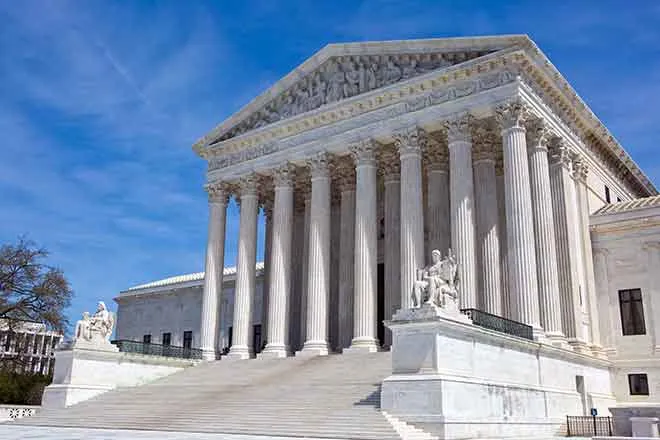
So I started filming with them in 2023, very early 2023, and right when Roe was overturned by the Supreme Court in June 2022, it was such an outpouring of panic and people were trying to figure out what do we do now.
A lot of stuff that I was seeing were things about abortion funds.
One of my good friends is from Charleston, West Virginia, and she told me about Holler Health Justice and was good friends with one of the founder, Caitlin Gaffin's sister.
And so she put me in touch with Caitlin and we were talking And I was not sure whether a group like that who was doing work that now was like in this kind of legal gray area or there was more scrutiny on them, if they would want someone to come with a camera and talk about and learn about their work and share what they were doing.
Luckily, they were excited to have me come down and spend time with them.
And I was very honored that they trusted me to do that, especially, you know, right after the overturning of Roe.
They have these crisis pregnancy centers that are popping up in West Virginia and throughout Appalachia.
What are they?
I mean, because Holler Health Justice, define them first.
What are they doing?
How would you define them?
So Holler Health Justice is an abortion fund, which means that they work with people who are in need of an abortion.
And then they do what they can to get people to the appointments that they need to get to.
Or depending on, you know, where they're at in their pregnancy, if there are things like Plan B and there are things like medication abortion, which are becoming harder to access.
But their work is basically just doing community, direct community outreach and community aid to both do education around reproductive care and also close gaps that people might have in terms of like how to get to an appointment for an abortion, whether that be they have to travel really far.
They have to cross state lines.
They might help someone arrange transportation.
If the price of the appointment is too high, they will work with other abortion funds and their own network of funders to close the gap.
A crisis pregnancy center is, I mean, they're called many different things.
One thing people who are pro-choice, pro-abortion call them are fake clinics because often they are places that appear to be medical clinics that advertise things like pregnancy screenings and other reproductive health care.
But in reality, they usually are not staffed by medical professionals.
It's usually volunteer run.
And very, very often the backing of these places is religious Christian right groups that are anti-abortion.
Often these places will crop up very close to abortion-providing clinics.
So in the documentary and in Charleston, you'll see when you're driving down the street towards that last clinic that was performing abortions before Roe was overturned, you first have to pass a place called a woman's choice.
They often have names like that where it's something that sounds like, oh, woman's choice, great, that's where I need to go.
And they'll try essentially to get people in the door and then convince them not to have an abortion.
And they have a lot of different ways that they do this.
One way is that they'll provide sometimes things like sonograms that can be, again, very cost prohibitive, very expensive.
They'll provide those for free.
Doesn't mean that they necessarily are providing them with a licensed medical professional, but they will provide those.
So that's one way that people end up getting in the door.
They also will sometimes tell people that they're not as far along in their pregnancy, and they are, so they can miss that window where they can get an abortion.
Especially in the wake of the overturning of Roe, they are getting a lot more money from state and federal governments.
Well, yeah, the Supreme Court stepped in to protect the crisis centers and their donors.
And I'm wondering if places like Holler Health and Justice feel safe, if they feel like they have any federal or state protection.
The folks at Holler Health are, I think they're super brave.
I think they think of themselves as just like showing up for their communities.
One thing they said that I just remember that I don't think I ever actually made it into the film, but they talked a lot about like the moment when Roe was overturned and there was all this uncertainty.
And some people were like very scared that they were going to get cracked down on for their work.
And they all just kind of looked at each other and were like, nope, we're just going to keep doing it because the need is there.
And that's just who they are.
And what really hit me is you could take the hot, flaming conversation about abortion out of this.
And there's this huge looming cloud of where is the reproductive health care?
I think if you want to avoid getting to the abortion question there, that should exist.
What's happening in West Virginia that there's this crisis?
I mean, I think what's happening in West Virginia is happening in a lot of states.
So before Roe was overturned in West Virginia, up until 2018, there was Medicaid funding for abortion, which is not common in every red state.
But it was something that really was a lifeline for people who needed reproductive health care.
You know, not that all reproductive health care is abortion.
And in 2018, the state removed that protection.
And then, you know, on top of that, there was one and this is in the film, but there was one health clinic after 2018 that still performed abortions.
And it was called the Women's Health Center.
It's also in Charleston.
That became like a focal point or a focus area for the anti-abortion movement.
So there was a lot of protesting and, you know, the same stuff you see in other places, like trying to block people from going into the clinic.
And I think the reason that, you know, the tension was so high there was because there were these maternity care deserts that were expanding in West Virginia, which means that, you know, there's no OB providers or birthing units and people are having to drive really far to get reproductive care.
In the absence of, say, controversy and wedge issues, there is nuance.
And within that, there are people who are living and caring.
And it seems like in there, there's this conversation that's so valuable to getting over these high fences we have built.
Your film and Roe was never enough helps do that.
It's a great watch.
Your film alone is very conversational.
It moves conversationally, but also a great conversation starter.
I'm so glad.
That's great.
You know, something that's happened voting wise since Roe was overturned.
We've seen this whenever there's been like a statewide vote in red states.
Often if the issue of abortion or reproductive health care is separated, like if it's a referendum rather than it's something that has to do directly with red versus blue politics, people even in red states will vote to protect that freedom.
And I think that says a lot where it's been politicized, but ultimately people just want control over their lives and their bodies.
If you make it as simple as that, you kind of see these walls break down.
Well, people will be able to see Roe Was Never Enough at the Mountain Craft Film Festival, where you'll be and receiving your accolades.
And also watch it on dailyyonder.com slash yonder radio.
Well, thank you so much, Emma, for sharing this story and doing that work.
Thanks so much for having me.
It's been great to talk to you about it.
You can go to dailyyonder.com slash yonder radio to watch Emma's film.
You can also join Emma at Mountain Craft Film Festival on October 2nd through the 4th in Clarksburg, West Virginia.
And find more of Emma DeSau's work at Emma, E-M-M-A, DeSau, D-E-S-S-A-U dot com.
And it was a year ago when I decided to test myself because I'm such a chicken around tarantulas and spiders in general.
Could be just a little guy who's here to help me kill bugs.
And so I went to the La Junta Tarantula Fest.
Now, the story you're going to hear is from last year, but the Tarantula Fest is September 25th and 26th this year and is ongoing every year as they celebrate what is known as the mate-gration of these giant, horrific spiders.
It's a lot of horizon and not many cars.
No matter how you're getting to La Junta, Colorado, there is a lot of horizon.
And in the fall, tarantulas.
There are a lot of tarantulas.
This year, Tarantula Fest is September 25th and 26th.
Here's the account of us going last year.
Do you like those things?
No, not really.
We're in the mood.
It's that time.
Yeah.
So you'll have to get a picture of Lori's too.
We would get a picture of Lori's shirt.
They're all at NAPS Farm Market wearing shirts with tarantulas embroidered on them.
And even that sight is too much for me because I'm afraid.
And my friend Brian knows.
You're going to look out across the highway and you're going to think, have they pushed cattle across here?
What are these things?
What are all these things on the road?
And then you're going to notice they're moving.
And they're all moving the same direction.
And it's going to be that visceral chill of like, this is an alien thing to me.
Regrettably, I've brought Brian, a former news reporter who now works for the Burlington Northern Santa Fe train.
And his southeastern Colorado territory means a lot of tarantulas making the journey in the fall.
And that journey, no matter how creepy these migrating dudes are, is impressive.
It brings people from all over the world.
Yes.
Where are you here right now?
Tarantulas.
What are you looking at?
Crickets.
We find Lisa and her friends in the road.
And we, too, found crickets.
Huge crickets, but not what we were looking for.
Steve and Grace would pull up and give us a local's perspective.
Did it bother you?
No.
I wanted to catch them.
Have you caught one?
We grew up here, so, yeah, the tarantulas are just part of life.
You can hear that he's helpful, but slightly annoyed.
And it gives us an idea when we get to Otero College in La Junta to ask around, should you take a tarantula captive?
Don't.
A captive is the same as killing it.
Yeah.
Unlimited.
They're out of the gene pool.
That's another Brian from Houston.
He's wearing a giant bug.
It's a stuffed bug on his head.
And Jeanette from Boulder is with him, and she's wearing a tarantula on hers. but that's not a tarantula on your head what's going on here this is a tarantula hawk it is a wasp that lays their eggs on tarantulas and the egg consumes them any place you have tarantulas you're gonna have tarantula hawk did not know about the tarantula hawk and this entire trip is about learning for one i want to know why am i afraid of spiders and can i overcome it that question would be answered when I ran into a student with a tarantula.
And here's how that goes.
What is your name?
I'm Jaden.
My name is Jaden.
I'm a master's student.
Master's student where?
San Diego State University.
Did you ever foresee yourself as a child doing what you're doing right now?
No, honestly, if you were to show a little me a picture of me right now, I'd probably like run and hide.
Like, that's not me.
The audio doesn't quite pick up what's happening to me, But Katomi from the Denver Museum of Nature and Science, she witnessed my reaction to a spider.
Oh my God, what is that?
Please do not come to me.
I saw that all in your eyes and the face and the body language.
This isn't about me.
I mean, arachnophobia is real.
As a matter of fact, at the Fox Theater in La Junta, they're playing the 1990 movie classic.
And after that wrapped up, we'd arranged an interview with Kimberly from the local library because she knows spiders and she knows the magic that happens to make more spiders.
Yeah, I think it's really cool the way that it is.
And the one thing that my daughter says after all this time, she's in her second year at West Texas A&M University.
And she's like, when we go places, please don't tell people about tarantula mating.
Like nobody wants to hear that.
And I said, everybody wants to hear about that.
It's such a cool thing, and they are, they're choosing.
The females are choosing, is this the male that I'm going to mate with?
And the whole process of all of it, this journey, the knocking on the den, you know, the special parts of their body that are formed at a certain time so that they can keep the female far enough away from them because then she might eat them after.
It's just all very, very cool, yeah.
And she, the female is also, we've learned, really protective of her babies.
And I could use a protective mother at this point as my friend Brian, as I'm talking to Kimberly, brushes my leg.
I love the tarantulas.
I would go as far as to say that.
Heather, go!
That was the reaction?
Jesus.
Oh, God.
That's just a, okay, I'm sorry.
No, no, it's good.
It's good.
So I've been telling people the more that I learn about the tarantulas, the more excited I am.
Just seeing the little, really little kids this morning be excited about seeing the tarantulas.
That fear hasn't been pressed into their mind yet.
It shouldn't be.
What should be is this incredible journey that should inspire all of us of these tarantulas migrating.
Sometimes up to 20 miles to continue the species. and then we see one and I'm a bit of a sputtering fool like I don't know maybe don't eat this one what happens well I stood up too quickly and I got dizzy and almost fell down and then had this imagine death where I was being consumed by tarantulas, but they don't do that.
They're scared of you.
They have this singular journey, which I'll detail along with video at our news website, dailyyonder.com.
And I survived.
I'm here on the other side and I've just got to be a grown up around these spiders that are working so hard to continue their species.
Shout out to you, you fuzzy, creepy monsters.
It's time for our final trivia clue and answer.
This competition is sponsored by the Katmai National Park and Preserve in southern Alaska.
That's the final hint there.
Do you have your guess?
The answer of this competition of carnivores is Fat Bear Week.
Fat Bear Week is so great.
It began as just one day, Fat Bear Tuesday in 2014.
The competition celebrates Katmai National Park's famous brown bears as they gorge on and to prepare for their winter hibernation.
The Bears put on several hundred pounds over the summer, and the public is invited to vote on their favorite fat bear until one winner is declared.
Previous champions include the Bears Chunk, Grazer, and Bear 747.
This year's Fat Bear Week is happening right now, and you can vote between September 22nd through the 29th at explore.org slash fat hyphen bear hyphen week.
And take care of yourself, too.
Maybe you get to hunker down and hibernate and grab a little Yonder Radio time.
We would greatly appreciate it.
Thank you for listening.
We will be back right here next week.
Thank you for listening to Yonder Radio, a production of the Center for Rural Strategies, publisher of the Daily Yonder.
I'm your host, Jared Iwi.
Thanks to Don Castle and the Tennessee Sheiks, Steph Gunno and the Lone Tones, Quincy Ponfair, Leo Pozel, and Tim Merima for the great music.
Our editor and producer is Susanna Brown.
This episode was also produced by Anya Patron-Slepian, with additional support from Alana Newman and Julia Tilton.
Our executive producer is Joel Cohen.
The executive in charge of production is Adam Georgi.
Yonder Radio, Rural Conversations with National Reach. guitar solo