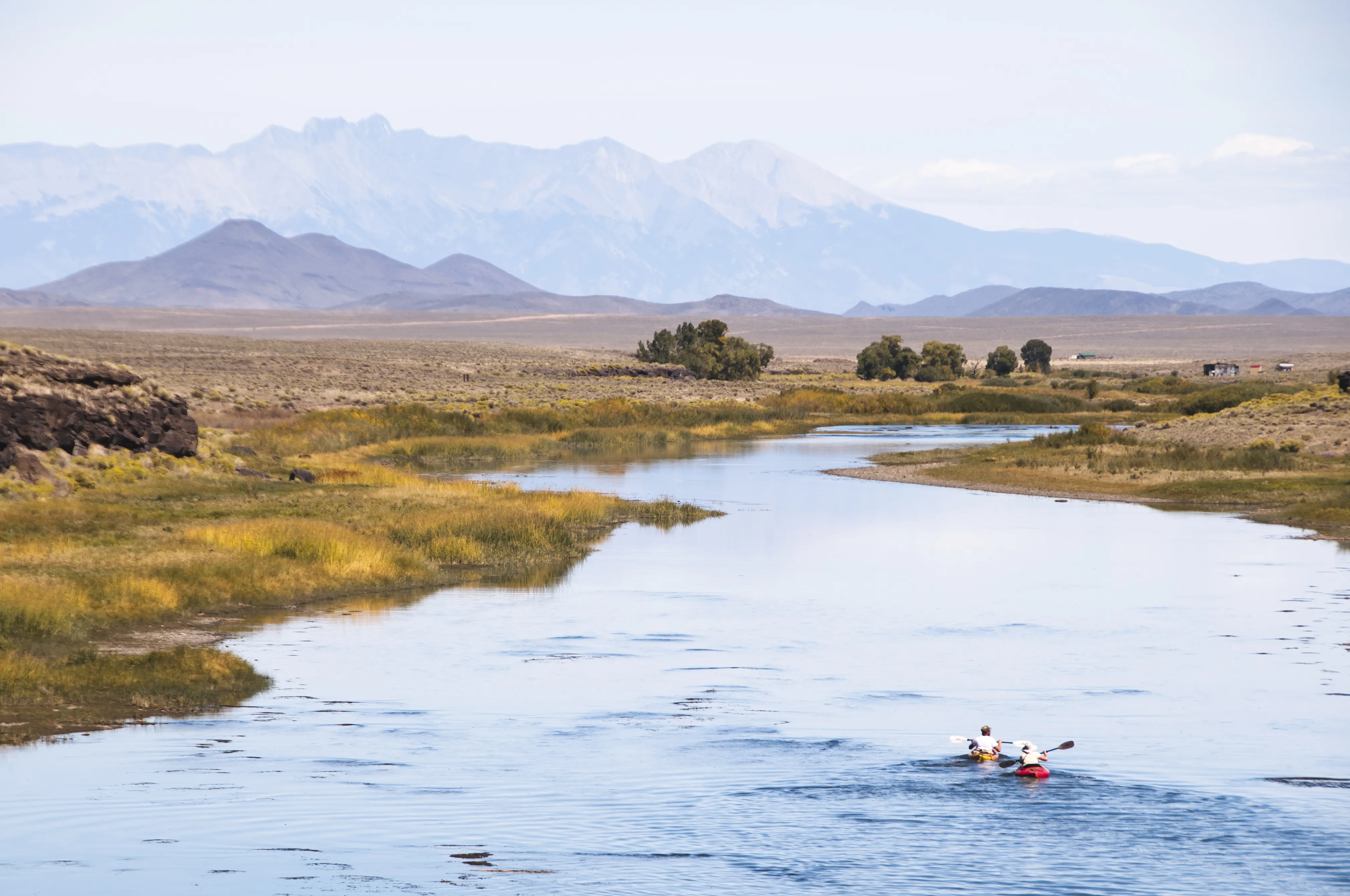
150 years ago, naturalists and thrill-seekers formed Colorado’s first mountaineering club

© Evgeniy Grishchenko - iStock-2155580431
After municipal elections in early April, the new city council in Colorado Springs met for the first time on April 15, 1876, making appointments to city offices and deliberating over a local liquor ordinance.
Founded five years earlier by William Jackson Palmer, president of the Denver & Rio Grande Railway, Colorado Springs had already outgrown its neighbor, the old Colorado City, and would eventually annex it. As the council convened, word came that the town’s ordinance prohibiting the sale or manufacture of alcohol had been upheld in court.
“Having given all proper notice of our intention, we must commence at once to prosecute all . parties engaged in selling or disposing of liquor whether in small or large quantities in violation of the ordinances,” said Mayor William Wagner, as reported by the Colorado Springs Gazette. “Our work must be sharp and decisive and we may reasonably hope that it will be short. The peace and good order of the city will be easily maintained if we can effectually suppress the sale of intoxicating drinks.”
Public domain - Wikimedia
But as the council turned to matters of official appointments and bills for city services, another group of Springs residents met elsewhere in town for an altogether different purpose, the Gazette reported: the inaugural meeting of the Rocky Mountain Club, the soon-to-be state of Colorado’s first organization dedicated to mountaineering.
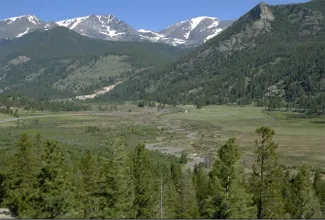
Robert Lamborn, the club’s founding chair, invoked the “the grand peak that towers above us … discovered in 1806 by Pike” as he laid out his vision for the group in a lengthy speech he’d prepared for the occasion.
“Few of those who come to this elevated region,” Lamborn said, “whether for business, for pleasure, or for health, have not felt at sometime a longing to climb upward into the grand and mysterious world of cliff and cañon and Alpine valley that hangs high above us with its own peculiar forms of animal and vegetable life, its rich and strange effects of light and color, its astonishing meteorological phenomena, its fields of eternal snow, its vastness, its grandeur, and its solitude.”
American mountaineering was having a moment in the centennial year. The Appalachian Mountain Club, which ranks today as the nation’s oldest continuously-operating outdoor group, had been founded in New England in January. On the opposite side of the country, a Scottish-born writer named John Muir had begun to win acclaim for works like “Studies in the Sierra” and “By-ways of Yosemite Travel.”
Though Colorado had been settled largely because of the gold, silver and other mineral wealth that could be extracted — often at great ecological cost — from its mountain landscapes, by the 1870s the residents’ relationship to the environment was beginning to change.
© ogichobanov - iStock-1088402018
In 1874, territorial newspapers had republished the rapturous accounts of English traveler Isabella Bird’s ascent of Longs Peak the previous year. Along with aristocrats like the Earl of Dunraven and Grand Duke Alexei Alexandrovich Romanov of Russia, Bird had been among the many European travelers drawn to what the author Samuel Bowles, in an 1869 travelogue, called “The Switzerland of America.”
Like the Appalachian Mountain Club in New England, Lamborn’s Rocky Mountain Club was modeled on the esteemed Alpine clubs of Switzerland, Italy and other European countries, which published detailed maps and guides for aspiring hikers and climbers.
At the club’s inaugural meeting, Lamborn, who as a young man had studied geology in Germany and France, read well-wishing letters from correspondents in Florence, London and Savoy — along with a note from geographer Ferdinand V. Hayden, who’d led several major geological surveys for the federal government, including a pivotal expedition to the Yellowstone region in 1871.
“The value of such an organization, with a library stored with maps and books of a local character, cannot be overestimated,” Hayden wrote. “I have often, while in Colorado, felt the want of government and other books and maps, descriptive of the Great West, which though readily obtained in Washington, cannot now be found collected at any point in the Rocky Mountains.”
The first iteration of the Rocky Mountain Club would be short-lived; two years after its founding, the Gazette reported that it had gone defunct. At least one other club of the same name would be formed in the ensuing decades, before the founding in 1912 of the Colorado Mountain Club, which has carried on the state’s alpine-club tradition to the present day.
Selected sources
- The Colorado Springs Gazette, April 22, 1876
- Isserman, Maurice. “Continental Divide: A History of American Mountaineering”