Colorado River negotiations crumble as another deadline passes by

Seven states drawing water from the Colorado River for drinking, farming and electricity walked away from the negotiating table Friday without a deal on how to share the dwindling water supply starting next year.
Negotiators spent months trying to close an expansive divide between the upstream states of Utah, Colorado, New Mexico and Wyoming, and the downstream states of Arizona, California and Nevada. On Friday, they told reporters it wasn’t going to happen before a Saturday deadline imposed by the U.S. Department of the Interior.
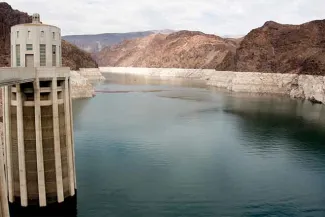
Hoover Dam on the Colorado River Drought © iStock - ngc4565
It’s the second time the states have blown past a due date to reach a broad agreement. It comes as dismal snowpack and drought plague the West, threatening to push reservoir levels much lower.
The river provides water to 40 million people across the U.S. and Mexico, contributing 27 percent of Utah’s water supply. It’s shrinking because of drought, overuse and hotter temperatures tied to climate change.
Both the upper and lower river basin states insisted they’re acting in good faith and said they’ll keep talking. Utah Governor Spencer Cox was optimistic, saying a solution is still within reach.
“Utah is ready to make a deal,” Cox said in a prepared statement. “We will engage in good faith with partners who are committed to durable solutions, not soundbites.”
The governor’s statement followed Arizona’s Friday announcement that there is no consensus. That state’s chief negotiator, Tom Buschatzke, said the downstream states made concessions, proposing “substantial cuts” to their water allocations. He blasted the Upper Basin for refusing to make a firm commitment to cut water use.
Upper Basin states argue they use less water than Lower Basin states, don’t have huge reservoirs to store water in dry years, and lack legal authority to place significant restrictions on water users.
Utah’s primary negotiator said the upstream states pitched a method of sending water downstream based on the levels in Lake Powell on the Utah-Arizona border, but the two sides couldn’t agree on how much should be released to Nevada’s Lake Mead. They also sparred over which reservoirs would be managed under the new plan and how much water should part from upstream reservoirs like Flaming Gorge on the Utah-Wyoming line.
“Their point that we’ve put nothing on the table, that couldn’t be further from the truth,” said Gene Shawcroft, Utah’s Colorado River commissioner. “I’m not going to get into a spitting match over this or that. We all have to have skin in the game, and that skin in the game is extremely painful.”
A report from the federal government out Friday projects that Lake Powell’s level could fall so low by December that it may not produce power.
“The terrible hydrology we have this year makes us even all that much more nervous about how we’re going to operate until we can come up with a deal,” Shawcroft said, saying the states are pivoting to focus on the immediate future.
He said Utah wanted to head off the potential for lawsuits ending with judges making their decision for them, and they still have hopes of doing so. As the clock ran down, however, Arizona and Utah took steps to build up their litigation funds.
Shawcroft said the federal government hasn’t explicitly granted an extension, but he hopes it will allow the states to continue to talk and report back. The Interior Department did not respond to a request for comment Friday on whether it will implement its own plan.
A coalition of conservation and recreation groups including The Nature Conservancy and Trout Unlimited said “continued gridlock carries real consequences for the River and those who depend on it.”
The six groups said there is little margin for delay, saying “hotter, drier conditions that present increased wildfire risks, water quality concerns, and water supply restrictions and shortages are now the operating reality.”