Colorado’s rural farmers try to adapt to shrinking Colorado River

Click play to listen to this article.
The Colorado River has 20 percent less water flowing through it than it did in the 20th century due to a decadeslong drought exacerbated by climate change.
Caitlin Ochs, a photojournalist and National Geographic Explorer, has been documenting how farmers are trying to adapt. She said each year, members of the Ute Mountain Farm and Ranch in rural southwestern Colorado create multiple plans for what to plant based on water allocations, which vary greatly from year to year. They have already made adjustments on the operations side, including building a mill to add value to the blue corn they grow.
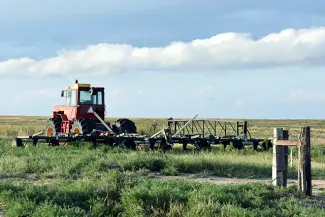
"They’ve implemented low-flow nozzles into their center pivot system," Ochs noted. "They’ve installed these small-scale hydro-powered generators to help them power their mill."
© Chris Sorensen / KiowaCountyPress.net
As the seven Colorado River Basin states wrangle over how many acre-feet of water they’re willing to do without, Ochs pointed out rural communities across the Southwest are experiencing a water crisis in real time. If the states cannot reach a deal by Oct. 1, the federal government would step in to enforce water cuts.
Each year, the Dolores Water Conservancy District decides how to divide up water under the 1922 Colorado River Compact. Users with the oldest, or senior, rights get their water first. Ochs explained the Ute Mountain Ute Tribe did have senior rights until they made a deal in the 1980s in part to secure drinking water infrastructure for the town of Towaoc.
"Practically, what that means is during really bad water years, years like we’re having now, for example, the UTE farm this year might only get 10 percent of their water," Ochs stressed.
Warmer temperatures mean more water evaporates before it reaches the Colorado River. Going forward, Ochs pointed out a temperature rise of one degree Celsius is projected to reduce the river’s total flow by 9 percent. She emphasized farmers are not just adapting to a couple of bad years.
"They’re adapting to this new baseline," Ochs underscored. "Because the river that they’ve built their livelihoods around isn’t really coming back to what it was, unless we manage to drastically cut emissions."