
Commentary - AI tools strengthen Nebraska law enforcement fight against sex trafficking

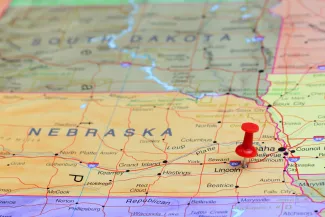
© Khanchit Khirisutchalual - iStock-1515913422
The sex trafficking industry is one of the most serious and fast-growing challenges facing Nebraska’s law enforcement officers.
Once thought to be an issue limited to major metropolitan areas, trafficking now reaches deep into Nebraska communities — from Lincoln and Omaha to our rural counties and small towns along the I-80 and I-29 corridors.
As the founder and director of Innocence Freed, a Nebraska nonprofit dedicated to supporting female victims of sex trafficking, I’ve seen firsthand how this unthinkable crime devastates survivors, their families, and the fabric of our local communities.

© Andranik Hakobyan - iStock-1437277148
Traffickers are constantly adapting, using technology to recruit, groom and exploit victims in increasingly sophisticated ways. But for the first time in decades, we are witnessing a shift. Artificial intelligence (AI) is giving Nebraska law enforcement and victim-service organizations a powerful new set of tools to stay a step ahead of traffickers — and we should embrace that progress, not shy away from it.
One example already making an impact is the use of AI-driven facial recognition to help identify missing Nebraskans who may be featured in online ads or exploitation networks. When used responsibly, this technology allows investigators to match images with missing-person databases far more quickly than any manual process, helping speed up recoveries and focusing limited resources where they’re needed most. In a state where many local agencies are stretched thin, these time savings can directly translate into lives saved.
AI is also proving invaluable in tracing the financial trails left by trafficking operations, many of which run through Nebraska due to our central location and major transportation routes. Trafficking networks frequently rely on subtle payment patterns to hide their activities. AI systems can detect anomalies and suspicious transactions that even seasoned investigators might miss. This type of data analysis can give Nebraska law enforcement a clearer view of how networks operate, who is funding them, and how they move money — ultimately leading to stronger prosecutions and more dismantled trafficking rings.
The promise of AI in this fight is real: faster investigations, more victims identified and more traffickers brought to justice. To be clear — AI will never replace the compassion and determination of Nebraska’s law enforcement officers, social workers, advocates and community partners. But it can be one of the most transformative tools we give them.
That’s why it’s critical that Nebraska and the federal government pursue policies that support — not hinder — the responsible use of AI in law enforcement. Poorly written regulations could slow deployment, add unnecessary costs or limit access to lifesaving tools for agencies that already operate on tight budgets. Instead, we should focus on smart, balanced policies that protect privacy while ensuring AI remains accessible to those fighting on the front lines across our state.
As Nebraska continues to confront the evolving threat of sex trafficking, we have a responsibility to use every tool available to protect survivors and stop the people who exploit them. By strengthening collaboration between Nebraska’s innovators, law enforcement agencies and advocacy organizations, we can build a more effective and compassionate response to this crisis.
Sex trafficking is fast-moving and adaptive. Nebraska must be just as fast — and even more determined. With the help of AI, we can turn the tide against traffickers and offer more hope, healing and freedom to the women and children who deserve nothing less.
Julie Shrader is the founder and CEO of Innocence Freed, a Nebraska nonprofit serving adult and child survivors of human trafficking and sexual exploitation.