Feds release draft long-term plans for Colorado River management

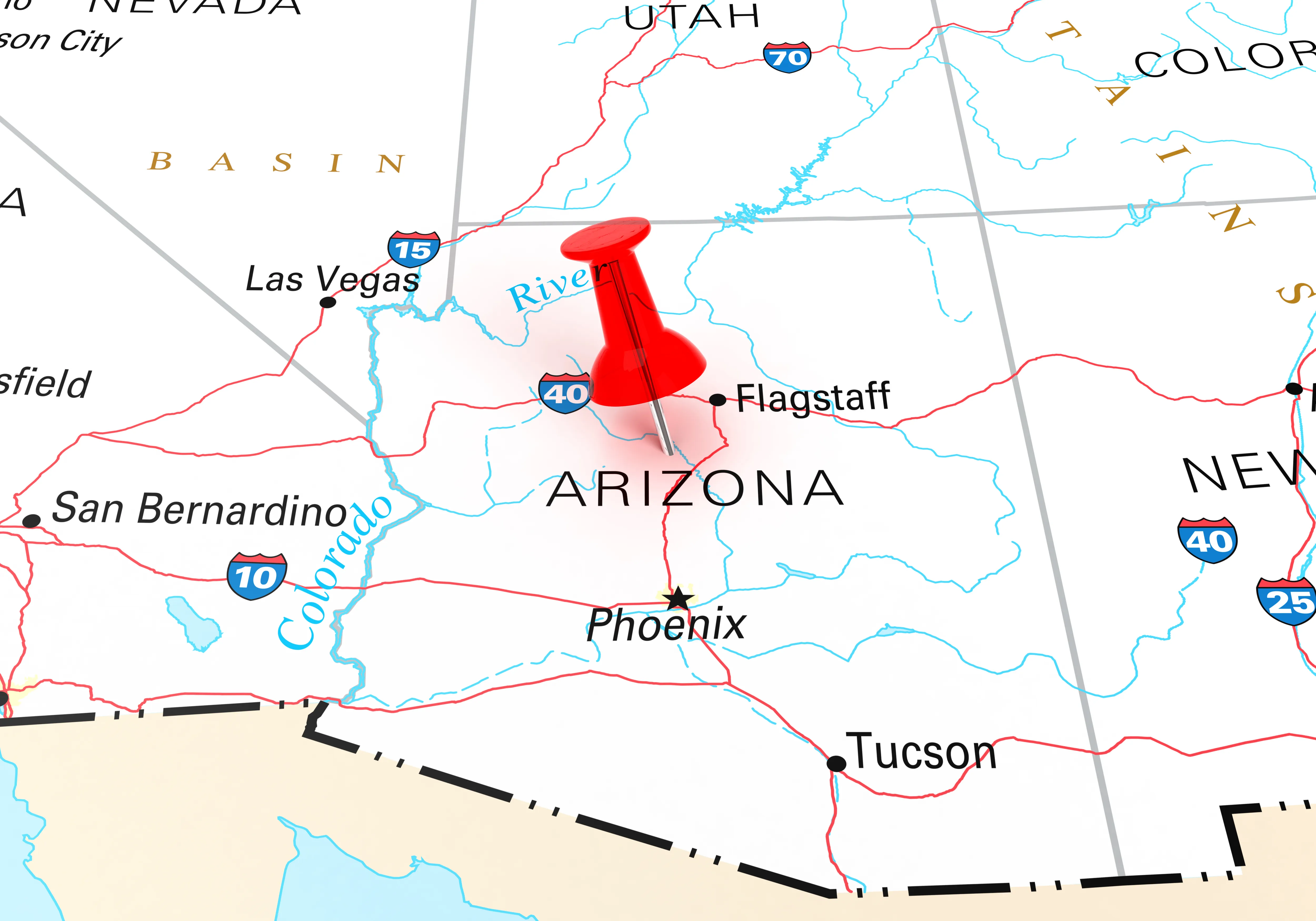
Amid stalled state negotiations over how to share the Colorado River’s dwindling water supply, the Bureau of Reclamation on Friday released a range of options that will serve as the foundation for how to manage the river’s largest reservoirs – Lake Mead and Lake Powell.
The highly anticipated 1,600-page document details five alternative proposals that will guide new water management rules to replace the current ones set to expire in August 2026. The proposals primarily focus on the operation of Lake Mead’s Hoover Dam and Lake Powell’s Glen Canyon Dam.
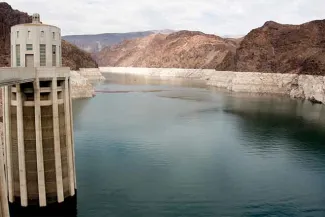
Hoover Dam on the Colorado River Drought © iStock - ngc4565
The seven states that share the river’s flows have been deadlocked for nearly two years over how to govern the waterway through the coming decades — even as water levels at Lake Mead and Lake Powell are forecasted to reach record lows after two straight years of disappointing snowpack across the West.
The alternatives include a compliance option that could be implementable in 2027 if states can’t reach a seven-state agreement on how to share the river’s water supply, however under that alternative Nevada, Arizona, and California would face water shortages up to 1.48 million acre-feet.
“The Department of the Interior is moving forward with this process to ensure environmental compliance is in place so operations can continue without interruption when the current guidelines expire,” Andrea Travnicek, the department’s assistant secretary for water and science, said in a news release Friday. “The river and the 40 million people who depend on it cannot wait. In the face of an ongoing severe drought, inaction is not an option.”
Any guidelines adopted for post-2026 Colorado River operations are likely to face an early test with forecasts anticipating low elevations at Lake Powell and Lake Mead in 2027. Lakes Powell and Mead are currently less than two-thirds full, while projections show the river’s inflow next year is likely to be 27 percent lower than normal.
Without a strong winter snow season, it’s possible Lake Powell’s levels could drop low enough to cease hydropower production by next October — a scenario that would also limit the department’s ability to send water downstream to Nevada, Arizona, and California.
Negotiations between federal officials and the seven western states that rely on the Colorado River have largely remained behind closed doors since 2023, but any new operating rules are required to go through a public environmental review process before a final decision can be made.
© iStock - ventdusud
The proposals released Friday were part of the National Environmental Policy Act (NEPA) process, which includes a Draft Environmental Impact Statement analyzing the impacts of the proposals.
Several river negotiators said they have not yet reviewed the lengthy document published late Friday, and could not give a detailed analysis of the proposals.
“We are reviewing the draft EIS, and we expect to be in a position to provide comments next week. We’d like to give a thorough review before we comment,” said Bronson Mack, a spokesperson for Nevada’s chief river negotiator and general manager of the Southern Nevada Water Authority John Entsminger.
Utah’s chief river negotiator Gene Shawcroft echoed those comments.
“The Authority will take the time necessary to fully evaluate the document before offering detailed comments,” Shawcroft said in a statement.
Shawcroft called the release of the draft environmental impact statement for post-2026 Colorado River operations “an important milestone in a complex and consequential process.”
“The Authority looks forward to carefully reviewing the draft and continuing to work with our Basin State partners, water users, Tribes, and the Bureau of Reclamation to help ensure future operations protect Utah water users, support the environment, and reflect Utah’s priorities,” he continued.
In an unusual move, the draft environmental impact statement did not identify which set of operating guidelines the federal government would prefer. A preferred alternative is typically included in environmental reviews.
“Given the importance of a consensus-based approach to operations for the stability of the system, Reclamation has not yet identified a preferred alternative,” said Acting Bureau of Reclamation Commissioner Scott Cameron in a statement Friday.
However, the draft environmental review does include a broad range of possible alternatives designed to enable states to continue working towards a seven-state consensus agreement on how to share the river’s shrinking water supply.
“Reclamation anticipates that when an agreement is reached, it will incorporate elements or variations of these five alternatives and will be fully analyzed in the Final EIS enabling the sustainable and effective management of the Colorado River,” Cameron said.
States’ last chance to share a final consensus-based plan will be mid-February 2026 in order to reach a final agreement in the summer, with implementation of the new guidelines beginning in October 2026.
States along the Colorado River have been split into two camps for months over how to manage the river after 2026: Arizona, California, and Nevada in the Lower Basin; and Colorado, New Mexico, Utah and Wyoming in the Upper Basin.
One of the biggest disagreements between the Upper and Lower Basin states is over which faction should have to cut back on their water use, and by how much.
Lower Basin states want all seven Colorado River states to share mandatory water cuts during dry years under the new guidelines. The Upper Basin, which is not subject to mandatory cuts under current guidelines, say they already use much less water than downstream states and should not face additional cuts.
The public comment period on the post-2026 alternatives runs from Jan. 16 to March 2. Reclamation will also hold two virtual public meetings to provide more information on the draft, scheduled for Jan. 29 and Feb. 10.