Life could be harsh in Colorado’s rugged, remote Middle Park region in 1876

© Evgeniy Grishchenko - iStock-2155580431
On a good day for the Colorado Central Railroad in spring 1876, it took less than three hours for a passenger train departing Denver to ascend Clear Creek Canyon as far as Floyd Hill.
Though the Colorado Central had plans to reach the mining towns of Idaho Springs and Georgetown, they wouldn’t be realized until 1877. The railroad’s terminus near the present-day intersection of Interstate 70 and U.S. 6 was the westernmost point of Colorado’s 900 miles of railroad track in the centennial year — a little farther west than the Denver & Rio Grande Railway’s Cañon City terminus to the south.

© iStock - den-belitsky
With the completion of a major railroad route to Pueblo in March, much of Colorado’s Front Range was enjoying a new era of transportation prosperity as the spring weather thawed out the territory 150 years ago. More competition between railroad companies meant lower freight and passenger rates, and railroads connecting more cities and towns meant swift, easy and reliable communication by mail and telegraph.
But those conveniences didn’t extend to Colorado’s far-flung mountain settlements, which could only be reached by trail or wagon road. In the winter months, when conditions permitted any travel at all, mail service between Georgetown and Hot Sulphur Springs depended on the enterprise of one carrier whose efforts to maintain “promptness and regularity” were praised in the weekly Georgetown Miner.
“The carrier has ceased bothering with a horse, and now makes his trips on snow-shoes, carrying the mail on his back,” the Miner reported. “Considering how sparsely settled the Park country is yet, it would surprise people generally to see the amount of mail matter that accumulates in our Post Office every week for the Springs.”
By mid-April, the Georgetown, Empire and Middle Park Wagon Road Company, which controlled the toll road over Berthoud Pass, had begun digging out the snow to clear a trail wide enough to travel on horseback, and “the sun will very soon enlarge a trail to the dimensions of a wagon road,” the Rocky Mountain News reported.
As Colorado neared statehood — and as the 20,000 residents of Denver enjoyed the comforts of public transit, gas lighting and municipal water system — passing “over the range” into Middle Park in 1876 could transport a traveler back into the territory’s disappearing frontier past.
© ogichobanov - iStock-1088402018
The area’s most prominent resident was the painter and engraver John Harrison Mills, who was elected Grand County probate judge in early 1876 and spent his years in Colorado depicting life in the mountains in the pages of eastern magazines like Scribner’s and Harper’s monthlies.
Many Middle Park settlers had just endured their first winter there after arriving the previous year with their families, and they mingled both with scattered bands of Ute people and with “old trappers” — some of the last of the mountain men who’d hunted and camped in Colorado’s mountain parks for most of the 19th century.
The harsh winter had brought reminders of the privations and perils of pioneer life. Mills had camped near Whitely Peak north of present-day Kremmling, intending to make sketches for a painting, but fell severely ill and spent several weeks stricken in camp before “his hunter neighbors fixed up a trail sled and hauled him over the snow thirty-five miles to Hot Sulphur Springs,” the News reported.
Even more unfortunate was a settler from Minnesota named L.G. Barott, who, after running out of food in late February 1876, left his Middle Park cabin to hunt elk, only to find himself “hopelessly bewildered” in the snow. Barott wandered alone through the wilderness for nearly three days before finally making it back to his cabin with both feet severely frostbitten, according to newspaper accounts. He paid a group of men $100 to haul him in a sled over Berthoud Pass to a doctor in Georgetown, in a journey that took six days.
“Dr. Lemen was called to see the sufferer, and at once proceeded to apply remedies which alleviated the acute pain the poor fellow was enduring,” reported the Miner. “Dr. L tells us that the final result must be amputation of the right foot.”
Pioneer society
With such hardships becoming an increasingly remote possibility for many Coloradans — most of the territory’s 100,000 or so residents had arrived in a post-1870 population boom — there was renewed interest in 1876 in preserving the legacy of the “Fifty-Niners” who had arrived during the Pikes Peak gold rush.
iStock
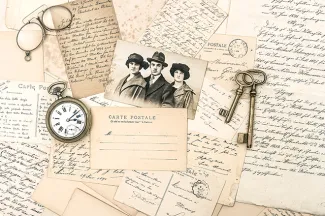
As the nation’s centennial celebration and Colorado’s long-awaited admission to the union approached, some of Denver’s leading citizens revived the Society of Colorado Pioneers, which had first been organized in 1872 but soon went defunct. Seventy-eight members — all of whom had arrived in Colorado from 1858 to 1860 — paid dues of a dollar a year to join the reconstituted group.
With support from prominent Fifty-Niners like William Byers, publisher of the Rocky Mountain News, the new pioneers’ association met on April 29, 1876, and took the lead on the territory’s preparations “toward a proper celebration of the centennial Fourth of July.”
The Society of Colorado Pioneers would become an important civic organization in the decades to come, eventually amending its bylaws to open membership to pioneers’ “lineal descendants.” In 1943, the group merged with a separate women’s group to become the Pioneer Men and Women of Colorado, and continued to hold annual Colorado Day celebrations at Denver’s Pioneer Fountain into the 1960s.
Selected sources
- The Colorado Miner, March 25 & April 8, 1876
- The Rocky Mountain News, March 23 & April 30, 1876
- “The Pioneer Men and Women of Colorado Celebrate Their Centennial,” The Colorado Magazine, October 1960.