Montana ag groups hammer Trump beef imports

© Smederevac - iStock-1470677566
President Donald Trump has announced that 300,000 metric tons of product for ground beef to be imported without a tariff quota for the next 90 days and it has been met with criticism both in Montana and beyond.
Agricultural advocacy organizations immediately hammered the plan and even some Republican politicians have been critical of the plan, including Montana’s Senator Tim Sheehy.
Montana ag groups were already frustrated with Trump's trade policy before this announcement, as Montana ag producers had a beef with Trump's tariffs about a year ago.
“I’ve advised President Trump against this course of action for a year because American ranchers have been struggling against the packer monopoly for decades, and this will further harm them – most of whom are MAGA Republicans,” Sheehy, a Republican, posted on X.

He said Trump’s “heart is in the right place” for trying to lower food prices, but the “reality is this action will make it more difficult for American ranchers to rebuild our herd and bring prices down for the American people.”
The rest of Montana’s all-Republican federal delegation have been against the move as well.
“Importing foreign beef is only going to hurt our ranchers and increase prices over the long-term,” Senator Steve Daines said on X.
Montana Cattleman’s Association President Tim Brunner said in a post that, “if you think you can rebuild a national cow herd in 90 days, I’ve got some heifer calves to sell you.”
Ranchers and farmers across the West have been dealing with severe, years-long drought that has made it difficult for cattle producers to rebuild their herds. Both cattle and the things they feed on need water to grow and with a limited supply, there can only be so many cows and so much good rangeland.
The herd-rebuilding challenge is not new — Montana ranchers had already 'culled back significantly' due to drought and high hay prices back in 2022, setting the stage for today's tight cattle numbers.
In the summer, a cow can drink 20 to 30 gallons of water per day which is fine if the ponds and streams are full on a rancher’s land and the cows can water themselves. It becomes far more difficult when watering cattle begins to involve tanker trucks and hours of work.
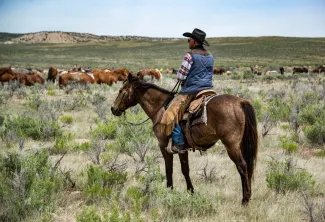
“This is a critical time of year for cattle producers, as we approach the season where they are making decisions regarding their herds,” National Cattlemen’s Beef Association Chief Executive Officer Colin Woodall said in a statement. “Cattle farmers and ranchers are responding to strong market signals and historically high demand, and we are already working to rebuild after years of ongoing drought, high input costs and other challenges that have reduced U.S. cattle numbers.”
Montana ranks sixth in the nation in terms of cattle production, with 1.25 million cows, out of an estimated national herd of 27.8 million in 2025. That means Montana represents about 4.5% of the overall beef production, with Texas leading the way at more than 4 million cows.
Walt Schweitzer, president of the Montana Farmers Union and a rancher, said the added beef will represent about 3% of the total beef supply this year in the United States. America is on pace to import about 30% of all beef consumed in-country, he added.
Cattle prices dropped almost immediately, which Schweitzer — who has been highly critical of the four packing companies that control the majority of the American meat market — took to mean that the packing companies might have had some advance knowledge of the deal.
Whatever deal Trump made to import the beef has also not been transparent, Schweitzer added. It’s led to plenty of speculation and little clarity.
“The consumers are going to go to the grocery store and they’re going to buy burger out of the meat counter that is most likely imported, but they’re going to pay the same price,” Schweitzer said Tuesday, “And the only people that are going to make money are the packers, and and it probably is going to be primarily JBS and the Brazilian cartel, because they’re the ones that have that kind of quantity of of scraps available to to fill this market.”
The American Farm Bureau Federation, the nation’s largest agricultural advocacy organization (representing more than 5 million people) came out against the announcement as well. The Farm Bureau represents the interests of many large agricultural and food production businesses. Montana’s chapter expressed its frustration as well.
“Despite high beef prices in grocery stores, prices paid to farmers and ranchers for their cattle have fallen sharply over the past two months, and beef packing plants are shutting down across the U.S. further undercutting a fragile recovery by swamping markets with foreign products and attempting to manipulate prices threatens to wipe out any progress that has been made,” AFBF President Zippy Duvall said in a statement.