New Mexico 9th state to end participation in federal immigration detention

Click play to listen to this article.
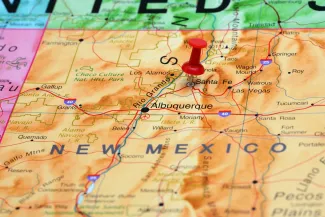
It will not completely stop detentions of local immigrants by ICE agents but recent legislation passed in New Mexico sets a precedent in efforts to protect them.
The Immigrant Safety Act ends existing Immigration and Customs Enforcement detention contracts in the state and prevents the use of state resources for federal immigration enforcement. It also stops the use of public land for immigration detention.
Carla Law, attorney for the American Civil Liberties Union of New Mexico, said such measures have been a priority for her group for several years but are needed now more than ever to combat the Trump administration's massive detention efforts.
"We're aware that if one minority group or if one marginalized community is on the chopping block, it's just a matter of time until another community that has been marginalized will be up for discrimination," Law emphasized.
The ACLU noted at least eight people already have died through interactions with ICE in 2026. The state's Immigrant Safety Act will take effect May 20. It passed the Legislature with a vote of 24-15 and was signed by the governor. A study by researchers at the University of Southern California-Los Angeles showed the new Trump administration's enforcement tactics have led to an increase in street arrests in communities by a factor of 11.
Law added the new Immigrant Safety Act ends the federal 287(g) provision in New Mexico, withdrawing the state from a program which trains local police to assist immigration agencies, and instead keeps them focused on local crime.
"With the prohibition of these types of agreements on a state level, we're really ensuring public safety is higher than ever amongst our most vulnerable communities," Law contended. "And that they feel safe enough to approach local law enforcement without fear of them acting as deportation agents."
ICE has contracts with three New Mexico detention centers and opponents of the Safety Act said it could harm the economies of rural counties where they are located. Advocates of the bill countered there are documented cases in all three centers of abuses and untimely deaths.