North Dakota farmers not set up for success in 2026

North Dakota’s farmers are looking for higher profits but things may get worse before they get better, ag industry experts say.
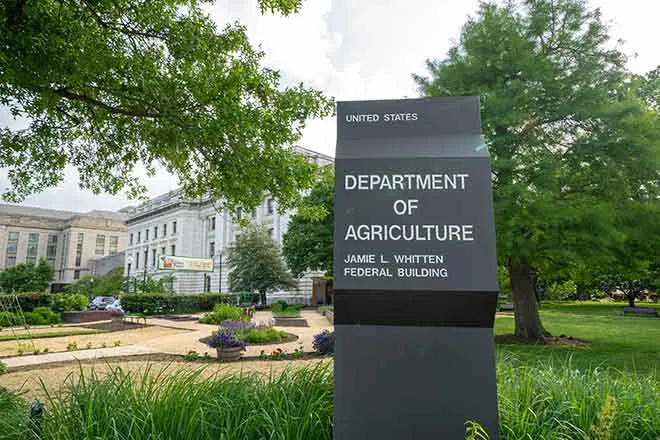
The U.S. Department of Agriculture in December announced its Farmer Bridge Assistance, a payment program to help farmers survive what was a disastrous 2025 for many producers.
North Dakota has set up its own loan programs to help farmers through economic hardship and to recover from storms that wiped out storage bins, making producers more dependent on short-term markets.
Bank of North Dakota President Don Morgan said there is “prolonged stress” on the ag industry, and 2026 will likely not provide much relief when it comes to profits.
He said the loans backed by the state-owned bank are not just meant to get farmers into 2026 but also into 2027.
Morgan said the bank will help farmers with “as much as a working capital break as we can.” The bank is taking applications until June 30, 2026.
The Bank of North Dakota allocated $37 million in loans to help rebuild grain storage and provide temporary storage. Another $300 million loan program aims to help farmers who lost money in 2024 and 2025. The bank also made available another $100 million in loans to help farmers pay for storing grain that has not been sold from the 2025 harvest.
As of mid-December, the bank had funded more than 100 loans under those programs, with about 30 applications pending.
Looking at the big picture, Bryon Parman, agriculture finance specialist with North Dakota State University Extension, said the frequency of bailout programs for farmers raises concerns about deeper problems.
“These ad hoc programs have started to become the rule more so than the exception,” Parman said. His comments came after the Trump administration announced the bridge payment program.
“The fact that you need them over and over and over again, there’s some issues,” Parman said.
Much of the blame for poor crop prices, especially in soybeans, has been blamed on the Trump administration’s trade war with China, a key market for North Dakota soybeans.

But Parman said he saw signs of weakness in the ag economy even when farm revenue was high in 2022. He said in that year, the rate of return on major assets and equity was relatively low to some previous boom years.
Parman said farmers are paying $10,000 and sometimes $20,000 an acre for land.
But the land “doesn’t make all that much money, which, as an economist, doesn’t make any sense,” he said.
Morgan said land values are being supported by large ag operations that are able to borrow more money, from out-of-state interests and the perception of scarcity.
“They aren’t making any more of it,” Morgan said of farmland.
Owning land that’s of high value does help a farmer’s balance sheet, Parman said, but high land values also make it hard for younger farmers to expand and be profitable doing it.
Unlike drought years or other natural disasters, Parman said crop yields have been pretty good.
“Prices have been an issue, but mainly they’ve been an issue because our costs are so high,” Parman.
Fertilizer prices are staying high in part because of competition for fertilizer from other parts of the world that are trying to improve their ag production, such as South America and India, Parman said.
In addition, China, a major supplier of fertilizer, has been exporting less, he said.
Mark Watne, who last year ended a 12-year run as president of the North Dakota Farmers Union, said he recently visited farms in Brazil and was impressed by their ability to increase production.
Brazil’s advances in agriculture and soybean production have allowed it to fulfill much of China’s demand. That means China has become less reliant on soybeans from the United States.
“Without even chopping down more rainforest, they can expand,” Watne said of Brazil “So I think it’s worrisome. I think we may become more of a residual supplier (to China) than we really want to be.”
One area of relief is declines in the prices of fuel and lubricants as well as lower interest rates, but are not enough to offset the increases in other categories.
“Most major crops will see a cost increase of between 1.5 percent and 2 percent from 2025-2026,” Parman wrote in a November article published by NDSU “While this would not be considered a large increase, given current crop prices, any increase at all will be difficult to absorb financially for many producers.”