North Dakota speed zone changes create shift in ticketing hot spots

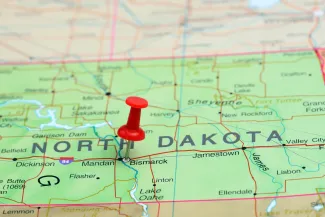
North Dakota state troopers wrote fewer speeding tickets on stretches of interstate highway that went up to an 80 mph speed limit in 2025, but some areas where speed limits were reduced saw a spike in citations — especially at Dickinson.
North Dakota’s top highway speed went up to 80 mph on August 1, 2025. At the same time, stretches of interstate at Dickinson, Grand Forks, Jamestown and Valley City saw the speed limit reduced from 75 mph to 70 mph.
State troopers wrote 223 tickets during the first year of Dickinson’s 70 mph zone, more than triple for the same area the previous year, according to data provided by the North Dakota Highway Patrol.
Tickets in the Grand Forks reduced-speed area more than doubled from the previous year. Meanwhile, Jamestown’s 70 mph zone saw a slight increase in tickets, while Valley City saw fewer.
Representative Ben Koppelman, R-West Fargo, sponsored the bill authorizing the 80 mph speed limit.
He said the feedback on the 80 mph limit has been “all positive,” but on the shift down to 70 around the four cities, “it’s all negative.”
Koppelman said some people are blaming him because they think the new 70 mph zones were part of his bill for 80 mph as the top speed.
The decision to create those zones was made by the state Department of Transportation.
“They created a speed trap,” Koppelman said of the Dickinson area.
Koppelman said he has complained to Transportation Director Ron Henke, but got no indication the zones will change.
Koppelman said he has talked with other legislators about addressing the situation in the 2027 session, but he said he is not aware of any bill drafts yet.
Kirk Hoff, director of the Department of Transportation’s Design Division, said those four cities are large enough that additional traffic congestion at peak morning and evening commute times warrants the slower speed limit.
© iStock - Alex_Schmidt
He added that there are curves on I-94 in the Jamestown and Valley City areas where an 80 mph speed limit would not be safe.
The Fargo-West Fargo and Bismarck-Mandan areas already had reduced speeds before last year’s changes.
The Department of Transportation also put in a 70 mph area near Medora, but Hoff said a further review of the curves in that Badlands area led to a decision to allow the 80 mph there.
Hoff said he was not aware of any plans to alter the existing 70 mph zones.
Major Tom Iverson of the Highway Patrol said tickets in that area may go down as drivers remember to slow down.
“If a roadway you’re just used to driving at 75 mph and it’s now 70, it may take a little bit of time to get used to,” Iverson said.
Overall in the first year of those four 70 mph zones, troopers wrote 1,000 tickets, compared to 776 in the previous year.
In the areas where the speed limit went up to 80, the number of speeding tickets fell to 4,742 in the 12 months starting August 1, 2025, down from 8,361 the previous 12 months.
The Highway Patrol also included data on the number of crashes on the interstates.
Crashes went up in the new 80 mph areas — there were 505 crashes from Aug 1, 2025, to July 31, 2026, up from 469 the previous year.
Crashes also went up in the areas where the speed limit was reduced from 75 mph to 70 mph over the same time period, rising to 65 from 53 the previous year.
Iverson said it is difficult to draw any conclusions on the effect of speed limit changes based on one year of crash data.
Speeding fines also increased as part of Koppelman’s bill.