Polis asks President Trump for major disaster declaration after Southwestern Colorado floods

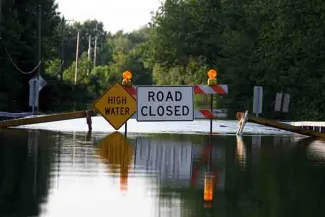
Governor Jared Polis asked President Trump on Saturday, October 31, 2026, for a fast-tracked Major Disaster Declaration after flooding and debris flows hit Southwestern Colorado. The request covers Archuleta and Rio Grande counties, where officials have confirmed almost $27 million in eligible damage.
The request went to the president through the Federal Emergency Management Agency (FEMA). It follows severe storms that occurred from October 22-25. If approved, the declaration would provide federal money to repair damaged public infrastructure and reduce future flood risks.
© iStock - djperry
"Devastating flooding has damaged homes and businesses, washed away roads, and disrupted the basic services Southwestern Colorado families depend on. Colorado has deployed rescue teams, delivered supplies, quickly restored use of roads, and committed state funding to help communities respond and recover. The damage documented so far exceeds what state and local resources can address alone. I am asking President Trump to swiftly approve this request to help restore essential services, rebuild damaged infrastructure, and support these communities on their road to recovery," said Governor Polis.
The governor seeks two types of FEMA help. The first is Public Assistance, Categories A-G. It covers debris removal, emergency protective measures, and repairs to roads, bridges, water control facilities, public buildings, utilities, parks, and other public facilities. The second is Hazard Mitigation Grant Program funding for affected areas. It supports work to reduce future flood and debris-flow damage. Examples include larger culverts, riverband stabilization, and infrastructure improvements.
Joint damage checks by state, federal and local officials have found $26.989 million in costs eligible for Public Assistance in the two counties alone. That early estimate includes only sites teams could safely inspect. About 100 homes in Archuleta County remained cut off as of October 29. More damage and costs will be recorded as access improves.
© iStock - designer491
The checks found about $10.6 million in damage to local roads, bridges and culverts. They found $2.44 million in damage to public utilities and $8.59 million in damage to parks and recreation facilities. Emergency protective measures account for another $4.16 million. More costs were found for water control facilities, public buildings, and debris removal.
The state filed the request on a fast-track basis because of the size of the damage. It did not wait for every damaged site to become reachable. Officials will keep assessing damage in other affected counties. Those counties and costs may be added to the request later.
Damage checks will also look at harm to homes and private property. That will help decide what federal help may be available for families, homeowners, and businesses. State and local partners are setting up Disaster Assistance Centers. The centers will connect Coloradans with help for property remediation, crisis counseling, evacuee resources, insurance resources, and more.
"The catastrophic damage from this disaster has had widespread impacts on community members and local, state, and Tribal infrastructure. This request will help to rebuild this infrastructure, and speed up the recovery process," said Trevor Denney, Director of the Colorado Office of Emergency Management.

On October 22, Governor Polis declared a disaster emergency for Alamosa, Archuleta, Dolores, Hinsdale, La Plata, Mineral, Montezuma, Ouray, Rio Grande, San Juan, and San Miguel counties. He added Conejos County on October 23. The declarations started the State Emergency Operations Plan and allowed emergency spending and purchasing. They also allowed the Colorado National Guard to help with flood response, evacuations, and search and rescue.
Colorado sent nearly 100 National Guard members with aircraft and ground equipment. Crews rescued 48 people and 31 animals. The state also sent incident management teams and field staff, and delivered food, water and supplies. State agencies worked with local officials, the Southern Ute Indian Tribe, and community groups. They reached stranded residents, helped with evacuations and shelters, and restored access to areas cut off by the flooding.
The Southern Ute Indian Tribe's lands were also hit by severe flooding. The Tribe will seek FEMA help on its own, apart from the state's request. Colorado has worked closely with Tribal leaders and supports the Tribe's choice. State officials and resources remain available to help coordinate recovery needs.

© iStock - gustovofrazao
Colorado has also put state money toward emergency repairs. On October 26, the Transportation Commission approved $5 million in contingency funds for the first transportation response. Colorado Department of Transportation (CDOT) crews and contractors have worked to stabilize damaged highways and restore access. That includes reopening routes to alternating traffic and starting temporary access repairs along Colorado Highway 151.
On October 28, CDOT asked for about $65 million in Federal Highway Administration emergency relief funding. That was based on early estimates of damage to federal-aid roads. On October 30, the Federal Highway Administration approved CDOT's request. It authorized $6.5 million in quick release funding for repairs to US 160, US 550, and Colorado Highway 151 before winter. These highway costs are separate from the FEMA costs in the governor's request.
The Major Disaster Declaration request is awaiting federal approval. Residents are encouraged to document damage and submit reports through county damage-reporting systems. Submitting a damage report is not an application for financial assistance. Updates on the request, and on any request for Individual Assistance, will be shared as soon as they are available.
Resources are available for affected Coloradans. To sign up for emergency alerts in your area, visit https://dhsem.colorado.gov/emergencyalert. For help, shelter and temporary lodging information, call 2-1-1, text your ZIP code to 898-211, or visit 211 Colorado's disaster response page at https://mars.colorado.gov/recovery-0. For road conditions and closures, visit COtrip.org or use the COtrip Planner app. To request free volunteer cleanup help, call Crisis Cleanup at 970-283-7325. For local updates, damage-reporting links and more resources, visit the Division of Homeland Security and Emergency Management's State Emergency Operation Center Updates page at https://dhsem.colorado.gov/taxonomy/term/100014. For immediate emergencies, call 911.